Ukraine's Drone Surge Hints At Summit Bargaining
Kyiv timed a massive drone offensive against Moscow and the Kerch Bridge days before the US-China-Russia summit — a calculated move to shift bargaining dynamics at a moment when great-power diplomacy threatens to marginalize Ukraine.
Ukraine Is Rewriting Its Own Diplomacy
Ukraine did not wait to be included in the conversation. On the night of November 15, Kyiv sent more than 1,300 drones into Russian airspace — striking Moscow and the Kerch Bridge in what may be the single largest aerial assault of the war. Two days later, President Trump, President Xi Jinping, and President Vladimir Putin will sit at a table in Astana without their Ukrainian counterpart.
The timing is the story.
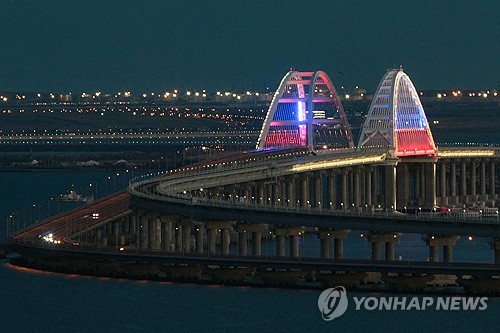
Moscow confirmed it intercepted over 1,300 Ukrainian drones overnight. About 60 percent headed for the capital. Mayor Sergei Sobyanin said his city shot down roughly 600 drones in a single night, a figure that underscores the sheer volume directed at civilian areas. The remaining strikes landed across Russia’s southwestern regions, with the Kerch Bridge — the engineered link between mainland Russia and occupied Crimea — explicitly targeted and damaged enough to disrupt traffic.
This was not a random escalation. It was a statement delivered in real time, aimed at a summit that will decide Ukraine’s fate without Ukraine in the room.
Who Stands To Lose When Great Powers Meet
The Trump-Xi-Putin framework represents something unprecedented: the first formal trilateral gathering of the United States, China, and Russia since at least the early Cold War era of high-level engagement. For Moscow, the payoff is straightforward. Even a handshake with Washington and Beijing signals normalization on Russia’s terms. No territorial concessions. No accountability for the war. Simply recognition that Russia sits back at the big table.
China benefits by staging itself as a responsible great power broker while avoiding direct entanglement in a conflict it has quietly sustained through economic and diplomatic support for Russia. Washington gets to play peacemaker without having made concessions to Ukraine or extracted meaningful guarantees from Moscow.
Ukraine gets reduced to a subject rather than a participant.
That is precisely why the drone campaign matters. By driving Russian air defenses into overload and making the cost of holding occupied territory visibly higher for Moscow, Kyiv is attempting to tilt the calculus before the summit even begins. Every intercepted drone is a reminder that Russia cannot secure its own hinterland. Every strike on the Kerch Bridge is a reminder that Crimea — Putin’s crowning geopolitical achievement since 2014 — remains vulnerable.
There are second-order implications that extend beyond the immediate symbolism. A successful trilateral summit could accelerate arms-sales restrictions on Kiev by Western allies who fear complicating the broader deal. Chinese commercial firms operating in Russian markets may face renewed scrutiny or selective enforcement in European jurisdictions if Washington interprets Astana as a thaw. And within Ukraine itself, the perception that Kyiv was excluded risks erosion of public trust in the government’s ability to defend national interests through conventional diplomacy — a risk that could shape political calculations long after any agreement is signed.
The Kerch Bridge And The Symbolism Of Broken Links
The Kerch Bridge is more than infrastructure. It is the physical manifestation of Russia’s claim that Crimea is irrevocably Russian. Opened in 2018, it was celebrated domestically as a triumph of engineering and sovereignty. Destroying or degrading it sends a message that reaches far beyond logistics: it tells the world that Russia’s fifteen-year hold on Crimea is conditional, not permanent.
Kyiv understands that symbolism is currency in negotiations. If Russia appears to lose its grip on Crimea on the eve of a great-power summit, the moral and political foundation for any settlement that recognizes Russian sovereignty becomes thinner. Ukraine’s argument shifts from “you invaded us” to “you cannot even hold what you took.” That reframing matters when diplomats are drafting language about borders, security guarantees, and postwar order.
The bridge also carries strategic weight beyond symbolism. It is the primary land corridor for Russian military logistics into southern Ukraine. Disruption forces Moscow to reroute supply lines through longer, more vulnerable maritime channels or to commit additional resources to protecting an alternative route across the Sea of Azov. Each diversion stretches an already strained logistical apparatus and raises the question of whether Russia can sustain its forward positions if its most direct connection to Crimea is intermittently severed.
What Happens Next
Russia will likely respond. Expect renewed missile strikes on Ukrainian energy infrastructure, possibly intensified air defense deployments over Moscow and Crimea, and rhetorical escalation from the Kremlin accusing Kyiv of provoking wider conflict. The question is whether those responses translate into operational constraints on Ukraine’s ability to continue long-range drone campaigns — or whether they simply reinforce the perception that Russia is fighting a defensive war on its own soil.
Ukraine’s military leadership faces a difficult balancing act. Continuing the assault demonstrates resolve and keeps pressure on Russian infrastructure, but it also risks accelerating the very depletion of drone stocks that Kyiv depends on for these operations. Western suppliers, watching the Astana preparations, may hesitate to approve additional shipments if they believe such deliveries could provoke a broader confrontation involving nuclear-armed states. That hesitation creates a window where Ukraine’s offensive capacity could contract just as the diplomatic window opens — a paradox that demands careful management from Kyiv and its partners.
For the summit, the immediate impact may be limited. Trump, Xi, and Putin will likely discuss the broad contours of de-escalation, trade, and regional stability. But the drone offensive changes the background radiation of those conversations. It forces every participant to account for a Ukrainian military that still has strategic initiative rather than acting purely as a battleground.
The Calculation Beneath The Campaign
Ukraine’s gambit is simple: prove that the war is not entering a managed decline but remains actively contested, and thereby compel the great powers to negotiate terms that at minimum acknowledge Ukrainian agency rather than treating Kyiv as territory to be divided.
If Moscow interprets the strikes as desperate rather than deliberate, it may double down militarily, closing off space for any negotiation built on mutual exhaustion. If Washington and Beijing see them as evidence that Russia remains unstable and unpredictable, the incentive to isolate Moscow grows — and isolation complicates whatever deal the three leaders might otherwise construct.
Either outcome favors Kyiv compared to the alternative — watching from the sidelines as three leaders redraw the map of Europe without asking Ukraine where its borders should be. The drones did not end the war. They changed the room.