Ukraine's Deep Strike on Russia's Biggest Refinery Changes Everything
Ukraine's strike on Russia's Omsk refinery — its largest — processed one in six liters of domestic fuel. What happens next reshapes the war economy, European energy, and the calculus of long-range sanctions.
The Math Behind the Strike
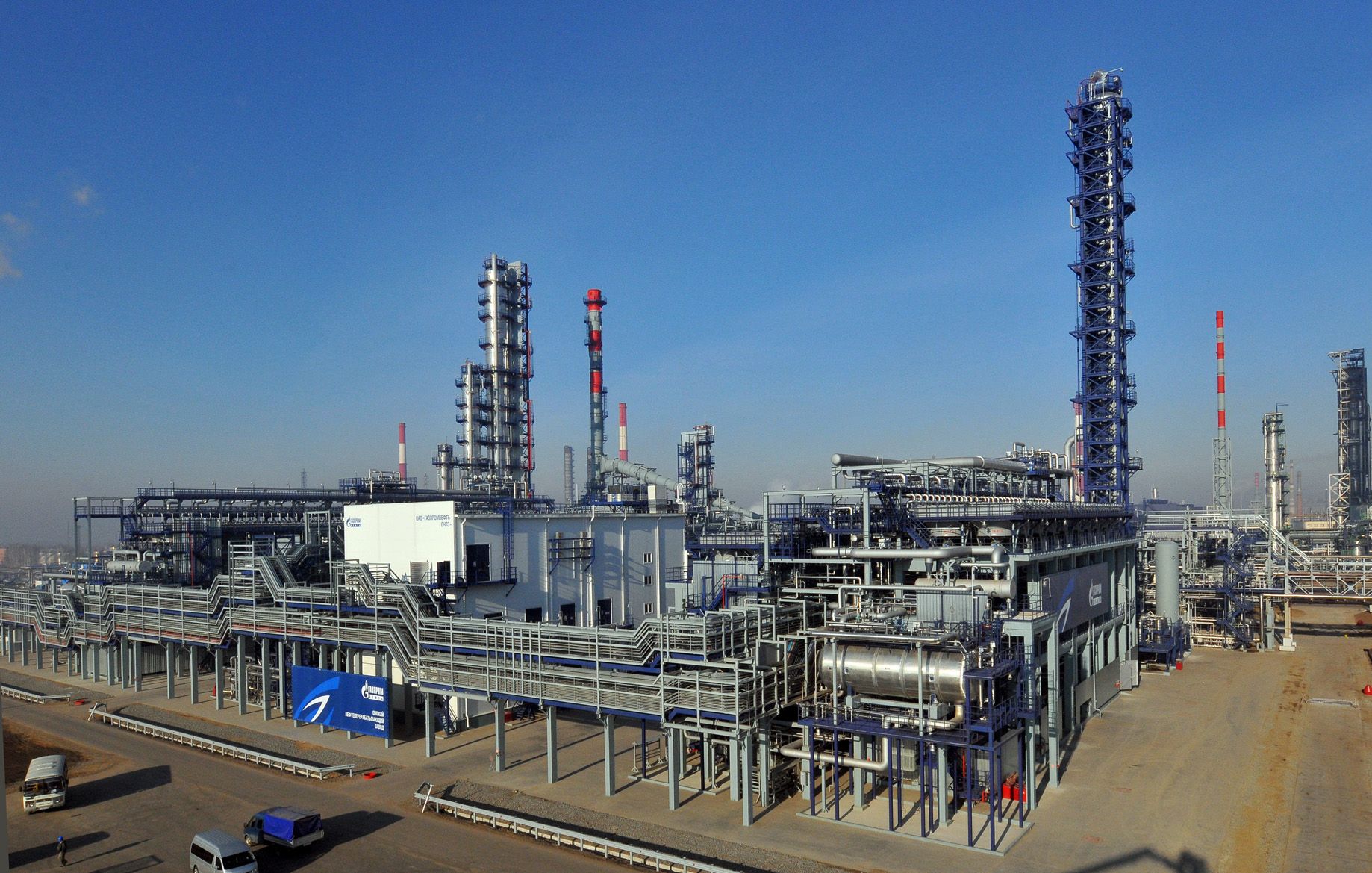
Let’s start with a number most Western headlines skip. The Omsk Oil Refinery produces one out of every six liters of Russian gasoline and diesel. That is roughly 16 percent of the country’s refined fuel supply flowing from a single site, owned by Gazprom, sitting 2,500 kilometers behind enemy lines.
Ukraine hit it again on November 11. It was the third strike in four months. But this time the drones traveled 3,000 kilometers to reach it — the deepest penetration of any Ukrainian drone attack on a Russian refinery to date. Eight hours of sustained drone fire turned Omsk’s skies black. Air raid sirens did not stop. Local officials closed airspace, restricted mobile internet, and ordered residents indoors. Fires were confirmed near the facility by OSINT analysts. The SSO did not announce specific damage levels, and independent verification remained impossible.
What is clear is the arithmetic of what Omsk represents. Russia processes approximately 5.8 million barrels of crude daily across all its refineries, according to industry estimates. Omsk handles over 21 million tonnes annually. At typical conversion rates, that translates to well over 300,000 barrels of finished products per day — gasoline, diesel, jet fuel, petrochemical feedstocks. Lose it consistently and you do not lose just a refinery. You lose a fifth of Russia’s domestic fuel pipeline.
Why This Matters More Than Crude Strikes
Striking oil fields is dramatic but inefficient. Russia has thousands of them spread across western Siberia, the Volga region, and the Arctic coast. Destroying one field rarely shifts the calculus because alternatives exist — even if expensive.
Destroying refining capacity is structurally different.
Russia cannot simply reroute crude from another region. A refinery is a fixed capital asset built to process specific grades of crude. It takes years to rebuild. And unlike crude, refined products — particularly gasoline and diesel — are harder to move in bulk across Russia’s vast geography. Pipelines favor certain corridors. Railcars have limited capacity. Trucks require fuel to carry fuel, creating logistics that collapse fast when any link breaks.
Omsk sits in western Siberia, reasonably well positioned to serve central and southern Russian consumption zones. It feeds military bases, transport networks, and civilian populations across a broad radius. Hit it repeatedly and the disruption propagates outward in ways that matter inside Russia — not just on paper metrics.
The July and October strikes on Omsk already tested this dynamic. After the July attack, Ukraine’s General Staff noted the facility produced a wide range of lubricants and petrochemicals alongside aviation fuel. Russia’s wartime dependence on precise chemical inputs for munitions manufacturing adds another layer. Petrochemical products are not discretionary. They feed defense industrial output directly.
The Escalation Is in the Range, Not Just the Target
Three thousand kilometers is not just distance. It is a capability statement.
Every previous Ukrainian strike on a Russian refinery — Ryazan, Volgograd, Krasnodar — sat within roughly 1,000 to 1,500 kilometers of the Ukrainian border. Those targets required either mid-air refueling, extended loiter times, or launch platforms already deep inside contested airspace. Omsk demanded something qualitatively different: drones engineered to fly further, persist longer, and navigate deeper into layered air defense terrain without degrading mission probability.
President Volodymyr Zelensky has framed long-range sanctions as one of Ukraine’s strongest levers against Russia. But long-range sanctions historically referred to trade restrictions — limiting access to technology, capping prices on exported oil, blocking shipping insurance. What Ukraine is demonstrating now is something closer to kinetic long-range sanctions: the ability to physically remove productive assets from the enemy economy at will, regardless of geographic protection.
This reframes the entire concept of strategic depth that Moscow has relied on since 2022. Cities once considered safe — Saratov, Orenburg, Kemerovo — now sit inside drone range. The psychological and infrastructural consequence extends far beyond any single strike.
The European Energy Angle Nobody Is Discussing Enough
Here is where the story becomes relevant outside Eastern Europe.
Russia normally exports gasoline surpluses during the summer driving season and imports refined products in winter when domestic heating and transport demand spikes. Losing 16 percent of its refining throughput disrupts that cycle at exactly the wrong moment. Less gasoline available for export means less revenue. Less refined product domestically means greater import dependence heading into peak winter demand.
Europe’s exposure is indirect but real. Russian refined fuel exports have been re-routing through Turkey, Central Asia, and Africa under shadow fleet arrangements. A reduction in those volumes tightens global supply slightly — enough to support benchmark prices, particularly Brent, which already carries geopolitical premiums well above fundamental supply-demand balances.
More importantly, the precedent matters. When a belligerent demonstrates sustained ability to destroy critical energy infrastructure deep in adversary territory, other actors reassess their own vulnerability curves. Norway, Kazakhstan, Azerbaijan — none of them face drone threats currently, but the logic of energy infrastructure defensibility changes globally when the assumption that “distance equals safety” stops holding.
What Happens Next
There are three likely trajectories from here, and they intersect.
First, Russia accelerates its own long-range drone and missile campaigns against Ukrainian energy infrastructure with renewed intensity. Kernel Holding reported damage to its production sites and storage tanks from Russian drones shortly after the Omsk strike. The exchange rate of attrition favors neither side absolutely, but Ukraine already operates with thinner margins on the energy distribution side. Lost storage capacity at Kernel is functionally equivalent to lost refining capacity at Omsk — except Russia can rebuild Tank B faster than Ukraine can rebuild Tank A given the resource imbalance.
Second, Ukraine continues pressing the refinery campaign deliberately. Each successful strike raises the cost of Russian war financing incrementally and compounds the infrastructure repair burden. Gazprom absorbs the revenue loss internally, but internal accounting mechanisms cannot erase physical destruction. Maintenance crews, replacement parts, temporary bypass systems — all consume resources that otherwise support frontline operations.
Third, and least discussed, international buyers adjust expectations. Countries that have been quietly purchasing Russian refined products — India, Türkiye, several African states — may recalibrate volumes if consistent supply gets disrupted by repeated Ukrainian strikes. Certainty of delivery matters more to downstream buyers than price discounts ever will. Even modest uncertainty about future availability triggers diversification strategies that reduce structural demand for Russian fuel exports over time.
The Deeper Implication
The Omsk strike is not a singular event. It is part of a campaign whose architecture remains deliberately opaque — intentionally so, to preserve operational security. What the available evidence confirms is that Ukraine now possesses the range, persistence, and targeting intelligence to punish Russia’s energy processing capacity systematically.
That capability will only deepen through 2027.
European energy markets priced in stable Russian flows through last winter at historically depressed discount levels. Stripped of Omsk’s output on top of prior damage to Volgograd, Ryazan, and other refineries, the mathematics of Russian wartime revenue become materially worse. And every ruble Russia cannot earn from refined fuel sales is a ruble it cannot deploy toward artillery shells, aircraft, or troop wages.
The drones that reached Omsk did not just burn fuel. They burned through the assumption that Russia’s interior was unreachable. That shift in perception may ultimately prove more damaging to Moscow’s war effort than any single barrel of gasoline left unrefined.