Ukraine’s Drone Swarms Are Reshaping NATO Doctrine
Ukraine’s deep-strike drone campaign is forcing Russia to rethink its homeland defenses—and exposing a critical vulnerability in NATO’s own air-defense posture.
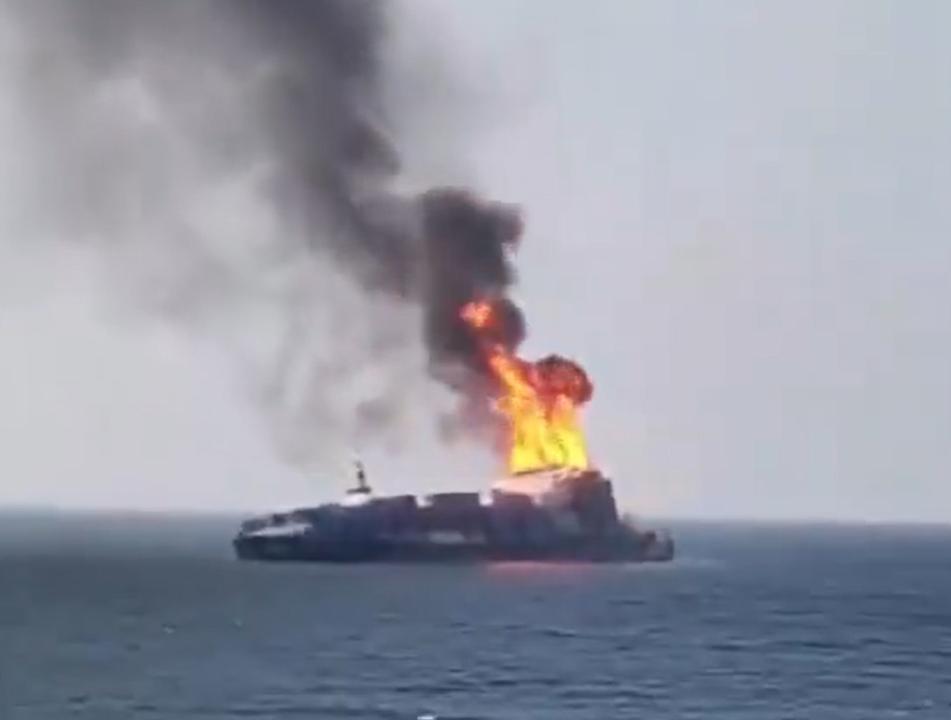
The War Is No Longer Staying on Ukrainian Soil
A Russian state-owned atomic energy container ship burned in the Black Sea this month after a Ukrainian sea-drone strike. It was one more incident in a campaign that has now crossed a line most analysts thought would not be breached this openly: Ukrainian drones are routinely striking targets deep inside Russia, including power infrastructure, military depots, and ships in Russian-controlled ports.
On August 16 alone, Kyiv launched over 800 drones across the Russian Federation. Russian air-defense forces claimed to have intercepted most of them. But the strategic impact was undeniable. The war has been brought home to Russian citizens in a way that Moscow’s leadership has struggled to contain—upending daily life in occupied Crimea, hitting logistics routes, and striking at facilities that were previously considered safe behind layers of air-defense coverage.
This is not a novelty. The turning point came in June 2024 with Operation Spider Web, when Ukrainian forces concealed drones inside trucks and pushed them deep into Russian rear areas before launching surprise strikes on parked warplanes. At the time, NPR noted that Ukraine was consistently inventing new ways to wage war with drones, beating back a more powerful Russian military across land, air, and sea. The pattern since then has only intensified.
How the Drone Model Actually Works
The operational picture is simpler than it sounds, and that is part of what makes it dangerous.
Ukrainian operators pull intelligence from commercial and military satellite imagery, identify high-value targets—weapons depots, air-defense batteries, fuel stores—then plot flight paths that weave around known Russian radar coverage. Drone pilots conduct their own target analysis mid-flight, adjusting in real time. The result is a低成本, high-precision strike capability that does not require stolen Western technology to function effectively.
This gives Kyiv an edge that no amount of Russian conventional firepower has erased. Moscow still field superior artillery, aircraft, and missile stocks. But Ukraine has found a way to contest those advantages at the tactical level, striking targets that force Russia to divert resources from the front line back to homeland defense.
The effect on Russian morale has been devastating in ways that go beyond the physical damage. Drones reaching areas near Moscow have thrown Russian defenses off balance. Civilian confidence in the government’s ability to project strength is eroding. In Crimea—a peninsula Russia has treated as an inseparable extension of its territory since 2014—continuous drone attacks are challenging Moscow’s iron grip in real time.
The Patriot Problem
Here is where the story turns sharper.
Ukraine is running out of American-made Patriot interceptors. The United States itself has burned through significant Patriot stockpiles responding to Iranian-backed threats in the Middle East. That means fewer missiles are available for Ukraine, even as Russian missile and drone launches against Ukrainian cities remain unrestricted.
This is the paradox of the current phase of the war. Cheap drones are doing what expensive missiles once did—penetrating defended airspace, striking high-value targets, forcing the defender to spend far more to stop them. But the defender still needs those expensive interceptors, and they are running short. Russia, facing a thinner homeland-defense perimeter, can continue firing missiles at will. Ukraine cannot always shoot them down.
The result is a war of attrition with no end in sight—a conflict locked into a grind where technology changes the rules but does not resolve the fundamental math of ammunition stocks versus target density.
What This Means for NATO
The implications reach far beyond Ukraine.
NATO’s air-defense doctrine has long been built around the assumption that high-altitude, high-speed threats—ballistic missiles, cruise missiles, manned aircraft—would dominate the skies. Drones of the type Ukraine is deploying do not fit that model cleanly. They fly low. They are slow. They are numerous. And they are affordable enough that an adversary can absorb losses that would be politically catastrophic at the missile level.
Several European defense ministries are already reviewing their interceptor strategies. The question is whether current stockpiles—designed for a different threat environment—are adequate for a war where a single swarm of hundreds of drones can saturate a defensive network faster than it can be replenished.
Russia is already rethinking its own homeland defenses in response to Ukrainian drones. That is the real signal. An adversary that was dismissed as technologically inferior is rewriting the rules of modern air warfare, and the countries watching most closely are not just in Europe—they are in Asia, where similar maritime and aerial disputes exist.
Who Wins, Who Loses, What Comes Next
Ukraine wins the tactical battle for now. Its drone program has proven that a smaller military can project power deep into an adversary’s territory without matching it platform for platform. The cost exchange ratio favors the attacker. Each Ukrainian drone costs a fraction of what each Russian interceptor costs. That disparity will not close quickly.
Russia loses strategically. Every layer of air defense it stations around critical infrastructure is a layer it cannot deploy on the front line. Every Patriot interceptor that fails to arrive from the West is a gap that widens.
NATO loses time. The window to adapt procurement and doctrine to a drone-saturated battlefield is narrowing. If the Patriot shortage in Ukraine becomes a pattern repeated across European capitals, the alliance’s deterrence posture faces a stress test it has not yet designed for.
The war in Ukraine will not end because of drones. But it will be shaped by them—perhaps more than any technological shift since the introduction of the tank.