The US Just Banned Canadian Goods. Other Trade Partners Should Be Nervous.
The US has moved beyond tariffs to outright import bans on Canadian dairy, alcohol, and motorcycles — a escalation that bypasses the WTO and sends a warning shot to every American trading partner.
The Import Ban That Changes Everything
The United States did not raise tariffs on Canada. It pulled the plug entirely.
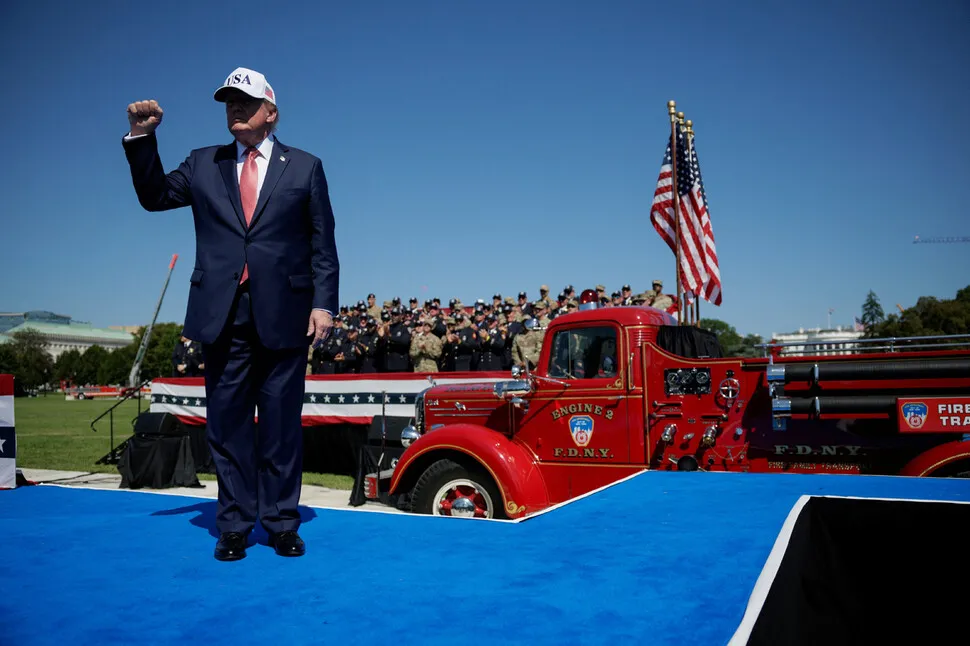
On June 8, President Donald Trump signed executive orders banning imports of Canadian dairy products, the broad spectrum of alcoholic beverages, and motorcycles and scooters — effective June 29 at 00:01 local time. The justification cited Section 338 of the US Tariff Act, which grants the president authority to ban goods from countries that discriminate against American commerce. Whether Canada has actually done so is the kind of claim that will likely end up in a courtroom, not a trading floor.
What matters is the direction. Tariffs are a lever. Import bans are a wall. The former compresses trade; the latter severs it. Washington has moved from squeezing its nearest partner to cutting it off at the joints.
The Escalation Sequence
The timeline reveals a pattern of tit-for-tat that grows more extreme with each round.
After bilateral trade negotiations collapsed last month, the US announced on June 22 that it would impose tariffs of up to 50 percent on approximately $20 billion in Canadian imports. Canada responded by threatening matching 50 percent tariffs on $27.6 billion in American goods, starting September 8.
Trump’s latest move came the same day Canada enacted its retaliatory tariffs. That sequencing — matching, not leading — suggests a leadership willing to absorb domestic pain as much as foreign pain.
The banned categories are carefully chosen. Dairy: whey protein, various molasses, non-alcoholic beer. Alcohol: wines, whiskies, beers, rums, vodkas. Motor vehicles: motorcycles and scooters. These are not bulk commodities that disappear from shelves. They are recognizable, consumer-facing products. Canadians will notice the gaps.
The Procurement Strike
There is a second layer to this that receives far less attention than it deserves.
Trump also directed the General Services Administration, in coordination with the USTR, to exclude Canadian products from the Multiple Award Schedule — the federal procurement system that allows government agencies to make long-term bulk purchases without going through individual bids each time. The GSA oversees roughly $50 billion in annual contracting through this mechanism. Excluding Canadian suppliers from it is not a tariff. It is a permanent displacement from one of the largest buyer markets in North America.
Trump’s justification on Truth Social echoed the section 338 logic: he claimed Canada had systematically blocked American small businesses from its government procurement markets. The claim has not been independently verified, and Canada’s procurement rules have long been defended as transparent and legally sound. Regardless, the directive is in motion.
Canada’s Pivot West
Mark Carney, Canada’s prime minister, did not respond with threats. He responded with strategy.
“Canada’s strategy is to become more independent,” Carney told reporters on June 8. “No country can hold us hostage.”
The implicit admission is stark: Canada has spent decades structuring its economy around the United States, and that architecture is now a liability. The response is to diversify — and the most immediate destination is not Mexico or Asia. It is the European Union.
According to an anonymous Canadian official speaking to the Associated Press, Ottawa is exploring a relationship with the EU that goes beyond trade agreements — potentially toward membership, a path that would take years but signals where the thinking is heading. Carney is scheduled to address the European Parliament on June 17.
This is significant because Canada-EU membership talks do not exist today. No country has ever joined the EU without first being European. What is being discussed is not a realistic timeline but a directional signal: Canada is telling its trading partners that Washington is no longer the only option.
The Ripple Effect
Here is what Western news wires are under-reporting: the United States is now using import bans as a routine trade policy tool, bypassing the World Trade Organization in the process.
Section 338 of the Tariff Act is old law. Its use against a treaty partner like Canada — bound to the US by the USMCA, the very agreement Trump himself renegotiated from NAFTA — is unprecedented in its blunt geography. If the US can invoke national security-style prohibitions against dairy and motorcycles from a country it shares a 5,500-mile border with, what stops it from doing the same to the EU, Japan, South Korea, or India?
The WTO dispute settlement system is already fractured. The Appellate Body has been blocked since 2019. Panels rule, and the losing party simply appeals into emptiness. When a major trading power moves from tariff disputes to outright bans without waiting for any international ruling, it is not just escalating a bilateral quarrel. It is rendering the multilateral system irrelevant by indifference.
Other US trading partners should read this as a preview, not an anomaly.
Who Wins, Who Loses
Canadian consumers lose first. The banned categories are not obscure — they are daily purchases. Prices for domestic substitutes will rise, and supply chains will scramble.
American producers in those same sectors lose too. Many Canadian dairy processors and brewery operations contract directly with US suppliers for ingredients, equipment, and distribution. Cutting off the Canadian market disrupts that entire chain.
Trump’s administration gains political theater. Banning Canadian whiskey is a headline. Banning Canadian whey protein is harder to explain at a breakfast table in Wisconsin.
The WTO loses legitimacy. Every day that import bans replace multilateral dispute resolution makes the organization more of a historical footnote.
China and the EU gain leverage. Not immediately — but the opening of a transatlantic economic channel between Canada and the EU, even in early exploration, plants a seed that rivals can water over the next decade.
What Happens Next
The bans take effect June 29. Canada’s retaliatory tariffs begin September 8. There is no deadline for de-escalation, no off-ramp visible in the current rhetoric.
Carney’s June 17 address to the European Parliament will be the first public test of whether the Canada-EU pivot accelerates or remains exploratory. If Brussels responds with concrete outreach, the symbolic weight alone could shift how other US partners calculate their exposure.
The legal challenge to the import bans under Section 338 will likely move through US courts before any WTO proceeding gains traction — and WTO proceedings move at glacial speed regardless. By the time a panel rules, the market will have already adjusted.
The broader implication is quieter but more consequential: the postwar trading order was built on the assumption that the United States would enforce rules, not rewrite them unilaterally. That assumption is fraying. Canada is the first case. It will not be the last.