US Blocks UK From Pre-Testing Frontier AI Models
The White House has ordered OpenAI and Anthropic to withhold new models from Britain's AI Safety Institute until American verification is complete — a move that undermines London's post-summit safety architecture and exposes a transatlantic fault line over who controls AI governance.
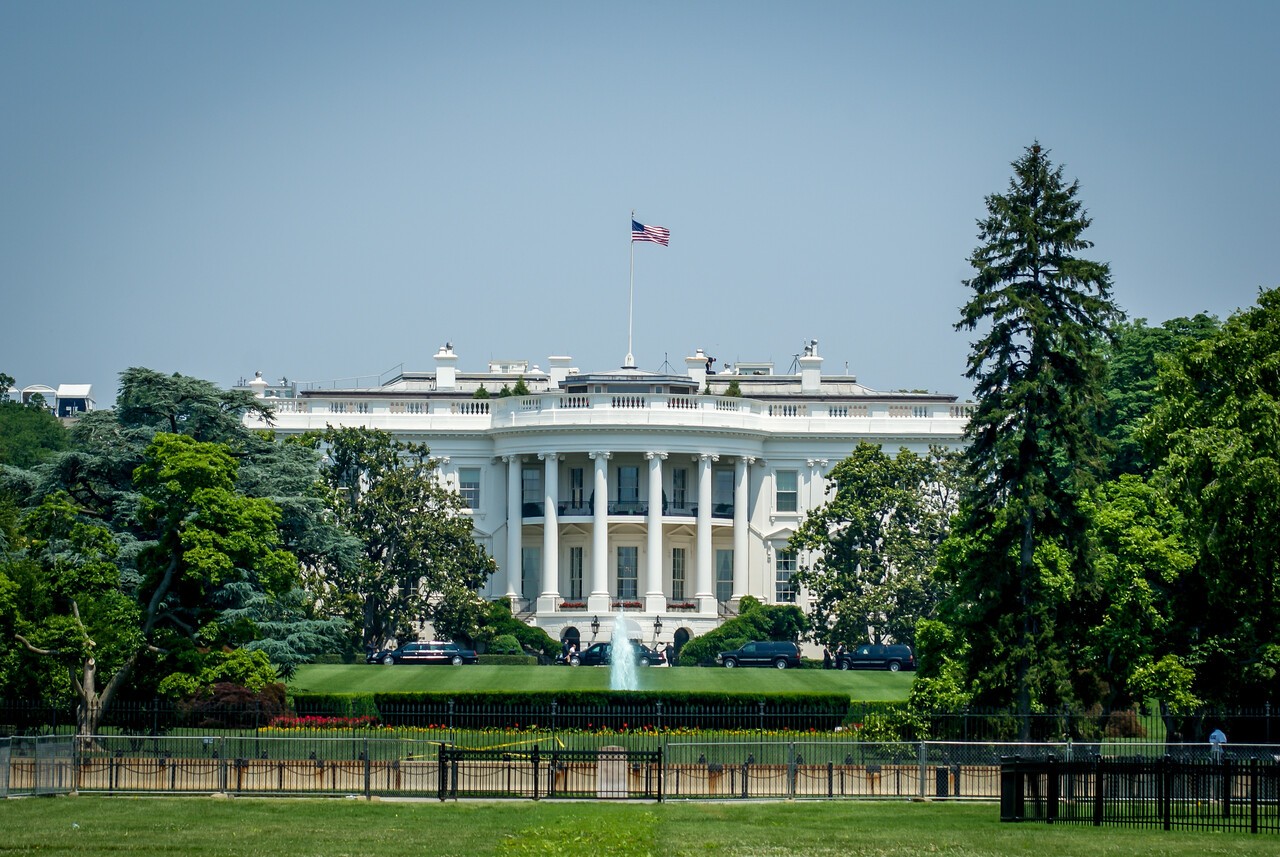
The US Has Drawn a Line in the Sand on AI Safety
The White House has told OpenAI and Anthropic that they must refuse to share their newest models with Britain’s AI Safety Institute until a US verification process is finished. According to Politico, the pressure came through the US National Cybersecurity Office and represents a formal policy shift, not an isolated incident.
Anthropic complied immediately. The company did not provide its Mistral 5.1 model to UK AISI, stating the model was restricted to certain US agencies. When questioned, it cited ongoing cooperation with the US government to eventually broaden access — a careful framing that places responsibility squarely on Washington rather than on the company itself.
OpenAI has not publicly confirmed whether it is also withholding models, though Henry Tuhmann, director of UK AISI, acknowledged in a recent parliamentary letter that access to Anthropic’s latest system is restricted while cooperation on OpenAI’s GPT-6 Astra continues.
What happened here matters far beyond a single delayed safety check.
The UK Built a System — and the US Just Broke It
At the 2024 AI Safety Summit hosted by the British government, the UK struck a deal with frontier companies including OpenAI and Anthropic: models would be tested by UK AISI before release. It was supposed to be the world’s first independent, pre-deployment safety regime for the most powerful AI systems. UK AISI became the designated testing hub.
This is the first time a frontier company has declined to submit its latest model to that process on the grounds of US government direction.
Andy Burnham, the UK Secretary of State for Department of Science, Innovation and Technology, tried to manage the fallout at the UN General Assembly, pledging continued close cooperation with both the US and major AI developers while pushing for a single global safety standard. The language was measured, but the substance was a retreat: the UK cannot enforce a rule it helped design when its main partner refuses to follow it.
The practical consequence is that UK AISI loses its credibility as a gatekeeper. If the most advanced models bypass its checks because Washington says so, the entire pre-release verification architecture built since the 2024 summit is hollowed out.
Why the US Is Taking This Position
The Trump administration’s hardline stance reflects a genuine cybersecurity concern. Advanced AI models can, in theory, be weaponized — used to identify vulnerabilities in critical infrastructure, automate phishing at scale, or probe defense systems. From Washington’s perspective, letting a foreign agency examine a model’s behavior before the US has completed its own review creates a risk of exposure, whether intentional or accidental.
The argument is straightforward: US companies developed these models under US regulation and with US investment; the US government gets first right of review.
But the policy has a structural flaw. The Commerce Department’s AI Standard and Innovation Center (CAISI), the US body responsible for evaluating frontier models, is operating with severe staffing shortages — dozens of unfilled technical positions and no confirmed director. If the US verification process is already a bottleneck with limited personnel, adding a mandatory delay before ally access will slow the global rollout of advanced models, potentially by weeks or months for each release cycle.
That slowdown hurts everyone, including US companies that want rapid deployment and international partners trying to build domestic capabilities.
Who Wins, Who Loses
The US government wins in the narrow sense. It gains exclusive first look at the most dangerous technology its companies produce. It sets the terms of any ally access. And it forces companies like Anthropic and OpenAI to answer to Washington before London, Berlin, or Tokyo.
The UK loses visibility into the very models it was designed to monitor. Its 2024 summit framework becomes voluntary only when it suits the company — and companies are now choosing compliance with DC over compliance with London.
European Union actors lose by extension. The EU has been pushing for its own regulatory framework through the AI Act. If the US can unilaterally restrict model sharing with the UK, it can do the same with Brussels, Paris, or Berlin. The transatlantic AI safety architecture the US promised is now conditional on US priorities alone.
AI companies lose operational simplicity. They must now navigate two competing verification regimes — one they control, one they don’t — and face pressure to prioritize the US process even when it conflicts with other commitments.
The global safety community loses coordination. The whole point of pre-release testing is that multiple independent bodies can catch different failure modes. Concentrating review in a single national system — especially one with known staffing gaps — reduces the chances of catching something dangerous before it ships.
What Comes Next
The immediate future is likely a period of awkward diplomacy. The US will insist it is following established policy. The UK will call for盟约 adherence to the 2024 summit commitments. Anthropic and OpenAI will stay quiet, having successfully deflected blame onto their home government.
But the deeper question remains unresolved: who decides what counts as safe enough to release a frontier AI model? The US approach treats that question as a national security matter, answered in Washington. The UK approach treated it as a multilateral governance challenge, answered through independent institutions. The two are now in direct conflict.
If this pattern repeats — if every major model release gets filtered through a US gate that operates on its own timeline and its own standards — the promise of coordinated AI safety fades into rhetoric. And the companies building these systems gain an unprecedented lever: they can play one capital off against another, claiming compliance with whichever government is most convenient at the moment.
For now, the White House has won the first round. The question is whether Britain and its allies accept that arrangement — or begin building parallel verification structures that do not depend on US permission.