Why the US-Canada Tariff War Will Hurt American Factories More Than Ottawa
Trump's 50% tariffs on $20 billion of Canadian goods aren't a negotiation tactic — they're a structural shift that targets treaty allies. The fallout will hit US manufacturers hardest, because North America's supply chains are far more interlocked than either side admits.
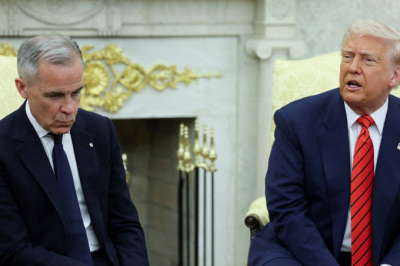
The Deal That Was Never Going to Hold
Donald Trump and Mark Carney came within sight of an agreement last week, then walked away from it. The US slapped 50% tariffs on roughly $20 billion in Canadian goods on August 22. Canada’s retaliation schedule starts September 8, dollar-for-dollar, targeting American steel, dairy, appliances, agricultural equipment, pulp and paper, and electronics. Both sides say the other broke the deal at the last moment. Both sides are probably right, in their own way.
What matters more than the blame game is what this rupture actually signals. Trump’s tariff strategy is no longer aimed primarily at strategic rivals. It is now targeting America’s deepest trading partner and closest military ally. The implication has not been fully absorbed by markets or policymakers.
The Numbers That Should Worry Washington
Fifty percent on $20 billion sounds like leverage. It is also a direct tax on American consumers and manufacturers who depend on Canadian inputs. The tariffed products — wine, furniture, dairy, cement, clothing, fishing rods, hockey sticks, medical knee braces — may seem random, but they are not. They span industries with highly integrated cross-border supply chains. A hockey stick manufactured in Ontario crosses the US border at least three times during production. A medical brace assembled in Michigan may use Canadian polymers sourced from Alberta. Each crossing now carries a 50% levy.
Canada’s export to the US represents about 77% of its total exports. The $20 billion figure is roughly 5% of Canada’s goods flowing into the United States. But percentage matters less than concentration. These are not abstract trade flows. They are inputs into factories, shelves, and hospitals on American soil.
What Carney Did Not Say Out Loud
Prime Minister Mark Carney called the US action an act of war. He framed Canada’s retaliation as defensive, not aggressive. His government also revealed that Canada was prepared to roll back existing retaliatory tariffs on steel, aluminum, and autos if Washington significantly reduced its own tariffs. That concession never reached public view during the collapse.
The message beneath the rhetoric is straightforward: Canada will absorb pain, but it will not surrender economic sovereignty. Carney’s government faces a difficult political calculus. Ontario and Quebec are auto and manufacturing heartlands. Retaliatory tariffs on US goods will hurt voters in those provinces. But doing nothing would be politically fatal for a leader who has already positioned himself as resisting American economic coercion.
The USMCA Question No One Is Answering
The United States-Mexico-Canada Agreement was supposed to be the modern replacement for NAFTA, built on rules rather than executive discretion. Trump signed it in his first term. Now he is undermining its core premise by imposing tariffs that violate its spirit if not its letter.
Carney acknowledged the damage directly: “Certainly not good news” for USMCA’s future. The agreement’s review clock is already ticking. If the US-CanaDa breakdown accelerates into broader institutional erosion, the entire North American manufacturing framework faces recalibration. Mexican officials are watching closely. They have their own grievances with Washington.
Who Wins, Who Loses
In the short term, Trump gains a negotiating headline. In the medium term, American companies pay the price. Business Roundtable CEO Joshua Bolten warned that the tariffs will raise costs for US businesses and households while disrupting supply chains. That is an understatement for sectors like automotive, where North American parts flow across borders an average of seven times before a vehicle reaches the showroom floor.
Canadian exporters lose market access. American exporters face symmetrical loss in Canada. Consumers on both sides face higher prices. The US Department of Agriculture, already strained by prior trade conflicts, will see another disruption in its largest export market.
What Comes Next
The immediate trajectory is escalation, not de-escalation. Neither side has indicated willingness to return to the negotiating table. Trump’s USTR representative Jamieson Greer said no further talks are planned. Carney’s government is moving toward formal tariff implementation on September 8.
If the dispute hardens into a sustained tariff war, the cost estimates from independent analysts range from $50 billion to over $100 billion in combined economic damage across both countries over two years. Those figures are directional, not precise, but they point in one direction: neither side wins.
The deeper risk is institutional. USMCA was designed to reduce uncertainty for manufacturers. This rupture does the opposite. It replaces rule-based trade with transactional coercion. Every factory planner in Detroit, Windsor, and Toronto now faces a new variable: the possibility that tomorrow’s tariff schedule changes overnight.
The Bigger Picture
This is not a bilateral dispute. It is a test of whether the post-war liberal trade order, even in its narrowest regional form, can survive a president who treats alliances as transactions. The US-Canada relationship was never purely economic. It was also strategic. Breaking the trade axis weakens both dimensions.
Markets have not priced in the full cost of this rupture because they are still thinking in terms of tariff rates rather than supply-chain geometry. North American manufacturing is not two separate economies occasionally exchanging goods. It is one integrated system with borders drawn through the middle of factories, not around them. Severing that integration does not create leverage. It creates fragility.
The next six weeks will determine whether this is a blip or a structural shift. September 8 is the near-term deadline. The USMCA review timeline is the long one. Both are moving in the same direction.