A Trilateral Trap: What a US-China-Russia Meeting at APEC Really Means
Shenzhen will host the first-ever three-way leaders' meeting between the US, China, and Russia — one that sidesteps Ukraine but opens nuclear deal negotiations and reopens Cold War-era fears of great power diplomacy excluding the region it shapes.
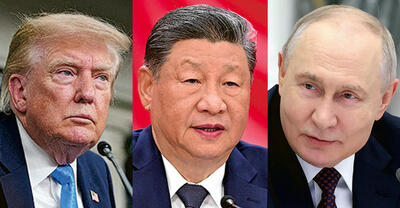
The Unlikely Trio Meets in Shenzhen
Donald Trump, Xi Jinping and Vladimir Putin are set to sit at the same table on November 19 in Shenzhen — not as rivals on separate stages but in a single room, at the sideline of the APEC summit. Washington confirmed the move on November 14. So did the Kremlin. This has never happened.
It is also unlikely to produce a breakthrough.
What makes this gathering remarkable is not what will come from it but what it reveals about where the world stands. Three powers that have spent years drifting apart — the United States locked in a strategic rivalry with Beijing, Russia isolated by its war in Ukraine, and China performing the balancing act of a lifetime — are now sharing a conference room. The optics alone should unsettle every capital from Seoul to Tokyo to Kyiv.
New START Is Back on the Table
The publicly discussed agenda narrows quickly: nuclear arms control and the war in Iran. For the United States, the pressing question is whether Beijing will finally agree to join a post-New START framework. The treaty between Washington and Moscow expired earlier this year, leaving no legally binding ceiling on the world’s two largest arsenals. SIPRI data puts the United States and Russia at more than 5,000 nuclear warheads each; China sits at roughly 500.
Washington’s position is straightforward. It argues that any successor agreement must include China, whose nuclear arsenal has been expanding. Beijing has consistently refused, insisting that the United States and Russia cut theirs first before China joins any talks. The Shenzhen meeting does not change that calculation overnight, but it places the question squarely in the spotlight. If either side signals flexibility here, the architecture of global nuclear deterrence shifts dramatically. If neither does, the meeting becomes a ritual rather than a turning point.
Ukraine Gets Sidelined
Perhaps the most telling omission is the war in Ukraine. Russian and Chinese officials have shown clear reluctance to discuss it at a trilateral setting where neither side directly engaged in the conflict. The White House and the Kremlin will hold bilateral discussions separately only if circumstances allow — currently, no such meeting is scheduled. That leaves Xi positioned as a mediator without a seat at the actual negotiating table over Europe’s deadliest war.
The absence of Ukraine from this conversation is a signal in itself. Great-power diplomacy has long operated on the assumption that regional actors benefit from being left out when the principals talk. Yalta in February 1945 is the textbook example: the fate of postwar Europe was carved up among Roosevelt, Churchill and Stalin while the countries actually living there had no say. The comparison haunts this meeting.
Xi, at least, has a different posture than the Republic of China in 1945. Beijing is hosting. It is also a key stakeholder in any Indo-Pacific settlement. But hosting does not erase the concern that outcomes reached in Shenzhen could reshape the regional order without consulting the people most affected by it.
Seoul and Tokyo Are Already Nervous
South Korea’s anxiety cuts closest to the bone. North Korea’s growing military cooperation with Russia, Pyongyang’s nuclear program and the broader question of denuclearization all fall under the shadow of this meeting. If the United States trades concessions on sanctions relief or intelligence sharing in exchange for Chinese movement on Iran or nuclear issues, Seoul could find itself paying a price it did not negotiate. The memory of Cold War agreements made without Korean input remains vivid in diplomatic corridors here.
Japan faces a similar calculus. A US-China understanding on Taiwan, the South China Sea or even broader maritime norms reached in private would leave Tokyo exposed. Both countries rely on open access and a rules-based order that, if renegotiated among three capitals, might look very different from the one they inherited after 1990.
China sees an opportunity. Wang Yuan of Renmin University’s Zhongyang Finance Research Institute told reporters that Beijing intends to stress multilateralism and sovereignty protections at the Shenzhen meeting and push back against any “Yalta 2.0” characterization. That framing is both accurate and deliberate. Beijing wants credit for keeping the door open to dialogue with Washington and Moscow while avoiding any appearance of dividing spheres of influence in Asia.
Limited Gains, Symbolic Weight
Analysts predict modest outcomes: perhaps a crisis-management hotline between the three capitals, limited cooperation on counterterrorism or climate change. None of these are nothing. Hotlines reduce the risk of miscalculation in a region already dotted with flashpoints. Climate commitments matter far beyond APEC photo ops. But neither would resolve the structural tensions driving US-China competition or the deeper rifts between Washington and Moscow.
Meanwhile, the economic subplot between Washington and Beijing continued ahead of the summit. Two trade committees held their first official video call on November 13, discussing tariff adjustments, including a potential $30 billion reduction in mutually imposed duties, and expanded agricultural trade. China’s Vice Premier He Lifeng used the APEC Business Advisory Council session to call for a stronger Asia-Pacific community. These are incremental steps, not transformations. But they show that engagement continues alongside confrontation — which is exactly how the next decade of great-power relations may play out.
The Real Test Is Not What Happens in Shenzhen
The meeting matters less for its immediate output than for what it normalizes. A regularized channel between the three powers changes the psychology of crisis management in Asia. It also raises the stakes for everyone else in the room — Japan, South Korea, Australia, India, Southeast Asian states — who will watch closely and wonder whether their interests have been priced into whatever deal emerges.
If the trilateral meeting produces no deal, it still signals that the three powers see value in staying connected. If it produces something small and concrete, it demonstrates that dialogue can yield results even amid strategic competition. And if it produces nothing at all, it remains a warning that the regions most shaped by US-China-Russia dynamics may soon find themselves increasingly absent from the conversations that shape them.
Yalta was remembered because it redrew the map of Europe. Whatever comes out of Shenzhen may not redraw maps, but it will shift the tone of an entire region.