Nuclear AI Controls: Why Excluding Seoul Matters
The US, China, and Russia are coordinating controls on AI in nuclear command systems ahead of a Shenzhen APEC meeting — while sidelining Ukraine and Korean denuclearization entirely.
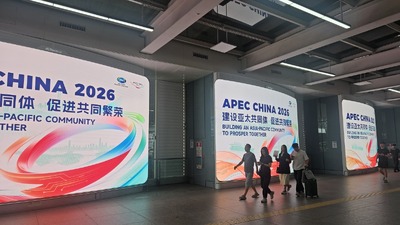
Three nuclear powers are meeting without Asia.
Washington, Beijing, and Moscow are preparing to discuss artificial intelligence safeguards inside nuclear command structures at a summit in Shenzhen. The same trilateral is leaving Ukraine out of the room and treating the Korean Peninsula as a bilateral matter between the United States and North Korea. What gets dropped from an agenda is often more informative than what lands on it.
According to reports citing multiple sources, practical working groups have been negotiating for weeks ahead of the Nov. 18–19 APEC meeting in Guangdong province. Their target is narrow but consequential: how to govern the role of AI in nuclear warfare prevention and in the command-and-control chain that ties nuclear weapons to political decision-makers.
The core proposal is not new in concept, but the coalition is.
Discussions reportedly cover whether human operators retain final authority over any nuclear release decision, whether AI-driven cyber attacks against nuclear C2 networks should be banned outright, and whether the three powers can produce a shared statement reaffirming that nuclear war cannot be won and must never happen — language that echoes the existing consensus among the five recognized nuclear weapons states but would carry fresh weight coming only from the three most destabilizing actors on paper.
Another concrete item under consideration is a pre-launch notification regime for ballistic missiles. China came under criticism last July after testing a submarine-launched missile from a nuclear-powered sub without following standard advance-notification protocols with neighboring states. A trilateral notification arrangement, however modest, would be an unusual point of alignment for Washington and Beijing given their wider friction.
The framing matters because it signals where these three powers think they still share enough common interest to bargain publicly. That boundary is shrinking around everything except strategic stability between themselves.
Why the sidelines were chosen for Ukraine and the Korean Peninsula.
China has made its position clear on both fronts: Ukraine belongs to direct US-Russia negotiations, and Korean denuclearization belongs to bilateral US-DPRK dialogue. Neither issue belongs in a three-way forum where all parties do not sit at the same table.
That leaves the meeting with a clean problem set — one anchored in existential risk management rather than territorial dispute or alliance politics. It also means two of the world’s most active nuclear flashpoints quietly exit the room.
For Seoul, the message arrives without ceremony. The trilateral arrangement does not cancel the extended deterrence guarantee, but it does recalculate the geometry around it. When the three nuclear capitals decide how to keep each other’s weapons systems from going rogue, the countries nested inside their security umbrellas become spectators to parts of the conversation that shape their own survival calculus.
The disarmament gap is the real obstacle.
Every report on this initiative notes the same friction point: the United States wants trilateral nuclear arms control. China refuses it on grounds of inventory size, insisting Moscow and Washington cut first. Russia hesitates on restrictions involving AI precisely because it does not want to bind its own discretionary margins in a potential confrontation with NATO.
Beijing’s posture reflects a genuine asymmetry. Its nuclear stockpile remains materially smaller than either American or Russian arsenals, which gives it leverage to resist deep cuts while simultaneously making it vulnerable to escalation dynamics it did not design. The preferred Chinese alternative — transparency measures, limits on space-based nuclear deployment, management of strategic competition rather than elimination of it — leans toward risk reduction without structural parity.
That mismatch makes a comprehensive treaty unlikely. A narrow statement against AI misuse in nuclear command chains, or a notification protocol, is achievable precisely because it does not require balancing warheads.
Who benefits and who loses from a G3 orbit.
Trump has publicly signaled that nuclear questions will dominate the side meetings. For him, a grand-strategic photo op alongside Xi and Putin carries domestic political value regardless of substantive output. For Xi, hosting the two rivals under Chinese APEC chairmanship projects normalization and great-power status. For Putin, attending a three-nation summit with Washington and Beijing offers a rare chance to break out of Western diplomatic isolation on the multilateral stage.
Japan and South Korea are the implicit losers. Their governments have invested heavily in tripartite coordination frameworks that assume America’s security architecture in Asia remains centered on allied consultation, not bilateral exceptions carved out by the great powers. If Washington and Beijing treat the Korean Peninsula as a bilateral channel with Pyongyang, Seoul loses direct access to the negotiations that determine its threat environment.
That is not speculation. The source reporting describes the relocation of those topics as effectively already decided within the trilateral筹备 process.
What comes next — realistically.
Expect a joint statement on nuclear war prevention. Expect noise about missile launch notifications, likely framed as voluntary rather than binding. Do not expect verifiable disarmament steps, and do not expect Ukraine or the DPRK issue to surface in formal documentation unless the United States and North Korea produce parallel outcomes elsewhere.
The more durable outcome may be institutional. If the three powers establish a standing technical working group on AI in nuclear command systems, that body would quietly define the perimeter of acceptable behavior for every other state seeking nuclear modernization — including India, Pakistan, Israel, and Iran — whose programs will be measured against standards drafted in rooms they do not enter.
APEC’s host city choice is telling. Shenzhen is not Beijing or Shanghai; it is a tech hub built on export manufacturing and semiconductor ambition. Hosting a summit about governing AI in nuclear weapons in that city adds a layer of meaning that goes beyond logistics. The meeting takes place inside the ecosystem that is creating the very capabilities the three powers are now trying to constrain.
Seoul should watch closely. The architecture being refined in Shenzhen does not announce itself as an alliance restructuring. It feels, instead, like ordinary crisis management among the powerful. That is exactly how realignments begin.