Fear of a New Yalta Haunts Asia Ahead of US-China-Russia Summit
A historic trilateral meeting between Trump, Xi, and Putin raises alarms across Asia that great-power deal-making will once again sideline smaller nations. Tokyo's diplomatic exclusion only deepens the dread.
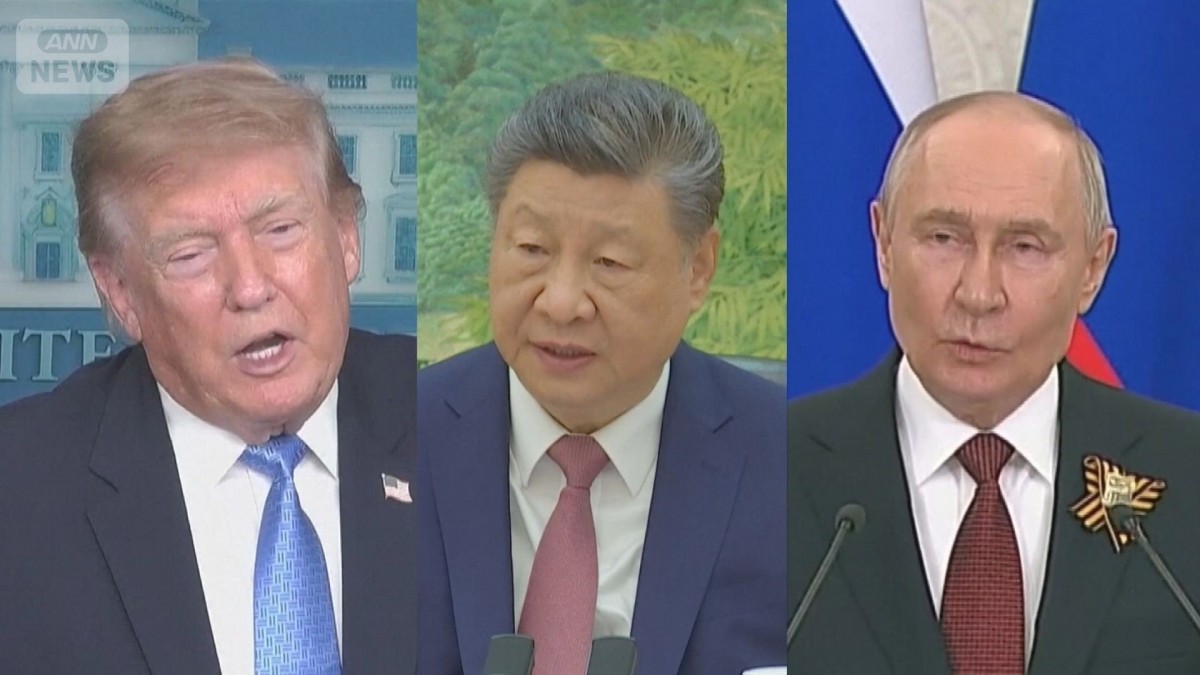
The Shadow of 1945 Over a Trilateral Summit
Ask anyone in Manila, Seoul, or Tokyo what they fear most about the upcoming meeting in Shenzhen, and you will hear one word repeated with growing urgency: Yalta.
Not the Yalta Conference of February 1945, when Roosevelt, Churchill, and Stalin carved up postwar Europe and Asia in rooms where the conquered had no voice. But its ghost — the idea that great powers can rearrange the security architecture of an entire region behind closed doors, then demand smaller states accept the new reality.
Ukraine’s president Volodymyr Zelenskyy said it bluntly last month. “It must not become a new Yalta Conference,” he told local media, a reference that carries particular weight given how Yalta’s secret protocols directly affected East Asia. The agreement between the Allies that granted the Soviet Union southern Sakhalin and the Kuril Islands is the same historical bone Japan continues to dispute with Moscow today.
Now Washington, Beijing, and Moscow are preparing for their first-ever formal trilateral summit, with Donald Trump positioning nuclear arms control as the centerpiece. The existing bilateral US-Russia treaty expired in February. Trump has publicly advocated bringing China into a new three-way framework, even mentioning denuclearization as a topic. China, which maintains a significantly smaller nuclear arsenal than either the United States or Russia, has shown little enthusiasm for the idea.
What makes this gathering dangerous for Asia is not merely the subject matter. It is the structure of the conversation itself.
Who Is in the Room, and Who Is Not
Trump’s itinerary reveals the geography of exclusion. He travels to the Philippines for an ASEAN-related summit, then onward to Shenzhen for APEC. At APEC, the US-China-Russia meeting will take place. But Prime Minister Sanae Takaichi’s visit to the region tells a different story.
Takaichi has been pursuing meetings with both Chinese Premier Li Qiang and President Xi Jinping during her trip through the Philippines and China. According to reports, neither has agreed to sit down with her. Her scheduled bilateral encounters are limited to leaders from the Philippines, South Korea, and Thailand.
This is not accidental.
Beijing has every reason to bypass Tokyo. Xi knows Takaichi represents a faction within the Liberal Democratic Party that takes a hard line on China, particularly on issues like Taiwan and historical disputes over wartime conduct. Avoiding her signals that China considers Japan outside the circle of powers whose opinions it needs to manage at this summit.
Washington’s silence on Ukraine is another data point. The White House has stated Kyiv will not be on the agenda. Yet Trump has made numerous statements in recent months that sounded like preconditions for accepting Russian territorial gains — language that closely resembles what any negotiator would prepare before a Yalta-style settlement discussion.
Small states are already hearing the script being written without them.
The Nuclear Question No One Wants to Solve
The stated purpose of the summit is nuclear disarmament. But framing it as a three-party exercise ignores how the issue actually works in practice.
China possesses roughly 500 to 600 nuclear warheads. The United States and Russia each hold approximately 5,000. Any arms control treaty that treats these as comparable starting positions effectively freezes China’s current buildup while constraining American and Russian modernization programs. That is not parity. It is asymmetric locking.
China’s reluctance is rational from its own perspective. It has spent decades deliberately keeping its arsenal small and opaque to avoid provoking a nuclear tripartite framework that would draw binding transparency requirements onto its forces. Joining such talks now would force Beijing to reveal capabilities it has kept deliberately vague.
For Asia, the implication is stark. A US-Russia-China nuclear deal that excludes regional actors would set precedents for strategic stability calculations that determine missile deployments, submarine patrols, and early-warning systems across the Western Pacific — all without a single invitation extended to the countries most likely to be affected.
What Asia Should Prepare For
The risk is not that the summit will produce an outright territorial settlement. It is far more likely to produce something subtler: tacit understandings about spheres of influence that leave allied states to clean up the consequences.
Japan faces the most immediate exposure. Its dispute with Russia over the Northern Territories sits on the exact territory shaped by Yalta’s secret provisions. If Washington and Moscow reach any arrangement that implicitly acknowledges Russian sovereignty there — or trades concessions elsewhere in Eastern Europe in exchange for Russian cooperation on China — Tokyo would find itself negotiating from a weakened position it did nothing to create.
South Korea faces parallel pressures. A three-way deal between Washington, Beijing, and Moscow could restructure the American nuclear umbrella in ways that shift burden-sharing expectations onto Seoul. The United States has already hinted at asking allies to pay more for their own security. A trilateral great-power framework provides cover for those demands.
Philippines and ASEAN members are already seeing the protests play out on their streets. Demonstrators in Manila confront police while protesting the economic fallout of global instability and opposing what they see as America’s renewed entanglement in conflicts that do not serve their interests. Their government’s diplomatic schedule reflects the same reality: survival depends on maintaining relationships with every major power simultaneously.
The Real Test Will Come After Shenzhen
Summits generate photographs. They rarely generate lasting architectures. What matters is whether the participants treat the trilateral format as a starting point for institutionalized dialogue or as a one-off photo opportunity.
If Trump returns to Washington claiming progress on nuclear arms control while Asian allies receive follow-up calls asking them to adjust their defense postures, the lesson will be clear: the new order is being negotiated elsewhere, and consultation is optional.
If China walks away without committing to any framework and uses the summit solely to signal to Moscow that it remains indispensable to great-power balancing, the result will be an emboldened Russia with fewer constraints and a United States looking for deals it can claim as victories back home.
Either outcome leaves Asia managing consequences it helped shape.
That is the modern Yalta anxiety in its purest form. The conference tables may have changed. The exclusions have not.