What the US-China-Russia Summit Means for the Rest of Us
Trump, Xi, and Putin are set to meet in Shenzhen — the first trilateral gathering of their kind. What they decide there will redefine alliances across Asia, Europe, and the Middle East, often without those regions' input.
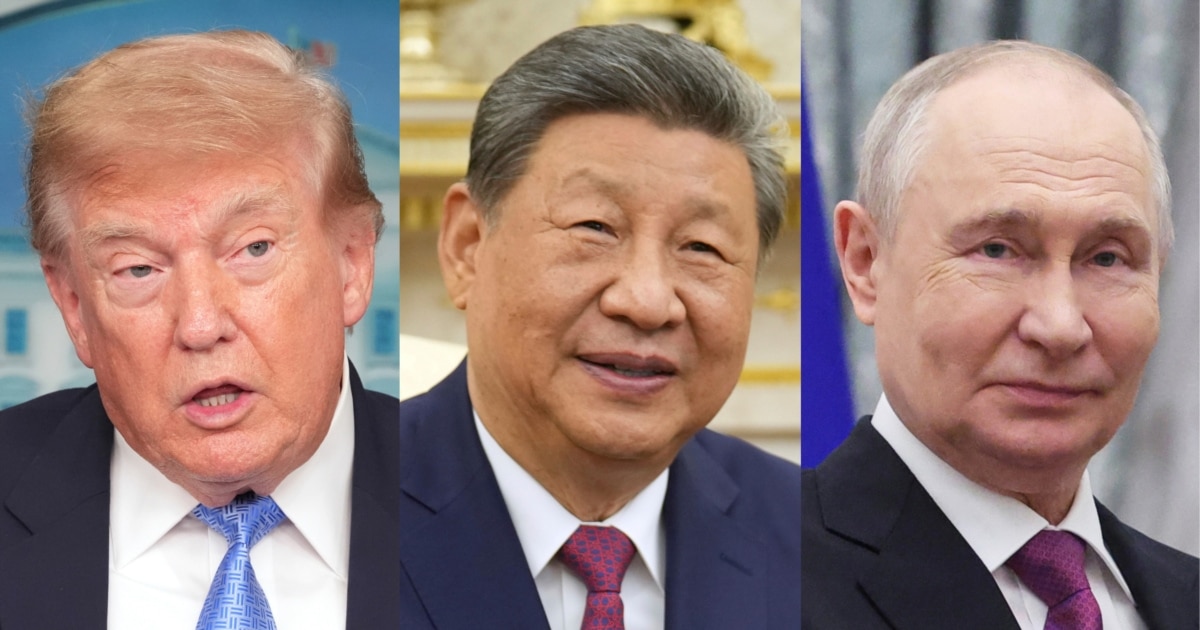
A Meeting That Rewrites the Rules
Shenzhen, not Washington or Moscow, has become the unexpected center of gravity. On the 19th, Donald Trump, Xi Jinping, and Vladimir Putin will sit at the same table for the first time — a trilateral summit unprecedented in the post-Cold War era. They’ve exchanged phone calls, yes. But this is the first occasion where all three leaders share a physical room under the banner of an APEC meeting hosted by China.
That detail matters more than most headlines suggest. The fact that Beijing chose Shenzhen — a city built on export manufacturing and technological ambition, far from the political symbolism of Beijing itself — signals something deliberate: China is framing itself not merely as a venue but as the essential intermediary between America and Russia. Xi is positioning himself as the one who can connect the two capitals when neither can talk directly to each other without crossing lines both would rather avoid publicly.
What Is Actually on the Table
Five issues dominate the agenda, and each one carries consequences far beyond the press photos:
Ukraine. The war enters another long winter. Both Washington and Moscow are exhausted by its duration. A trilateral conversation about ceasefire or armistice terms — even preliminary ones — could unlock something neither side feels able to offer alone at present. If China mediates, Kyiv faces a familiar problem: every great-power compromise on its sovereignty tends to originate without its seat at the table.
US-China rivalry. Tariffs, semiconductor restrictions, AI governance — this is where the real structural friction lives. Any de-escalation signal here would move markets faster than any sanctions agreement. Supply chains have already been fragmenting for years; a thaw would accelerate realignment in ways that ripple through Southeast Asia, Taiwan, and Europe equally.
Iran and the Middle East. China and Russia maintain entrenched relationships with Tehran. Whatever position emerges on Iranian nuclear questions or regional security architecture would likely sideline the Gulf states and Israel — again — reminding them why they’ve been quietly accelerating strategic autonomy in recent years.
North Korea. Trump has floated meeting Kim Jong Un again. China and Russia are Pyongyang’s primary lifelines. How the trio handles the Korean peninsula question will determine whether denuclearization talks resurface or whether the regime entrenches further with renewed great-power backing.
Nuclear security. The United States and Russia remain the world’s largest nuclear arsenals; China is expanding rapidly. Any revival of arms-control dialogue among all three would be historic — and historically fraught. Trust runs thin when two of the three parties are actively competing over technology, trade, and territorial influence.
The Real Story: Everyone Else Gets Offloaded
Here is what the coverage misses: the rest of the world — Japan, South Korea, the European Union, ASEAN, Saudi Arabia, India — is being asked to absorb whatever outcome falls out of this meeting without having authored it.
Japan and South Korea are America’s treaty allies in Asia. Their security architectures depend on US commitments that, in practice, may now be negotiated between Washington and Moscow with Beijing setting terms. When Trump discussed possible Russia deals during his first term, Seoul and Tokyo felt it viscerally. They will feel it again.
Europe watched the Ukraine War with direct stakes. If the conflict gets reshaped by great-power bargain-making in Shenzhen, Brussels and Warsaw will bear the geopolitical weight of decisions made in a Chinese conference room.
The Global South has spent years hedging between Washington and Beijing, refusing to pick sides. A trilateral summit that produces parallel settlements on Ukraine, Iran, and North Korea — all brokered with Chinese mediation and Russian-American tacit accommodation — would effectively freeze the status quo in favor of whoever holds the most power, which is precisely the order China’s diplomatic messaging claims to oppose.
What China Gains
Xi’s calculus is coherent if ruthless. China gets credit as indispensable mediator while avoiding direct accountability for outcomes. It preserves its relationship with Russia without formally endorsing Moscow’s war. It keeps America engaged without committing to anything that constrains its own military modernization. And it reinforces the narrative — useful across Africa, Latin America, and Southeast Asia — that multipolarity is arriving whether Western institutions like it or not.
The timing inside APEC also benefits Beijing. Hosting a major Western leader like Trump on Chinese soil while simultaneously facilitating Russo-American engagement allows China to stage-manage the optics of a new diplomatic hierarchy — one where Washington no longer sets the agenda unilaterally.
What Trump Gains
A headline-grabbing meeting with two adversaries is exactly the kind of high-profile dealmaking language Trump understands and markets domestically. A breakthrough on Ukraine, a tariff pause with China, leverage over North Korea — he needs tangible results before next year’s electoral cycle. Shenzhen offers him a single-stage platform for all of them.
But the risk is substantial. Getting caught in a grand-bargain narrative while actual concessions flow toward Russian or Chinese interests — particularly on sanctions relief or technology access — would expose him to charges that he traded alliance credibility for photo opportunities.
What Putin Gains
Nothing less than strategic recognition that Russia’s war in Ukraine cannot simply isolate Moscow permanently. If China hosts Trump and Putin together, and the resulting conversations produce even procedural progress on ceasefires or nuclear talks, Putin secures what months of battlefield maneuvering failed to deliver: Great Power normalization on Russian terms, not Ukrainian or Western ones.
What Comes Next
The summit itself will produce statements. The aftermath is what determines alignment shifts. Watch for three things in the weeks following:
First, whether Tokyo and Seoul receive advance briefings or learn publicly alongside everyone else. Their intelligence-sharing frameworks and forward-deployed forces make silence from Washington devastating.
Second, whether Europe articulates a coordinated response or fractures along national lines between Atlanticists and pragmatists.
Third, whether the Global South welcomes the mediation framework or views it as institutionalized exclusion — a question that will shape how seriously developing nations engage with multilateral bodies going forward.
This meeting in Shenzhen is not simply another diplomatic event. It is a stress test for the existing alliance system and a preview of a version of international politics where the rules are rewritten by whoever can convene the right people in the right room. For Japan, South Korea, Europe, and the Global South, the uncomfortable truth is that they may soon find themselves living inside someone else’s architecture.