The US-China Truce Is Real. It Leaves Korea Exposed.
The Trump-Xi trade deal is genuine but hollow on everything that actually matters to Seoul. Taiwan and Iran exposed the fault lines that leave middle powers like South Korea navigating a minefield.
The Deal That Isn’t
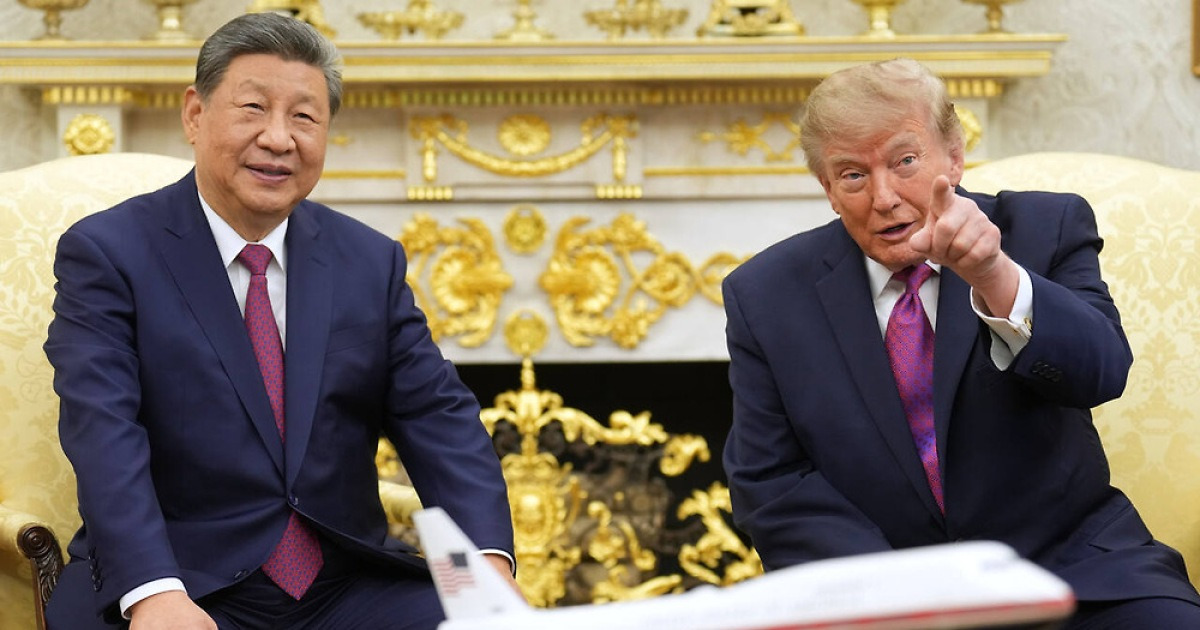
Donald Trump and Xi Jinping walked away from the White House on September 24 with something they could both sell at home: a new trade agreement. Xi called it a gift to both nations and the global economy. The details were never released. The White House issued no statement. What followed was a masterclass in ambiguity from two leaders who understand precisely how much silence can accomplish.
On paper, this is a de-escalation. Tariffs paused, supply chains breathing again, companies in both countries exhaling. But the real story — the one that should make Seoul sit up straight — is what fell through the cracks between the handshake and the silence.
The sectors covered under the agreement remain deliberately vague, but sources familiar with the discussions indicate the initial focus centers on agricultural purchases and select manufacturing tariffs. Soybeans and corn from American farms are expected to flow back to Chinese markets, a reversal that pleases agricultural lobbyists in the Midwest but does little to address the broader strategic competition. More critically, the agreement sidesteps the fundamental tensions around semiconductors, advanced computing, and technology transfer — areas where Seoul’s economic survival depends on navigating between both powers. The pause on tariffs buys time, but it doesn’t resolve the structural questions about who controls the critical supply chains that Korea’s export-driven economy relies on.
Beyond the headline de-escalation, there are second-order effects rippling through third-country markets. Vietnamese and Mexican manufacturers are already recalibrating their positioning, sensing that the US-China rapprochement may reduce pressure on transshipment enforcement and alter the calculus for companies that built operations specifically to circumvent tariffs. Korean exporters face an asymmetric exposure — their competitiveness depends not just on bilateral trade volumes but on maintaining credibility with Washington’s broader economic statecraft, a position that grows more unstable with each ambiguous summit.
Taiwan: The Unspoken Line
Xi used the meeting to reiterate China’s position in language designed for domestic audiences. He told Trump the United States must maintain its “correct stance” against Taiwan independence and handle the issue with prudence. Chinese state media carried the remarks but reported nothing back from Trump.
When pressed afterward by reporters asking whether Taiwan was discussed, Trump offered the only detail he was willing to share: they had a very good meeting. Nothing more.
That silence is the signal. Trump has spent years treating Taiwan as a bargaining chip — questioning the one-China policy, suggesting Taiwan should pay for its own defense, implying the United States might reconsider its commitments. Xi’s public framing here was not an appeal. It was a warning delivered in daylight.
For South Korea, the message cuts deeper than rhetoric suggests. Seoul’s entire post-Cold War security architecture assumes American unwavering commitment to the region, yet the agreement reveals a United States willing to treat security guarantees with the same transactional flexibility as trade deals. Seoul’s vulnerability is compounded by its geographic reality — it sits within artillery range of North Korean forces and depends on American nuclear deterrence, making any shift in American commitment calculations potentially catastrophic.
There’s also a domestic dimension to this uncertainty. Yoon Suk-yeol’s government has staked significant political capital on maintaining the alliance as Korea’s anchor, but if Americans increasingly view their treaty obligations as negotiable rather than binding, Seoul faces the prospect of being asked to absorb risk without American backstop — a scenario the Roh administration never fully grasped until now.
Iran: Two Different Wars
The divergence on Iran was more explicit. Trump wants China to apply economic pressure alongside the United States against Tehran. Xi wants dialogue and negotiation.
This is not a minor disagreement about tactics. It reveals two fundamentally different conceptions of how great powers should behave. Trump operates on transactional coercion — maximum pressure, maximum leverage, maximum profit. Xi is playing a longer game, preserving access to Iranian markets and oil while positioning China as the power that can broker a settlement the United States cannot.
For Seoul, the implications cut both ways. South Korea is deeply embedded in Iranian energy supply chains. Any move toward alignment with the US stance risks economic retaliation. Any move toward neutrality risks diplomatic isolation from Washington. The Kim Jong-un administration is watching closely, calculating which pattern of great-power behavior it can exploit most effectively.
The real concern for Seoul, however, is how this divergence affects the broader US alliance architecture. If the United States treats alliances as transactional instruments rather than enduring commitments, and China simultaneously refuses to constrain itself through American-designed frameworks, then middle powers face an impossible choice: become junior partners in competing systems or attempt a balancing act that satisfies no one. This isn’t merely about Iran — it’s about whether the institutional frameworks that have underwritten regional stability for decades can survive when the two primary architects are pulling in opposite directions.
The AI Silence
Perhaps the most consequential gap is what was not said at all. There was zero progress on artificial intelligence governance or cooperation. Both nations are racing to build the most powerful AI systems on Earth, and there is now no framework — not even a fragile one — for managing the risks together.
This matters for Korea because Seoul is simultaneously a hub for AI development and a country vulnerable to whatever regulatory vacuum opens up. Chinese AI firms will compete globally without constraints. American firms will operate under rules that China ignores. The asymmetry benefits Beijing, and Seoul sits between them.
Beyond the competitive dimension, there are direct economic consequences. Korea’s semiconductor industry — the backbone of its export economy — depends on continued access to both American technology and Chinese markets. Without coordinated AI governance, the United States may impose stricter export controls on advanced chips and related technologies, while China accelerates its domestic alternatives. Seoul faces pressure to pick sides on foundational technology standards that will determine how AI systems are built, deployed, and governed globally. The absence of US-China cooperation on AI governance means these decisions will be made unilaterally, and Korea will have to navigate the consequences of frameworks it helped neither design nor shape.
Why Seoul Should Be Nervous
South Korea’s dilemma is structural, not circumstantial. The country trades more with China than any other nation — over $200 billion annually in goods. But its security alliance is with the United States, a commitment enshrined in a treaty that has held for seven decades and is now being tested by the very leader who signed it.
The trade agreement between Washington and Beijing removes one layer of uncertainty while adding three more. Companies can breathe easier about tariffs. But they face a new reality: the United States will negotiate trade deals flexibly and abandon security commitments equally flexibly.
The Roh administration inherited a foreign policy built on the assumption that great-power rivalry could be managed through institutional frameworks and predictable alliances. The Trump-Xi summit suggests those frameworks are thinner than anyone admitted.
What makes this especially troubling for Seoul is the compounding effect — each dimension of US-China competition reinforces the others. Trade uncertainty undermines investment planning. Security ambiguity erodes deterrence credibility. Technology rivalry fragments the innovation ecosystems that Korea depends on. And none of these problems have a bilateral framework to address them, because the two powers most central to resolving them aren’t cooperating.
The immediate consequences are already visible. Korean automakers are reassessing their US investment strategies as tariff regimes shift unpredictably. Semiconductor companies are restructuring supply chains to hedge against both American export controls and Chinese market exclusion. Defense planners are quietly exploring contingency options that would make the alliance structure far more complex than the straightforward US-Korea framework that has existed since 1953.
What Comes Next
Xi is scheduled to visit the National Archives later Thursday before a state dinner at the White House. The visit itself is symbolic — a recognition of the historical weight both leaders carry. But symbols do not resolve structural tensions.
The trade deal will hold for now. Tariffs will stay paused. Supply chains will adjust. But the questions remain unanswered: What happens to Taiwan if the next crisis erupts? Can South Korea trust Article III of the mutual defense treaty when the treaty’s American signatory treats alliances as negotiations?
Seoul needs to stop treating the Trump-Xi accord as a stabilization event and start treating it as a signal that the architectural assumptions of Korean foreign policy need revision. The era of managing between two superpowers through institutional frameworks is ending. The new era requires accepting that middle powers will be asked to choose, and choosing badly will be less costly than failing to choose at all.
The clear path forward involves three moves. First, Seoul should publicly reaffirm its commitment to the US alliance while simultaneously establishing direct communication channels with Beijing on issues of mutual economic interest — not to balance between powers, but to clarify boundaries. Second, the government needs to accelerate diversification of trade and investment relationships, particularly with India, Southeast Asia, and the European Union, reducing the concentration risk that makes Seoul vulnerable to any single power’s policy shifts. Third, and perhaps most urgently, Seoul should push for a formal trilateral consultation mechanism on technology standards and regional security — not because it will solve the underlying tensions, but because the alternative is unilateral decisions made by Washington and Beijing that Seoul simply accepts.
The trade agreement between the United States and China buys time, but it doesn’t buy security. It buys certainty about tariffs, not about commitments. For a country whose geography makes it simultaneously the most important and the most vulnerable player in East Asia, that distinction isn’t academic — it’s existential. The question for Seoul isn’t whether the truce will hold. It’s what Korea will look like when the next crisis arrives and finds it still believing that ambiguity between superpowers is the same thing as strategic autonomy.