SK Hynix Is Chasing Micron Through the Memory Superclause
Micron's stunning earnings have re-anchored expectations for the memory supercycle through 2028 — and SK Hynix's 1,097% profit jump is the signal that Korea may finally close the gap.
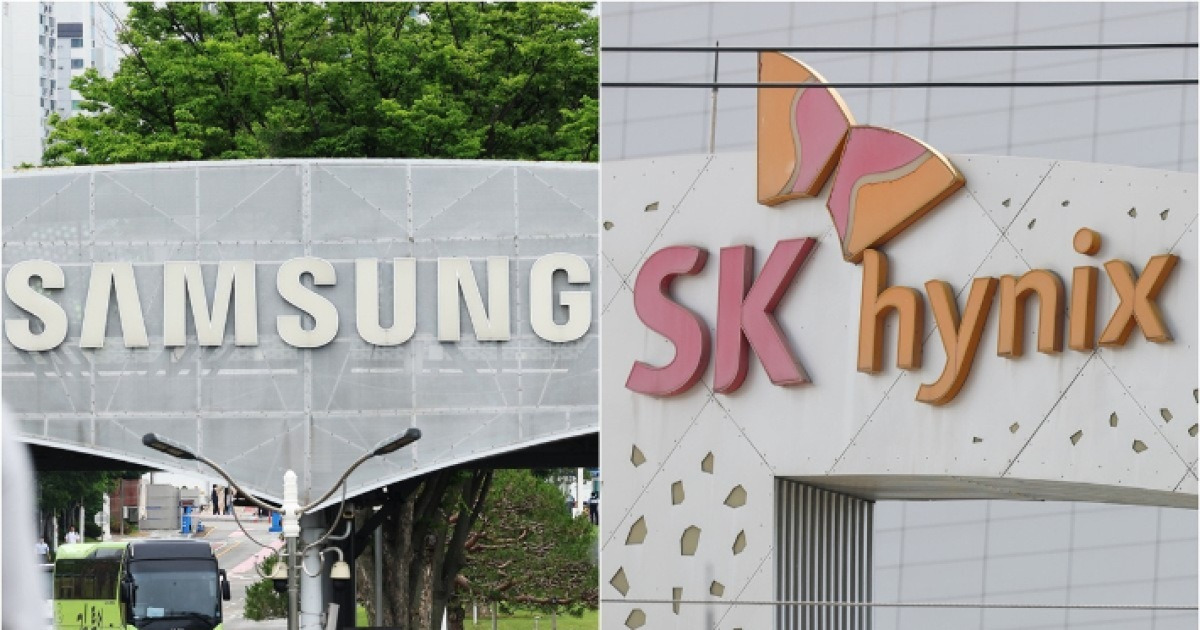
The numbers that changed the board
Micron reported fourth-quarter fiscal 2026 revenue of $5.42 billion — nearly five times the $1.13 billion from a year earlier — with a non-GAAP gross margin of 87 percent and earnings per share of $33.42. The company guided for $6.15 billion in the next quarter, and its CEO Sanjay Mehrotra said 75 percent of 2027 production capacity is already contracted.
But the most consequential line came in the forward-looking comments: Mehrotra expects DRAM and NAND supply to remain tighter than demand in both 2027 and 2028. In an industry defined by boom-and-bust cycles, that is an unusually long runway for optimism. No major memory forecast has stretched this far past the current quarter.
Why this is not just another cycle
The memory business has historically run on a three- to four-year pendulum. Prices spike, everyone builds factories, capacity floods in, prices collapse, and the cycle repeats. What makes this iteration different is the structural demand driver — artificial intelligence.
AI data centers are not incremental buyers. They are voracious. The same advanced wafer capacity needed for high-bandwidth memory (HBM), the specialized DRAM that powers GPU clusters, is also needed for standard DDR5 and enterprise SSDs. Samsung’s own vice president Kim Tae-woo projected that HBM will consume roughly 30 percent of global DRAM wafer capacity by 2027, up from about 20 percent today. That shift is not neutral. Every additional wafer devoted to HBM is a wafer not available for general-purpose DRAM.
TrendForce expects contract prices for mainstream DRAM to rise 10 to 15 percent in the fourth quarter of 2026 alone. Enterprise SSD pricing is projected to climb 15 to 20 percent. The constraint is real and it is not temporary — it is the result of a technology that forces competitors into the same narrow production bottleneck.
The Korean bet
SK Hynix’s profit surged 1,097 percent year over year in its most recent reporting period, and market consensus places its third-quarter operating profit around 77 trillion won — a figure that would be the highest in the company’s history. Samsung’s third-quarter profit is similarly tracked at approximately 108 trillion won, also a record.
Korea’s September export data tells the same story. Semiconductor shipments jumped 262.8 percent to $60.3 billion, pushing the trade surplus past $49.8 billion for the first time in history. The numbers are not close calls. They are declarations.
For decades, the hierarchy of memory manufacturing has been clear: Micron, Samsung, SK Hynix. The gap between SK Hynix and Samsung has been the story of Korean semiconductors. But SK Hynix’s dominance in HBM — it is widely considered the leading supplier to Nvidia’s GPU ecosystem — has shifted the competitive map. If HBM is the scarcest and most profitable memory product in the world, then the company that makes the most HBM wins disproportionately.
That is the thesis behind the SK Hynix rally, and it is not yet priced into global equity valuations. Wall Street analysts tend to evaluate memory companies on backward-looking price cycles rather than forward structural demand. The result is a mismatch between the stock price and the durability of the earnings environment.
Where the supply curve bites
New capacity is not abstract. It arrives on a schedule. Micron’s first Idaho fab is expected to begin wafer production in mid-2027, with the second targeting late 2028. Samsung’s P5 facility in Pyeongtaek is aimed at 2028, though equipment delivery is being accelerated. SK Hynix has moved its first cleanroom opening at its Yongin cluster forward from May 2027 to February 2027.
TrendForce estimates that none of these additions will materially shift the supply-demand balance until 2028. That means the two coming years are effectively unencumbered by new capacity, giving current producers pricing power across a wide window. The next inflection point — when supply could catch up — is likely no earlier than late 2028.
Mehrotra acknowledged the same uncertainty, saying it is unclear when supply and demand will rebalance. That lack of visibility is exactly what keeps contract prices elevated.
Who wins, who loses
The winners are clear: SK Hynix and Samsung, whose capital expenditure plans now have a much stronger return profile than the cycle averages would predict. Also beneficiaries are the equipment suppliers feeding their expansion — Samsung’s accelerator on equipment deliveries is itself a signal that the industry is moving faster than before.
Thelosers are the buyers. Cloud providers, AI startup teams, and any organization running GPU clusters will continue to pay a premium for memory through at least 2028. Microsoft, Meta, and Amazon — all of whom are building AI infrastructure at unprecedented scale — are on the demand side of a shortage that will not loosen soon.
Micron is also a winner, but its advantage is narrowing. The company’s surprise earnings have lifted the entire sector’s valuation floor, and SK Hynix’s HBM leadership means it captures disproportionate upside from the AI demand tail. Micron’s long-term supply contracts rose to $32 billion from $22 billion in June, but those deals lock in price — they do not capture the full spike that HBM pricing can generate.
The risk that no one is pricing
The bull case assumes AI spending does not slow. If cloud capex contracts, or if GPU vendors find alternative memory architectures, the entire demand thesis weakens. There is also the risk that new capacity comes in ahead of schedule — Samsung and SK Hynix are already accelerating — and that supply arrives faster than TrendForce’s timeline suggests.
But the more immediate risk is political. The U.S.-China technology relationship continues to evolve, and any sudden export restrictions on memory sales to China — currently a major destination for Korean semiconductor revenue — would disrupt demand assumptions built into current forecasts.
The bigger picture
What is happening here is not simply a commodity cycle. The memory supercycle is reshaping the balance of power in the global semiconductor industry. For the first time since the 1990s, a Korean company holds a decisive edge in the most strategically important memory product. That edge came from bets placed years ago on HBM technology — bets that the market largely ignored until now.
The next two years will determine whether that lead consolidates or erodes. If supply remains constrained and AI demand keeps growing, SK Hynix and Samsung will accumulate capital at a rate that allows them to fund further expansion without relying on external financing. If demand stalls, the current cycle ends with a harder landing than anyone expects.
Either way, the 2028 inflection point — when new fabs come online and supply finally catches up — will be the moment the market recalibrates. Until then, the memory stocks in Seoul are trading on a story that Wall Street has not fully accepted.