The US Is Weaponizing Diesel — And the World Has Nowhere to Hide
The Trump administration is weighing a diesel export ban to crush domestic fuel prices ahead of the midterms. If enacted, it would be the most aggressive energy-trade maneuver since the 1970s — and Europe faces a shock rivaling the 2022 gas crisis.
The Tap That Could Shut Off
Donald Trump’s administration is reportedly preparing to slam the door on diesel exports — not as retaliation, not as a sanctions tool, but as a domestic price control measure aimed squarely at inflation ahead of the November midterm elections. The stakes are enormous. America is now the world’s largest fuel producer. Closing its taps would be the first time a top-tier energy exporter has weaponized its own supply against the global market in the modern era.
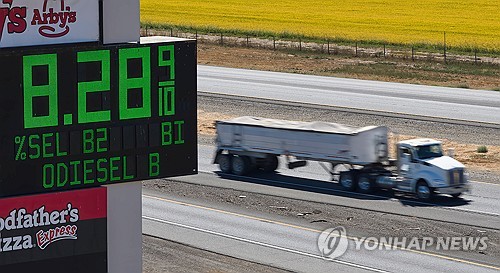
Domestic diesel prices have already surged 70 percent year over year, surpassing $6.50 per gallon at California pumps. That is not an abstract statistic. It is a direct hit to American households and to every sector that runs on diesel — trucks, ships, farms, construction equipment. But the real shock would travel outward. The rest of the world, as Robert McNally of the Roffnan Energy Group told the New York Times, has no option but to absorb the full brunt of whatever price gap opens between American and global markets.
A 1970s-Style Energy Coercion
There has never been a clean parallel for what is being contemplated here. During the 1973 oil embargo, producing nations restricted output to punish political adversaries. This would be different: a consumer nation — the world’s largest energy producer — voluntarily constricting its own export flow to suppress domestic prices. It inverts the logic of energy statecraft.
The mechanism, according to reports, is blunt. The Trump administration has warned the European Union: release strategic petroleum reserves to cushion your own markets, or face a US export ban. It is an ultimatum wrapped in an energy policy. Europe is now convening emergency talks with member states to discuss a response.
The message from Washington is unmistakable. America will prioritize American fuel affordability, even if it forces the rest of the world to compete for scarcer diesel on the spot market. It is economic nationalism at its most direct — and it arrives at a moment when global diesel markets are already fragile.
Who Gets Hit Hardest
Europe is the obvious target of the shock. The continent is still recovering from the aftershocks of Russia’s 2022 invasion and the resulting natural gas crisis that Capital Economics now says could be rivaled by a diesel squeeze. European freight costs, industrial production, and agricultural input prices are all diesel-sensitive. A sudden reduction in transatlantic diesel availability would push those costs higher at a time when European manufacturers are barely holding ground against Asian competition.
Asia would face a more muted direct impact, given the distance and the fact that US diesel shipments to Asia represent a smaller share of total regional supply. But global commodity markets do not respect geography. Diesel is traded on a single marginal price. Any significant withdrawal of American supply reroutes vessels and reruns contracts everywhere. Prices move together. Asia cannot isolate itself from the ripple.
Shipping companies would be the first domino. Global container routes depend on diesel-powered vessel engines. A supply crunch would force carrier decisions — slow steaming, route cancellations, surcharge hikes. Freight rates would follow. Agriculture would feel it next: planting, harvesting, and transport all run on diesel. Food prices, already elevated, would climb further.
The Political Calculus
This is, undeniably, a political move. Midterm elections are months away. Diesel at $6.50 a gallon is a visceral issue for American voters — it touches groceries, commuting, and the cost of everything shipped by truck. The administration is betting that suppressing domestic prices at the margin will buy political credit, even if the broader economic consequences are severe.
But the political math is risky. The Federal Reserve has spent years fighting inflation. An export ban that raises global commodity prices while trying to lower domestic ones sends mixed signals that markets read quickly. It could complicate monetary policy, strengthen the dollar through commodity re-pricing, and invite retaliatory measures from trading partners who see their supply chains disrupted by American policy rather than market forces.
The strategic petroleum reserve angle is also problematic. The US SPR is already a contested resource — released aggressively during the Biden administration’s price controls and now sitting at levels that leave little room for another major drawdown. Asking Europe to release its own reserves shifts the burden but does not create new supply. It simply moves inventory around while demand remains fixed or growing.
What Happens Next
If the ban materializes, expect a rapid scramble. European refiners will compete for non-US diesel cargoes, pulling supply away from other buyers. Asian importers will find themselves squeezed into a rising spot market. Insurance and freight costs will adjust to reflect the new uncertainty.
The EU’s emergency meeting is a signal that Brussels takes this seriously — but the bloc’s options are limited. Europe has spent years diversifying away from Russian gas without fully solving its energy cost disadvantage. A US diesel restriction would reopen that wound at the worst possible time.
For now, the announcement is a threat, not an action. But threats of this magnitude reshape markets on contact. Traders are pricing in the possibility. Supply chains are adjusting their assumptions. The question is no longer whether this could happen — it is how much damage the fear of it causes before a final decision is made.
The era of American energy abundance was supposed to be a net positive for the world. If the Trump administration decides to hold that abundance hostage, the global economy may pay a price far higher than $6.50 a gallon.