U.S. Finally Admits It Has Weapons in Space
The Pentagon's first formal acknowledgment that it has deployed weapons in orbit changes the rules of space deterrence. Here's what Washington's candor means for Beijing, Moscow, and NATO.
The confession no one expected
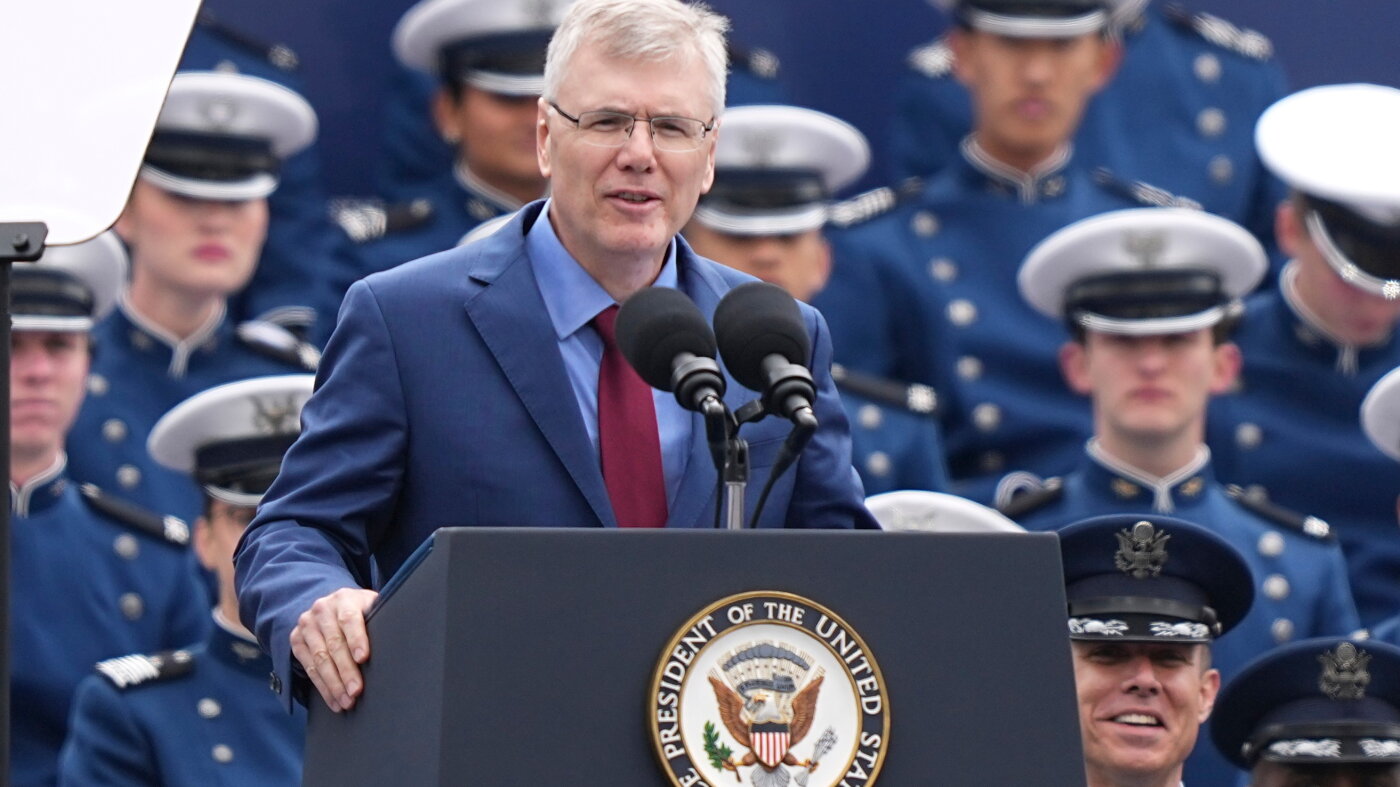
Secretary of the Air Force Troy Meink did not mince words at the Air and Space Forces Association conference last Monday: the United States has fielded “on-orbit space control weapons capable of defending the Joint Force against hostile adversary action.” The sentence was brief. Its implications are not.
This is the first time the U.S. government has formally acknowledged deploying weapons in space. For decades, Washington and its allies have lived under the carefully maintained ambiguity of the 1967 Outer Space Treaty, which designates space as a global commons reserved for peaceful purposes. The treaty bans nuclear weapons but leaves a loophole for conventional weapons — a loophole that has grown wide enough to fly a fleet of satellites through.
What makes this acknowledgment different from past hints and leaks is the precision of the admission. Meink confirmed capability, deployment, and intent simultaneously. The U.S. is no longer probing the edge of legality. It has crossed it on the record.
Deterrence through transparency
Traditional deterrence theory depends on two elements: capability and credibility. The U.S. now has both on display. By confirming space weapons exist and are operational, Washington has shifted from strategic ambiguity to strategic clarity. The message to Beijing and Moscow is blunt: we can hurt you in space, and we will tell you when we have done it.
This is a gamble. Clarity deters, but it also provokes. Adversaries who previously operated under the assumption that the U.S. was years away from orbital weapons now know the clock has stopped ticking. China, which has been building anti-satellite capabilities since the 1980s, will interpret this acknowledgment not as reassurance but as escalation. Russia, which has spent years lobbying at the United Nations for a ban on all space weapons, will see it as hypocrisy confirmed.
The harder question is whether this move strengthens deterrence or weakens it. In nuclear strategy, the paradox of transparency is well known: making second-strike capabilities visible reduces the incentive for a preemptive strike, but it also gives an adversary precise target data. Space weapons face the same paradox. Confirming they exist tells adversaries exactly what to defend against — and what to destroy first in a crisis.
Beijing’s calculus shifts
China’s military modernization has long treated space as a domain of vulnerability. Roughly 90 percent of the PLA’s intelligence, surveillance, and reconnaissance capability flows through satellites. The Chinese navy relies on them for navigation; the rocket force depends on them for targeting.
Washington’s acknowledgment changes the math. If the U.S. can deploy weapons in orbit, China can no longer assume it enjoys a monopoly on space-based strike capability. More importantly, Beijing must now plan for a scenario in which U.S. space weapons could be used offensively — not just defensively, as Meink framed them. The distinction matters. “Space control” is a term that covers everything from jamming enemy satellites to physically destroying them. The line between defense and offense in space is thinner than in any other domain.
China’s response is likely to accelerate its own deployment timeline. The PLA has already tested co-orbital anti-satellite systems and ground-based direct-ascent missiles. Expect those programs to receive more urgency, more funding, and more operational focus. The question is no longer whether China will weaponize space. It is how aggressively it will do so, and whether it will try to strike U.S. assets before they become fully operational.
NATO’s space command wakes up
NATO established its Space Command in 2022, but it has operated in the shadow of national programs — primarily American. The U.S. acknowledgment changes that dynamic. European allies can no longer treat space as an American problem. If Washington is deploying weapons orbitally, the alliance’s shared infrastructure — communication satellites, early-warning networks, intelligence-gathering systems — is now potentially targetable.
Germany, France, and the UK have all begun investing in indigenous space capabilities. France has been particularly aggressive, building a defense satellite constellation and testing anti-satellite technology. But Europe’s programs are small compared to what is coming. The U.S. Congressional Budget Office estimates the Golden Dome missile defense system — which includes space-based interceptors — could cost $542 billion over two decades. That is not a number that invites European free-riding.
NATO members will face pressure to contribute meaningfully to space defense or risk being left behind in a new domain of alliance warfare. The question is whether political cohesion can keep pace with the technical requirements. Space capabilities demand interoperability, shared architecture, and mutual reliance. Those are harder to achieve among allies than against adversaries.
The Golden Dome arrives
Meink’s announcement must be read alongside the Trump administration’s Golden Dome initiative. The president has directed the Pentagon to pursue space-based interceptors and promised the system would be fully operational before his term ends in January 2029. Last year, he stated the system would have the capability to intercept missiles “even if they are launched from space.”
That statement alone is significant. No U.S. administration has publicly claimed the ability to engage objects in orbital trajectory as part of a missile defense architecture. It is a capability that blurs the line between defense and offense in ways that will trouble arms control advocates for years. The $542 billion price tag suggests the Pentagon expects to build something far larger than a satellite kill vehicle — it envisions an orbital presence that can monitor, intercept, and potentially strike in multiple domains simultaneously.
The timeline is aggressive. Two years to go from announced intent to operational capability is fast even by defense-industry standards. If the goal is deterrence, speed matters. If the goal is strategic stability, speed is the enemy.
Who wins, who loses
The immediate winners are the U.S. Space Force and the defense contractors building the systems. Lockheed Martin, Northrop Grumman, and Raytheon will see demand for their space-related portfolios surge. The Air Force gains a new operational domain that justifies expanded budgets and institutional importance. China and Russia lose the informational advantage they enjoyed for decades — the ability to plan for a space environment that America could exploit but not openly arm.
The longer-term losers are less visible. Arms control regimes erode further. The 1967 Outer Space Treaty becomes increasingly irrelevant as major powers treat its restrictions as aspirational rather than binding. New crises become more likely, not because space is inherently more dangerous, but because ambiguity has been replaced by acceleration. Every country that watches Washington’s acknowledgment will feel compelled to respond. None of them will wait.
The next two years will determine whether this moment becomes a ceiling or a floor. If the U.S. can demonstrate that its space weapons serve primarily defensive purposes and integrate them into alliance frameworks, it may carve out a stable, if militarized, equilibrium. If it treats space as another battlefield to be won unilaterally, it will trigger exactly the kind of escalation spiral that deterrence theory warns against.
One thing is clear: the era of pretending space is immune to warfare is over. The U.S. just made sure everyone else knows it too.