US Gas Prices Refuse to Fall — Iran War Is Keeping You Paying More
Labor Day gas prices just hit $4.15 a gallon — the first time ever — and autumn isn't bringing relief. The Hormuz Strait blockade has rewritten the seasonal price cycle, and consumers are the ones footing the bill.
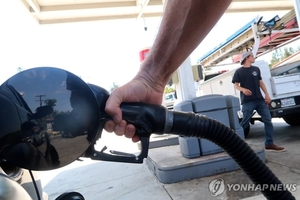
The Price of Driving in America Just Broke a Decades-Old Cycle
For six days each year, Americans traditionally mark the end of summer with a road trip, a barbecue, and an uncomfortably high number at the pump. This year, that number crossed a threshold no one thought they’d see in their lifetime: $4.15 per gallon on Labor Day. The first time in history the holiday price has topped four dollars.
But the real story isn’t the single data point. It’s what comes next.
According to GasBuddy petroleum analyst Patrick De Haan, if geopolitical tensions don’t ease, the September through November window could produce the most expensive autumn on record. That is not a normal fear. In 2022, when Russia’s invasion of Ukraine sent oil prices spiraling, gasoline in the US peaked at $5.02 in June, then fell back to $3.79 by Labor Day. People breathed easier. Prices dropped because the seasonal pattern held — demand softened as summer ended, refineries adjusted, and drivers stopped filling up as eagerly.
This year, that pattern has been surgically removed from the market.
Hormuz Is the Thread That Unraveled Everything
The cause is direct, almost brutally simple. For roughly six months, the United States and Iran have been engaged in mutual military strikes. Through all of it, the Strait of Hormuz — the chokepoint through which roughly 20% of global oil passes — has remained largely blocked. International crude has stubbornly held above $80 a barrel. The shipping lane has not reopened.
That bottleneck does something to American gas prices that most Americans never experienced in the past two decades: it eliminates the seasonal dip. In normal years, fall drives prices down. In this year, the Hormuz blockade guarantees that even as demand softens, supply fears keep the pump price elevated. The math is brutal. Since late February, when the national average sat at $2.98 a gallon, prices have jumped approximately 40% in half a year.
De Haan put it plainly on CNN Business: the longer the US military and Iranian forces continue exchanging attacks, the slimmer the chance of de-escalation becomes. Translation: drivers should brace for more pain, not less.
The Summer Travel Plateau That No One Was Watching
While the headlines focused on the pump price, a quieter signal appeared in AAA’s travel data. Every summer since the pandemic ended, American road travel had climbed year over year — Memorial Day, Independence Day, the July fourth weekend. This year, that growth stopped dead. Memorial Day and July travel were essentially flat compared to 2025 levels.
That stagnation didn’t happen because Americans decided to stop driving. It happened because they couldn’t afford to. $4-a-gallon fuel acts as a tax on every leisure trip, every vacation, every reason to get in a car and leave town. Families recalculated. Trips got shorter. Some got skipped entirely.
What we’re witnessing is a demand-side compression that most analysts overlooked until it was already priced into the market. The summer travel boom didn’t slow because of a recession or a policy change. It slowed because drivers simply ran out of willingness — and ability — to pay.
The Cost-of-Living Squeeze Gets Wider
Gasoline has always been one lever in America’s broader cost-of-living crisis, but it’s no longer pulling alone. Housing costs remain historically elevated. Food prices continue their upward march. Electricity bills carry the weight of energy infrastructure investment and volatile natural gas markets. Gasoline is now layered on top of an already full plate, and the cumulative effect is what economists reluctantly call a cost-of-living spiral.
CNN Business noted that drivers will likely feel the pain well into autumn. That is an understatement. When the seasonal relief that normally arrives in September never materializes, the psychological blow to consumer sentiment is significant. Americans have grown accustomed to the idea that prices might ease after Labor Day. Now that expectation has been broken, and expectations matter as much as numbers in a market driven by confidence.
What Happens Next
The most probable near-term path is a slow bleed. Without a diplomatic breakthrough between the US and Iran, and without the Strait of Hormuz reopening, there is no mechanism to push oil prices significantly lower. That means gas prices remain anchored at or above current levels through the fall.
A secondary scenario — more optimistic but currently remote — would involve a ceasefire or negotiated de-escalation that allows Hormuz traffic to resume at something close to normal levels. Even in that case, the psychological scar on American drivers would linger. The $4.15 Labor Day number will be talked about for years, and it will reshape how Americans think about energy, travel, and the cost of doing things that previously felt routine.
From a market perspective, the implications are already visible. Automakers are feeling the shift toward smaller, more fuel-efficient vehicles at a pace faster than projected. Truck and SUV sales, long the backbone of American auto profits, are encountering headwinds they haven’t faced in over a decade. Insurance, logistics, and freight companies are repricing routes. Airlines are watching domestic vacation demand for early warning signs of further consumer fatigue.
And from a political angle, the numbers are about to become ammunition. When the President faces a voter who cannot afford a commute, the conversation stops being abstract. It stops being about OPEC quotas or Middle Eastern foreign policy and starts being about the price of getting to work.
The Labor Day gas price record was always going to make headlines. What no one expected was for the headlines to be followed by a fall that refused to bring relief.