The $2.8bn Bomb Deal That Rewrites Middle East Rules
Washington is preparing its largest munitions sale to Israel in years — 40,000 two-thousand-pound bombs that bypass normal oversight and signal how far the US will go in backing Israeli operations. The deal reshapes the regional military balance and raises new questions about accountability.
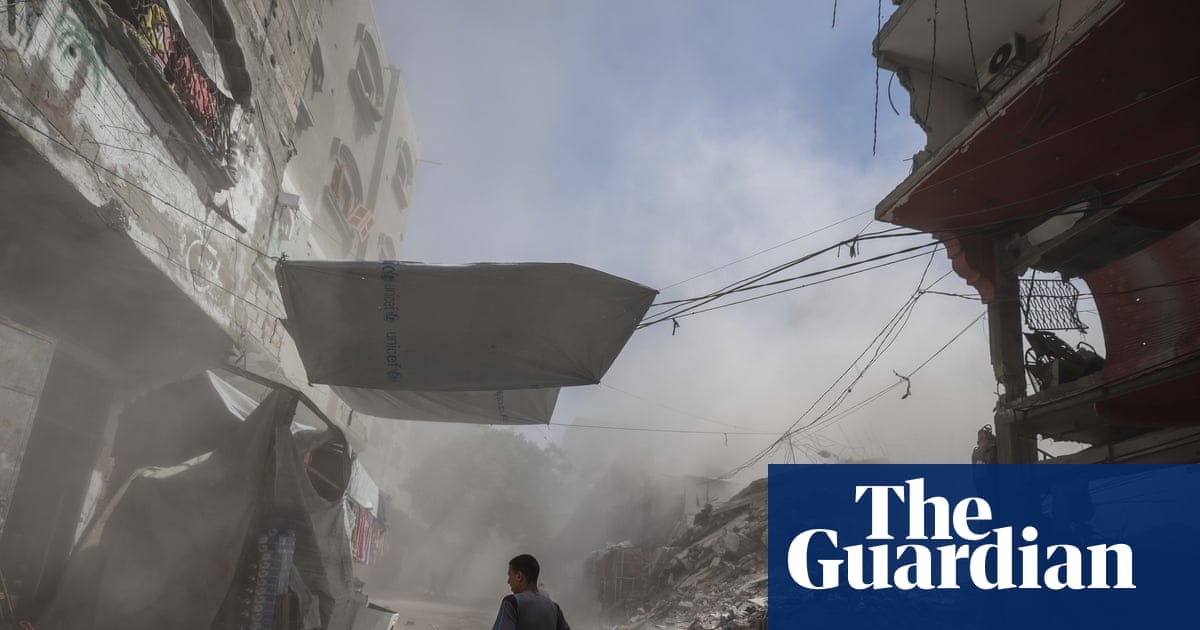
The scale is the story
Forty thousand two-thousand-pound bombs. That is the number at the center of a $2.8bn arms deal between Washington and Israel that, by almost any measure, represents the largest such munitions transfer in years.
Twenty thousand of those are MK-84 general-purpose bombs. The other 20,000 are BLU-117 variants, designed to penetrate hardened structures before detonating. Both types have already been dropped hundreds of times in Gaza and Lebanon. This is not a future capability. It is an intensification of something already happening.
The deal, first reported by the Washington Post and confirmed to The Guardian by two US officials and a person familiar with the plan, is not yet final. Congress has been informally notified. Most of it will be funded through Foreign Military Financing — meaning American taxpayer dollars are effectively being loaned to Israel to buy weapons from American manufacturers. The circular nature of the transaction matters: it is a subsidy wrapped in the language of commerce.
How fast the pivot happened
The timeline tells you everything about the current posture.
When Donald Trump returned to office in early 2025, he lifted a hold on one shipment of MK-84 bombs that the Biden administration had imposed in 2024 over concerns about their use in Gaza. Within months, the Trump administration bypassed normal congressional review and approved nearly $3bn in arms — including more than 35,500 of the same bombs. In January, it added another $6.67bn in sales. And now comes the $2.8bn package, bringing the cumulative total well past $12bn in a single presidential term.
The Biden pause was brief and partial. It covered one shipment, not the pipeline. Two years later, the Trump White House has not merely restored what was held back — it has multiplied it.
What the bombs actually do
The MK-84 is a 2,000lb unguided gravity bomb with a warhead containing roughly 420lb of high explosive. It is cheap, mass-produced, and devastating at range. When dropped on urban areas, it can level entire city blocks.
The BLU-117 is the variant most relevant to Israel’s stated target set. It is a penetrator bomb, built to punch through reinforced concrete and underground structures before exploding inside. That makes it useful against tunnel networks — which is exactly how Israel has described the primary purpose of its strikes in Gaza.
But penetrating bombs do not respect the distinction between a Hamas command center and the apartment building above it. Trevor Ball, a former US Army explosive-ordnance-disposal technician who analyzes strike footage, told the Post that Israeli forces routinely use MK-84s to bring down whole buildings when pursuing suspected militants. “If Hezbollah or whoever is in a building, an MK-84 will bring down the whole building,” he said.
That describes a pattern, not an exception. The New York Times reported in late 2023 that Israel had designated areas of Gaza as “safe” for civilians while simultaneously dropping MK-84s on those same areas. The implication was blunt: the safe zones were safe from everything except American bombs.
Who wins and who loses
Winners on paper are easy to name. The US defense industry — Lockheed Martin, General Dynamics, the contractors who assemble and maintain these ordnance lines — sees another multi-billion-dollar revenue stream. Israel’s military capacity is reinforced at a moment when its ammunition stocks have been heavily drawn down across two theaters. The strategic alignment between Washington and Jerusalem hardens further, with no meaningful conditionality attached.
The losers are harder to quantify because they are mostly absent from the room where this decision was made. Palestinian civilians in Gaza, where the health ministry reports more than 73,000 killed since October 2023. Civilians in Lebanon, where similar bombs have been used extensively. The fragile ceasefire that Washington brokered has already been violated multiple times, and this deal makes any future enforcement more difficult, not easier.
Regional allies are the wildcard. Gulf states that have quietly accepted US arms deliveries to Israel now face a reality in which American munitions are being funneled at an accelerating pace into a military that has used them repeatedly against civilian populations. That creates political friction Washington would prefer to avoid. Iran watches and recalculates.
The oversight that almost did not happen
Perhaps the most striking feature of this deal is how little formal scrutiny it is receiving. The nearly $3bn sale last year bypassed normal congressional review. That precedent makes it easier to move the current package through quickly. The informal notification to Congress — not a formal request, not a waiting period, just a heads-up — is a procedural choice, not an accident.
This is a recurring pattern in the Trump administration’s Middle East policy: speed over process, certainty over accountability. The legal framework for arms sales exists precisely to create friction, to force a debate about whether the weapons will be used lawfully and whether the buyer is a responsible steward. Both questions are politically toxic for the current White House. So the friction is reduced.
What comes next
The war on Gaza has not ended. The ceasefire holds only intermittently. Israel has made clear it retains the right to resume operations, and the timing of this deal suggests Washington is preparing for exactly that scenario.
For Iran, the signal is unambiguous: the United States is doubling down on Israel’s qualitative military edge, regardless of the cost in civilian life or the damage to America’s standing in the region. For Gulf partners, it is a reminder that their security guarantees from Washington remain conditional on their public compliance with Israeli priorities.
For Palestinians in Gaza, it means the next round of destruction will arrive with American bombs, funded by American money, approved without American debate.
The numbers tell the story. Forty thousand bombs. Over $12bn in total sales this term. More than 73,000 dead. None of these figures are projections. They are records. The question now is not whether this deal will change the balance of power in the Middle East — it already has. The question is who pays the price for that shift.