U.S. Loses Measles Elimination — A Warning for the World
The U.S. has lost its measles elimination status for the first time in 25 years, recording over 5,400 cases this year alone. What happened here should alarm every country watching vaccine confidence unravel.
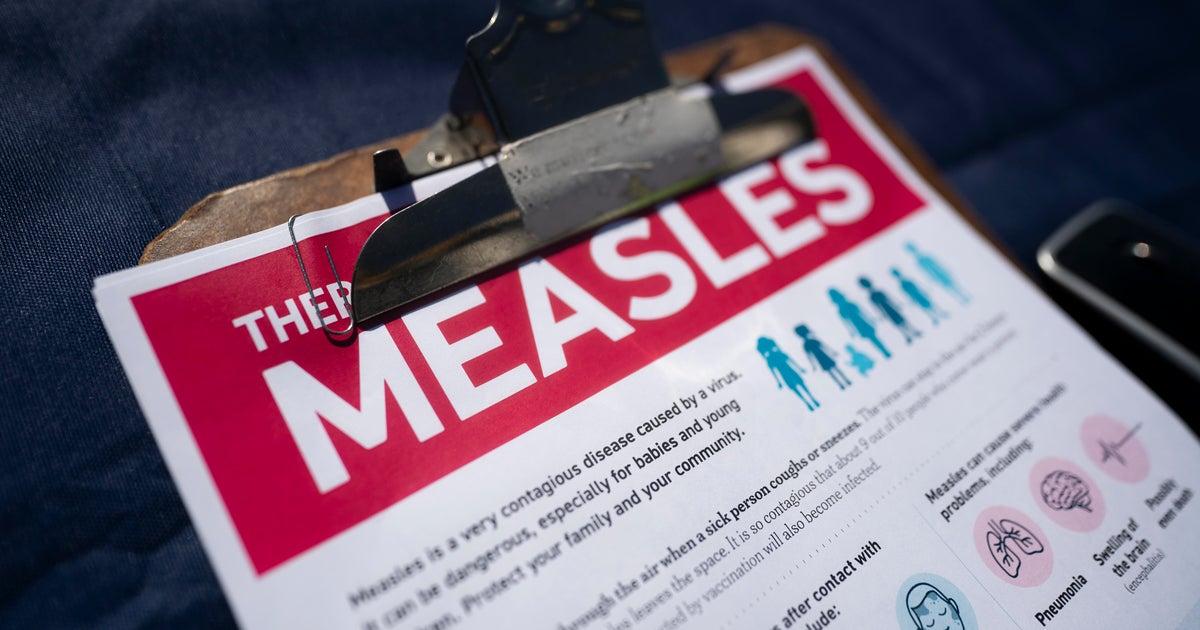
The U.S. Has a Measles Problem Again
For the first time since 2000, the United States no longer qualifies as a country that has eliminated measles. The Pan American Health Organization, the WHO regional body covering the Americas, made the call after the U.S. tallied more than 5,400 cases this year — more than double the 2,242 recorded in all of 2025, already the worst year in three decades.
The number feels almost abstract until you read past it. There have been at least six measles-related deaths. Pennsylvania has reported more than 1,500 cases and seven deaths. Cases have turned up in 45 states and Washington, D.C. Nearly all infected were unvaccinated. A third of this year’s cases are tied to outbreaks that began in 2025 and have refused to stop spreading.
This is not a developing-world crisis. It is happening in the richest country on earth, where the measles vaccine is cheap, widely available, and 97% effective per dose. The tools exist. They are simply not being used.
What Losing Elimination Status Actually Means
“Elimination” does not mean zero cases. It means there is no sustained local transmission lasting more than twelve months. The U.S. held that standard for twenty-five years, even through notable flare-ups — the 2015 Disneyland outbreak traced to international visitors, the 2018–19 New York cluster that required emergency restriction of vaccine exemptions. Each was contained. This year, containment is failing.
According to Dr. Céline Gounder, CBS News’ medical correspondent, when population immunity drops below the threshold needed to interrupt chains of transmission, the virus stops being an imported curiosity and starts behaving like a permanent resident. That is what has happened here. And it carries consequences that reach well beyond American borders.
The technical distinction matters because it signals a structural shift, not a temporary setback. Once local transmission persists beyond a year, the virus establishes itself in vulnerable communities the way water finds cracks in a foundation. Removing it requires far more effort than maintaining the barrier would have.
Why Every Country Should Be Watching
The U.S. has long served as both exporter and benchmark for vaccine policy. When Americans lose faith in a vaccine, that skepticism travels fast — across oceans, through diaspora networks, via social media algorithms that do not distinguish between a Houston clinic and a Lagos hospital. The post-pandemic erosion of vaccine confidence was always going to surface somewhere. The fact that it surfaced first in the country with the most media reach is not accidental.
Globally, the message is harder to ignore now because the World Health Organization had staked credibility on the idea that measles elimination was sustainable. Twenty-seven countries worldwide have already lost their elimination status, according to WHO reporting, but the U.S. holding out for a quarter-century gave the campaign symbolic weight. Losing it undermines that narrative at a moment when low- and middle-income countries are still fighting to maintain the 95% coverage thresholds the WHO recommends.
Dr. Omer Awan put it plainly: “It’d be one thing if we didn’t have the tools to fight this, but the tools are at our disposal, we just aren’t using them.”
The second-order effects are already visible. International travel corridors are tightening screening protocols. Some airlines have added vaccination verification questions to booking flows. Pediatric clinics in Europe and Asia are reporting increased demand for MMR booster doses from expatriate communities concerned about returning home. The contagion is no longer just biological — it is institutional, shaping how health systems respond to perceived risk even when that risk may be overstated in specific contexts.
The Policy Slide Is Real — And Reversible
What makes this especially frustrating is how directional the decline has been. In 2025, nine states made it easier to opt out of school vaccination requirements. Where states ended nonmedical exemptions, kindergarten vaccination rates rose two to four percentage points — enough to matter at population scale. Legislatures reconvene in January. The exemption rules written next year will shape outbreaks for years after that.
There is a direct line from state legislatures to measles deaths. Pennsylvania’s outbreak is the clearest proof. So is the data showing that 96% of this year’s cases occurred in people who were unvaccinated or unsure of their status. Only 2% were fully vaccinated. The virus is not finding new hosts; it is finding empty ones.
But the reversibility cuts both ways. States that tightened exemptions saw immediate improvements. Connecticut, which closed its personal belief exemption in 2019, watched kindergartener vaccination rates climb from 93% to nearly 98% within three years. Mississippi, which maintains the strictest exemption policies in the nation, continues to rank among the lowest in childhood immunization coverage. The policy lever works — the question is whether governments choose to pull it.
Who Pays the Price
Measles is among the most contagious diseases known to medicine. One infected person can pass it to fourteen others in a susceptible crowd. Most people recover, but the complications are brutal: pneumonia, encephalitis, permanent cognitive damage, deafness. Some cannot be vaccinated at all — infants too young for the MMR shot, pregnant women, people with weakened immune systems. They depend entirely on the people around them staying protected.
When herd immunity frays, those vulnerable groups bear the brunt. Awan flagged exactly this dynamic. They are the ones who will get sick when outbreaks persist. They are the ones whose hospitals fill up. They are the ones counted in the death toll that has already passed six and could climb.
The financial burden falls disproportionately on families without resources to absorb it. Hospitalizations for measles cost an average of $30,000 to $50,000 per patient. Emergency isolation protocols disrupt schools, workplaces, and community gatherings. Contact tracing teams — already stretched thin after years of pandemic fatigue — must reroute personnel from other priorities. The outbreak economy extends far beyond the clinical cases recorded by any single health department.
What Comes Next
Regaining elimination status requires the same ingredients any country needs: vaccination rates above 95%, surveillance sharp enough to catch importations early, laboratories ready to confirm cases within hours, and a rapid response mechanism that moves before an outbreak becomes an epidemic. The U.S. has most of this infrastructure. It has simply been allowed to atrophy politically.
The window to close it is narrowing. Outbreaks stretching back into 2025 are still active. If they carry into next year without significant intervention, the statistical and political reality may harden further. State-level policy shifts — tightening or loosening exemptions — will determine how fast recovery happens, and whether the U.S. posture changes the calculus for other nations wrestling with their own confidence crises.
International health bodies will be watching closely. The WHO’s next global measles report will carry a different tone if the U.S. remains in active outbreak mode. Funding allocations, technical assistance priorities, and diplomatic pressure will all adjust accordingly. Other nations facing their own exemption debates — India, Nigeria, Brazil, France — will measure their own trajectories against America’s collapse and draw their own conclusions.
Measles was declared eliminated in the U.S. forty-six years ago. It is back. Not because science failed, but because trust did. The path forward is unchanged from what it was a quarter century ago: vaccinate the susceptible, isolate the infected, trace the contacts, and protect the vulnerable. The difficulty was never in knowing what to do. It was in doing it consistently, despite noise, distraction, and political headwind. That discipline has eroded. Restoring it is the real work ahead.