US Mediation Fails to Stop Kyiv Drone Strike
Trump's envoys meet Putin then Zelenskyy amid ongoing fighting, revealing the fragility of European defense planning and the limits of bypassing NATO allies.
The Washington Shortcut That Left Europe Behind
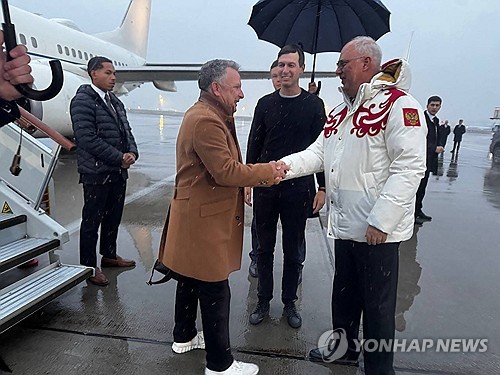
Jared Kushner arrived in Moscow on November 12 to meet Vladimir Putin — not as a president, but as Donald Trump’s personal envoy. He was joined by Steve Witkoff, the real envoy tasked with brokering the kind of trilateral breakthrough that European capitals have been too slow to engineer themselves. Two days earlier, in Abu Dhabi, the same pair had mediated ceasefire talks between Russia and Ukraine. Within hours of returning to Moscow, one Ukrainian civilian was killed when a Russian drone struck a nine-story building in Kyiv.
The timing is not accidental. It is diagnostic.
Who Gains When the US Circumvents Europe
Kushner told reporters that the sequential meetings with Russian and Ukrainian leaders were “to achieve more progress on some issues we discussed,” adding that “some breakthroughs and opportunities are visible” in those areas. What he did not say — what the White House has refused to clarify publicly — is that Europe was not consulted before the Abu Dhabi talks began, and remains outside the Moscow-Dublin corridor that Kushner is now tracing.
This is the quiet crisis underneath every diplomatic headline: the United States can still make phone calls that shape outcomes on Ukraine, and Europe has not built the architecture to respond.
Nine months after the last serious negotiation attempt, Kushner and Witkoff are retracing a path that reveals everything about the fragility of European defense planning and the limits of bilateral diplomacy pursued without multilateral scaffolding. The core tensions remain unresolved — the US, Europe, Russia, and Ukraine agree on the need to discuss security guarantees, but disagree on procedure, mechanism, and pace. Europe insists on a ceasefire first; Russia refuses. Fighting continues anyway.
The second-order consequences are already materializing beyond the immediate venue. European defense ministers, many of whom learned of the Abu Dhabi meeting through press reports rather than diplomatic channels, are convening emergency sessions this week. Poland, the Baltics, and Finland share a common anxiety: every instance of Washington operating independently erodes Brussels’ negotiating leverage within its own alliance. Germany has quietly accelerated discussions on strategic autonomy within the EU framework, while France is pushing for a dedicated European rapid-response diplomatic corps capable of deploying before American envoys reach foreign capitals.
The Numbers Behind the Headlines
On November 12, a Russian drone attack hit Kyiv’s capital, destroying a nine-story building and killing one person. Russian regional authorities reported shooting down five drones overnight targeting Moscow and Tula. Two days earlier, in Abu Dhabi, Kushner and Witkoff had mediated trilateral ceasefire discussions. Within hours of departing Moscow for Dublin to meet Volodymyr Zelenskyy, the cycle repeated itself.
The arithmetic is stark: nine months of diplomatic stagnation broken by a single trilateral push that produces no operational pause. The United States moves faster than NATO’s security architecture can respond. Europe watches from the sidelines of its own continent.
What makes these numbers compounding rather than merely repetitive is the pattern they describe. Each abortive negotiation cycle strengthens Moscow’s position incrementally — not through military gain alone, but through diplomatic exhaustion. Western audiences grow accustomed to news of stalled talks while frontline conditions deteriorate. Supply chains for ammunition and air defense continue straining under demand that outpaces production timelines. Every month without a negotiated framework extends the window during which territorial adjustments become irreversible facts on the ground.
Ukraine’s defense ministry released figures showing that drone strikes across eastern and central regions increased forty percent in the three weeks preceding Abu Dhabi. Infrastructure damage alone exceeded estimates that NATO analysts had projected would persist through winter at current rates. The humanitarian dimension — displacement of an additional thirty thousand civilians in recent months, hospital capacity reduced below pre-invasion levels in several Donetsk districts — compounds pressures that any eventual negotiation must address.
Who Loses When Diplomacy Bypasses Institutions
Zelenskyy will meet Kushner in Dublin, but the format matters. When the US negotiates directly with Russia — president to president’s envoy, no EU delegation present — it signals that European security architecture remains unfinished. The institutions built over decades of post-Cold War integration exist, but they have not produced the operational capacity to match American diplomatic velocity when Washington chooses to move outside NATO frameworks.
Kushner described the negotiations as seeking “more progress on some issues we discussed,” noting that “some breakthroughs and opportunities are visible.” What he omitted — what the Russian source material confirms silently — is that Europe was not invited to Abu Dhabi, and remains excluded from the Moscow-Dublin sequence now underway.
The broader implication is structural, not circumstantial: if the United States can broker trilateral deals without fully integrating European partners, Europe has not completed the architecture required to survive American diplomatic pivots. Nine months after the last serious negotiation, the US returns to a path that bypasses NATO — and Europe has not finished building the defenses to compensate.
The erosion extends beyond institutional credibility. Market reactions tell part of the story. European energy futures rose modestly following reports of the Abu Dhabi session, reflecting investor recalibration of risk premiums associated with protracted conflict scenarios. Insurance adjusters representing industrial operations across Central Europe have begun flagging extended war-exposure clauses in renewed contracts. Defense contractors report procurement accelerations ordered not just by governments but by private sector clients seeking to hedge against policy unpredictability.
Perhaps most consequential is the precedent effect on other theaters. Chinese officials tracking these developments have noted the operational template — bilateral American mediation bypassing multilateral consultation frameworks. Regional stakeholders from the South China Sea to the Sahel now calculate that Washington may pursue parallel tracks elsewhere, reducing Beijing’s ability to coordinate responses through established alliance architectures. The normative boundary between acceptable bilateral engagement and institutional exclusion continues to blur with each new diplomatic circuit.
What Happens Next in the Moscow-Dublin Corridor
Kushner and Witkoff will complete their Moscow meeting and fly to Dublin, where Zelenskyy awaits. The substance on European security guarantees faces disagreement across the table — the US, Europe, Russia, and Ukraine align on principle but diverge on procedure, mechanism, and timeline. Europe insists on ceasefire-first; Russia refuses. Fighting continues regardless.
The fragile trilateral push exposes a reality that European defense planners have deferred too long: the institutions built since 1991 exist on paper but lack operational depth when Washington acts unilaterally. Nine months after the last negotiation attempt, the US resumes diplomacy outside NATO frameworks. Europe has not completed the architecture needed to respond.
Several scenarios crystallize from Dublin onward. If successful, the resulting agreement could establish a monitored ceasefire zone along current contact lines — something both Kyiv and Moscow have publicly rejected until now. Such a framework would likely require verification mechanisms involving Turkish or Qatari observers, creating a model for future engagement that deliberately sidesteps EU structures already strained by competing priorities from the Balkans to North Africa.
If it fails — and early indicators suggest limited alignment on core terms — the next round of talks could slip into spring, compressing the diplomatic window while military dynamics shift further. Winter offensive preparations would consume the remaining negotiation period, and any agreement reached might reflect battlefield realities rather than political compromise.
The third scenario deserves equal attention: partial delivery. A narrow arrangement addressing prisoner exchanges or humanitarian corridors while leaving territorial questions and security guarantees indefinitely postponed. This outcome would satisfy no party completely but would provide temporary pressure relief sufficient to alter domestic political calculations in Washington, Kyiv, and Moscow alike.
Regardless of which path emerges, one structural consequence is already locked in. European leaders who attended the Abu Dhabi proceedings indirectly — through leaked documents and delayed diplomatic cables — have accepted that transatlantic coordination gaps represent a permanent feature rather than a temporary malfunction. The question now is whether Brussels treats these gaps as problems to be engineered around or threats to be formally addressed through institutional reform.
The answer will determine whether subsequent US-mediated engagements reinforce or further fragment the collective defense project that defined European security architecture for three decades. No amount of rhetorical commitment to transatlantic solidarity can substitute for operational readiness when alternative diplomatic channels open simultaneously alongside established alliance frameworks. The Moscow-Dublin route tests exactly how much redundancy exists in systems designed assuming predictable American participation through institutional gateways rather than personalized emissaries navigating directly between adversarial capitals.
What emerges from Dublin will reveal whether the European security project survives the American shortcut, or whether bypassing multilateral institutions leaves a vacuum only bilateral deals can fill — at what cost to the transatlantic alliance, and at what price to the very concept of collective defense.