US Semiconductor Tariffs Could Rewrite Samsung and SK Hynix's US Playbook
The Blue House is scrambling to shield Korean chipmakers from proposed US tariffs. But the real story isn't diplomacy — it's what happens when Samsung and SK Hynix are forced to pick between America's market and America's factories.
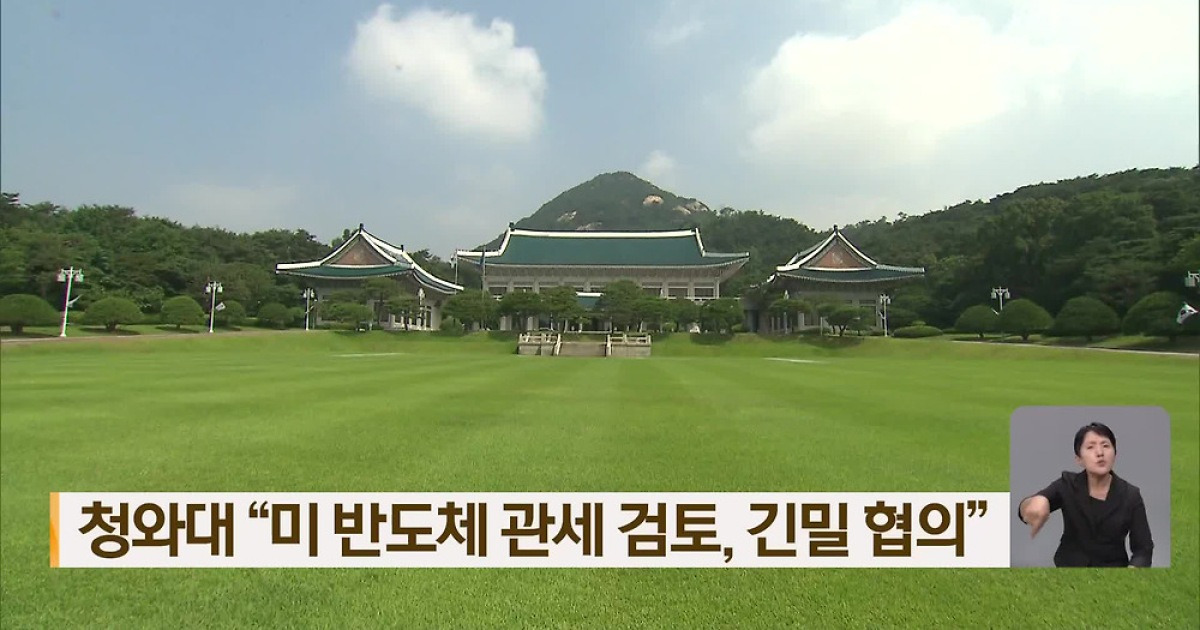
The Blue House Is Already Nervous
The Korean presidential office dropped a brief statement on September 3 that read like a diplomatic warning shot: Washington is reviewing new semiconductor tariffs, and Seoul will coordinate closely to ensure Korean companies aren’t disadvantaged. The specific terms haven’t been finalized, a White House official told reporters.
That hedge — “not yet confirmed” — is itself telling. The US Commerce Department has already previewed the framework: target tariffs on chips not manufactured on American soil. The message is blunt. Build in America or pay.
For South Korea, this isn’t abstract trade policy. It’s an existential question for two companies that collectively dominate the global memory-chip market. Samsung and SK Hynix together account for roughly 70 percent of worldwide DRAM and around 60 percent of NAND flash. They also have billions of dollars in US operations already underway or planned.
Who Gets Hit First
Korean memory-chip makers already operate fabs in the United States. Samsung has a facility in Austin, Texas, that it expanded into a major production site. SK Hynix built a fabrication plant in Hillsboro, Oregon, which became one of the largest advanced-memory factories outside Asia. These facilities produce chips sold into the American market and beyond.
Under a tariff regime that taxes chips regardless of where they’re ultimately used, those US fabs lose their protective buffer. The logic of the CHIPS Act subsidy model was simple: build here, and you get money instead of tariffs. A targeted tariff flips that equation — suddenly the American footprint becomes a taxable event rather than a strategic asset.
The immediate casualty would be margin. Memory chips are a commodity business where a single percentage-point change in landed cost shifts market share between Samsung, SK Hynix, and Micron. A tariff applied selectively to non-US production — or conversely, a tariff that penalizes all imported advanced chips including those made in Texas and Oregon — creates a lose-lose for Korean firms regardless of how they structured their American presence.
The Investment Dilemma
Here is where the Blue House’s quiet panic makes sense. Samsung and SK Hynix face a structural contradiction that didn’t exist five years ago.
On one side, American incentives are pulling them deeper into US manufacturing. The CHIPS Act offers billions in grants and loan guarantees for building and operating semiconductor fabs on American soil. Samsung has committed to spending over $17 billion on its Texas complex. SK Hynix has invested several billion in Oregon and announced plans for additional capacity. Both companies see the US market as strategically indispensable.
On the other side, a tariff that targets foreign-made chips — even those produced inside the US by Korean firms if the rules are written broadly enough — could erase the economics of those investments. The math gets brutal fast. A memory fab running at full utilization burns through hundreds of millions in annual operating costs. Add a tariff layer on top and the return on a $17 billion commitment starts looking like a hostage negotiation.
The worst outcome for Seoul isn’t a tariff on chips made in Korea. It’s a tariff on chips made in America by Korean companies — a scenario that would effectively tax Korean capital twice, once for being Korean and again for not being American enough.
What Washington Is Really Doing
The target-tariff language from the Commerce Department signals something deeper than trade enforcement. It’s industrial policy with teeth. The US doesn’t just want Korean fabs on American soil; it wants Korean dependence on American manufacturing. A tariff regime that penalizes production outside the US creates a coersion mechanism that subsidies alone cannot achieve.
Micron, the only American memory-chip maker, benefits immediately from any framework that raises the cost of Korean competition. The geopolitical alignment is clear: weaken the Korean duopoly’s price advantage, accelerate onshoring, and ensure that the next generation of advanced memory — critical for AI data centers, defense systems, and autonomous vehicles — flows through American supply chains rather than Seoul’s.
This isn’t speculation. The CHIPS Act already embeds clawback provisions that prevent companies from expanding advanced production in China for a decade. A tariff regime extends that logic globally, turning the subsidy stick into a tariff hammer.
What Samsung and SK Hynix Will Do
The Korean response will likely unfold in three phases.
First comes the diplomatic channel. The Blue House statement was the opening move — signal cooperation, warn against disproportionate impact, keep the lines open. Seoul will argue that Korean memory firms are American employers with American stakeholders, and that punishing them under a tariff regime harms US downstream industries too.
Second comes the financial recalibration. If tariffs materialize, both companies will urgently reassess the unit economics of their US fabs. Samsung may accelerate its Texas expansion to lock in CHIPS Act subsidy commitments before tariff rules finalize. SK Hynix could restructure its Oregon operations to prioritize memory products that qualify for exemptions — likely the most advanced nodes where US production capacity is thinnest and American leverage is highest.
Third comes the strategic pivot. If the tariff landscape makes US production economically unviable for certain product lines, Samsung and SK Hynix will redirect capital elsewhere. Taiwan is the obvious alternative — TSMC’s ecosystem is mature, the talent pool is deep, and the geopolitical risk calculus is different. But Taiwan isn’t free of its own vulnerabilities. Japan and Europe remain distant third choices.
Who Wins and Who Loses
Micron wins. Any tariff that raises the landed cost of Korean memory chips improves Micron’s competitive position in the most profitable segment of the semiconductor industry. The question is whether Washington is willing to accept higher chip prices for American AI and defense buyers as the cost of achieving supply-chain sovereignty.
Korean taxpayers lose. The government has been subsidizing Korean chipmakers’ global expansion for decades. A tariff regime that forces those companies to absorb higher costs or relocate production destroys the value of that public investment without creating new domestic jobs — because the fabs would likely move to Taiwan, not disappear.
American consumers and tech companies lose in the medium term. Memory chips are foundational inputs. Higher prices cascade through every device, every data center, every AI training run. The US AI industry, which depends on massive memory capacity, faces a direct cost increase from policies designed to strengthen American manufacturing.
What Happens Next
The Blue House is monitoring closely. That’s the diplomatic posture. The operational reality is that Samsung and SK Hynix are already running scenario models on what their US operations look like under different tariff structures. Those models will determine whether the next major capital expenditure goes to Texas, Taiwan, or somewhere else entirely.
The tariff review is still in progress. The specifics remain unclear. But the direction is set. Washington has chosen to use market access as a lever for industrial policy, and Korea’s two most valuable companies are now sitting on the other side of it.
The question isn’t whether Seoul will negotiate. It’s whether negotiation can change an American strategy that views Korean semiconductor dominance as a vulnerability rather than an alliance asset.