The US Just Struck Iranian Tankers — Global Oil Markets Are Now on Alert
The US has bombed Iranian government-owned oil tankers in the Hormuz Strait in a retaliation the Pentagon calls a "tanker-for-tanker" policy. The move marks a qualitative shift in how Washington enforces maritime blockades — and sends shockwaves through energy markets that Korea and the rest of Asia depend on.
A Doctrinal Shift in the Strait
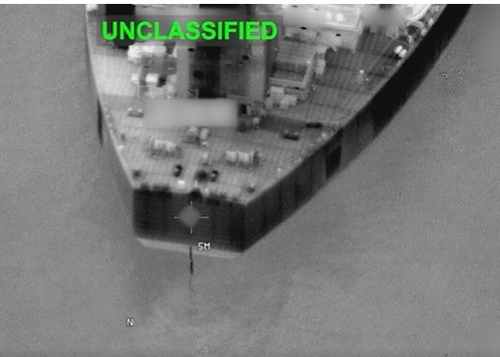
On September 1, US forces struck two Iranian government-controlled oil tankers anchored near the Iranian coast in the Hormuz Strait. The Pentagon confirmed the strikes were authorized by President Donald Trump and described them as the first salvo of a new “tanker-for-tanker” policy — a doctrine that treats Iranian maritime aggression not as a law-of-the-sea violation but as an act of war against commercial shipping, answered by targeting the adversary’s own commercial fleet.
This is not a minor escalation. It is a redefinition of how the US enforces its maritime blockade of Iran. Previously, Washington responded to Iranian attacks on commercial vessels by striking IRGC assets, naval platforms, or coastal missile sites — infrastructure aimed at enabling attacks. Striking an Iranian-owned tanker itself is qualitatively different. It signals that the US is now willing to treat Iranian state-owned commercial shipping as a legitimate military target, effectively blurring the line between civilian commerce and state combatant in the strait.
The Numbers Behind the Strike
According to Axios, US drone-fired missiles hit the engine rooms of both tankers while they were anchored north of the US maritime blockade line, closer to Iranian territorial waters. The strikes were part of a broader campaign that hit approximately 100 targets across Iran, including IRGC positions.
Iran’s response was measured but vocal. The Islamic Revolutionary Guard Corps claimed to have launched roughly 25 ballistic missiles toward Jordan, though US and Jordanian officials reported that only about half reached Jordanian airspace and 10 were intercepted. Three missiles struck Jordanian territory without causing damage, according to US officials.
Iranian state media, via Tasnim News Agency, declared that a “decisive operation” against US targets had begun, with missiles and drones aimed at American military bases and key facilities across the region.
Why This Matters for Korea and Asia
Korea is not a party to the conflict, but it is one of the world’s most exposed economies to a disruption in the Hormuz Strait. Roughly 70 percent of South Korea’s crude oil imports transit through the strait. Every day of heightened risk in Hormuz is a direct hit to Korean refinery margins, logistics costs, and ultimately consumer prices. Korean shipping companies like HD Hyundai Heavy Industries and the major container lines are also exposed through rerouting premiums and insurance spikes that follow any escalation in the Gulf.
More pointedly, some Korean shipping firms have historically operated vessels that transited Iranian waters or handled cargoes linked to Iranian state interests. While no Korean-owned vessel was identified as among the two struck, the precedent being set — that Iranian state-owned tankers are now fair game for US strikes — changes the risk calculus for every Asian buyer and insurer that has ever handled Iranian crude. Risk premiums on Hormuz transit will climb, and those premiums are borne by everyone who moves energy through the strait, not just the belligerents.
Japan, Taiwan, and China face similar exposure. Together, these three economies import roughly 60 percent of the world’s seaborne crude, and the overwhelming majority of it passes within 30 nautical miles of the same waters the US just weaponized against Iranian commercial shipping.
The One-Month Clock
US Central Command officials told reporters that the strikes significantly degraded Iran’s ability to threaten commercial shipping through Hormuz, and that the threat level from Iranian attack boats, mines, and missile teams would remain suppressed for at least a month. That timeline matters because it establishes the first window in which global energy markets can recalibrate without immediate panic — and also the window in which Iran will be most motivated to find alternative ways to reassert pressure, whether through proxy attacks, mine warfare, or asymmetric strikes on nearby allies.
The fact that US officials framed the operation as degrading rather than destroying Iran’s naval capability is telling. This was not designed to end the conflict. It was designed to reset the cost-benefit calculation for Iranian maritime aggression — and to test whether other Asian importers would absorb the resulting price volatility rather than push diplomatically for de-escalation.
Who Wins and Who Loses
Washington wins credibility with its Gulf partners and sends a message to Tehran that commercial shipping tied to the Iranian state will no longer enjoy protective ambiguity. Iran loses tangible assets — two tankers, likely significant IRGC operational capacity in the strait, and its claim that it can attack shipping with impunity without suffering direct commercial consequences.
But Iran also gains a propaganda narrative: the US is now bombing Iranian civilian-appearing vessels in international straits, which fits a longstanding Iranian frame of American aggression against the global south. Expect that frame to resonate in capitals from Beijing to New Delhi, where governments have been careful to avoid outright alignment with Washington on Iran.
Asian importing nations lose in the short term. Insurance rates spike, freight rates climb, and any supply disruption — even a temporary one — translates directly into higher input costs for their manufacturing bases. The longer-term loss is the erosion of the principle that state-owned commercial vessels deserve protection in contested waters, a principle that has underpinned global shipping stability for decades.
What Comes Next
The Trump administration has signaled this is a policy, not a one-off strike. If the “tanker-for-tanker” doctrine holds, the next Iranian move against a US-allied or Western-linked vessel could trigger another round of strikes on Iranian commercial shipping — potentially larger, potentially including choke-point infrastructure beyond tankers.
Iran’s own statements about a “decisive operation” suggest it is already planning responses beyond the strait. The risk is not just continued disruption of Hormuz traffic but an expanded campaign against US bases in Qatar, Bahrain, and the UAE — targets that sit far from Iran’s shores and that could draw regional powers deeper into the conflict.
For Korea, the immediate priority is monitoring which additional Iranian tankers or IRGC-linked vessels might be added to future US targeting lists. The second priority is preparing contingency fuel-supply plans for the refineries that depend on Hormuz-transiting crude. The third — and arguably most important — is understanding that the old assumption that the Gulf conflict would stay contained to military and proxy domains is now over. Commercial shipping is in the crosshairs, and the economic fallout will be felt most acutely by Asia.