US Withdrawal from Saudi Arabia Signals a Fracturing Gulf Security
The US is pulling diplomats and families out of Saudi Arabia as Houthi attacks on airports and oil facilities intensify. What this partial drawdown means for Gulf security, energy markets, and Washington's Iran policy.
The Evacuation That Isn’t Just About One Country
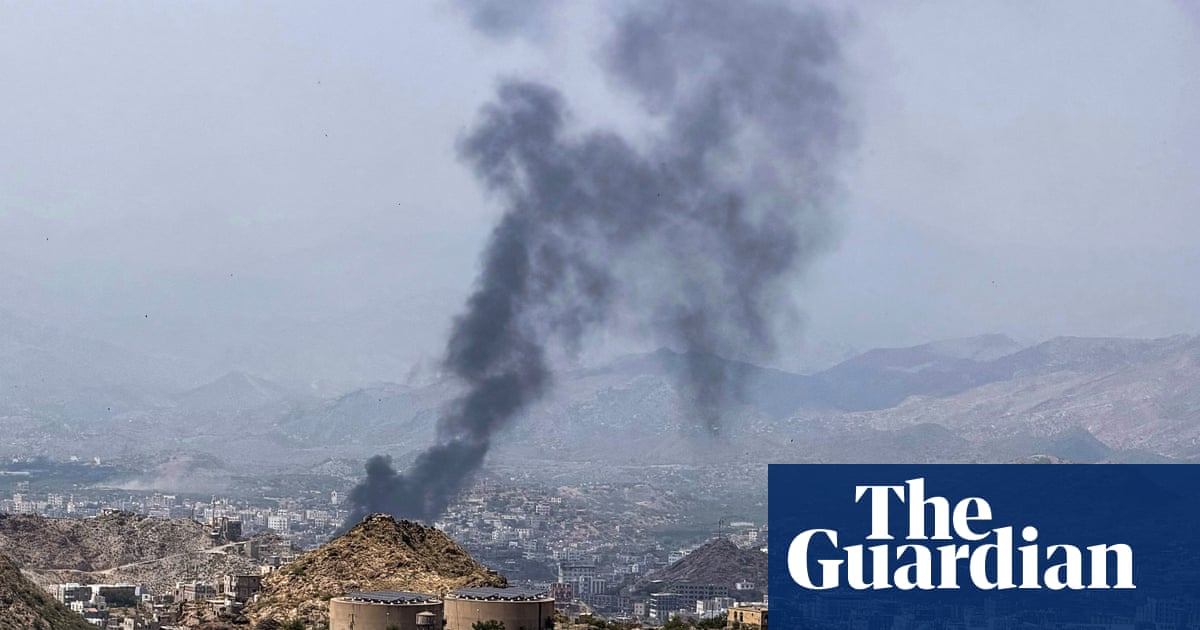
The State Department ordered some diplomats and families to leave Saudi Arabia on Wednesday. The official reason was straightforward: near-daily Houthi strikes on civilian airports and critical energy infrastructure. At least three people were killed Wednesday evening — two at King Fahad International Airport in Dammam and two more injured by debris from an intercepted drone targeting an oil facility. Neither attack was immediately claimed, but the pattern is unmistakable.
What makes this withdrawal notable is not just the violence. It is the fact that Washington is reducing its diplomatic footprint in Riyadh at the very moment it appears to be preparing for a potential restart of strikes on Iran.
The embassy in Riyadh had already been operating with skeleton staff since it was badly damaged at the start of the US war on Iran in late February. Some diplomats had recently returned. Now they are being told to go again. The State Department moved quickly to contain the story, with spokesperson Tommy Pigott calling reports of further withdrawals from the UAE, Jordan, Qatar and Bahrain “inaccurate.” But the optics are unavoidable: the US is pulling back from its most important Gulf partner even as the regional security environment deteriorates rapidly.
Who This Actually Affects
The Houthi campaign against Saudi Arabia has escalated dramatically over recent weeks. The strike on Riyadh’s international airport was described as the kingdom’s deadliest in years. Flightradar24 confirmed that flights were diverted away from Dammam’s airport after Thursday’s overnight attack. Global carriers are already adjusting. The question now is whether this is the beginning of a sustained disruption to Saudi commercial aviation and, more importantly, energy logistics.
Saudi Arabia is the world’s largest oil exporter. Any attack on its infrastructure that disrupts production or export routes — whether through the Strait of Hormuz or the Red Sea pipelines — would send immediate shockwaves through energy markets. The two people killed near the oil facility in the south-east on Wednesday were not military targets. They were likely contractors or workers. That is a pattern the Houthis have repeated: hitting infrastructure and accepting civilian casualties as collateral damage in a campaign to make Saudi Arabia ungovernable.
The US military has been quietly scaling back its presence at bases across the Middle East in recent days, according to NBC. A CENTCOM spokesperson framed the moves as routine optimization. But observers familiar with the region noted that the previous deployment order — non-essential staff leaving the Gulf ahead of the Iran war in late February — produced a very different operational posture. This time, the drawdown is happening while active conflict is still unfolding.
The Iran Calculus
Here is where the analysis gets uncomfortable. Multiple outlets, including the New York Times, reported that the Trump administration has been presented with plans for a “short but intensive” military operation against Iran, developed jointly with Israel. Defense Secretary Peter Hegseth travelled to Israel earlier this week for meetings with Prime Minister Benjamin Netanyahu. Trump himself has publicly discussed targeting Pickaxe Mountain, a site linked to Iran’s nuclear program.
Yet Trump has also stated he does not intend to restart the war before the 3 November elections. The State Department insists this is merely a diplomatic reassessment, not a strategic retreat. Both statements could be true simultaneously, which is precisely the problem.
When a superpower is visibly reducing its on-the-ground presence while its leadership is debating renewed military action against a regional adversary, the message sent to every actor in the Gulf is ambiguous at best. Iran’s proxies interpret ambiguity as opportunity. The Houthis have been emboldened by exactly this kind of signal — they escalated their strikes knowing the US was already committed elsewhere and politically constrained at home.
Who Wins and Who Loses
Iran wins if the Houthis continue to degrade Saudi infrastructure without triggering a full US response. That is the playbook: create enough instability to make the Gulf unviable as a US forward base while keeping the conflict below the threshold that would draw American forces into a second front.
Saudi Arabia loses. The kingdom is being asked to absorb sustained attacks on its civilian and energy infrastructure while Washington reduces its diplomatic and military presence. Riyadh’s security guarantees, which have underpinned the Gulf’s economic order for decades, are being quietly renegotiated.
The Houthis win by making southern Saudi Arabia unstable. Every disrupted airport, every damaged oil facility, every civilian casualty reinforces the narrative that the kingdom cannot protect its own territory without American help — and that help is now conditional, partial, and distant.
European and Asian energy importers lose through market uncertainty. Oil prices do not care about political timing. A credible disruption to Saudi supply, even a temporary one, reverberates through global markets within hours.
What Happens Next
The most likely near-term scenario is continued attrition. The Houthis will keep testing Saudi air defenses and infrastructure. The US will keep managing the crisis at arm’s length — enough presence to deter total collapse, not enough to guarantee security. Diplomats will hover between the embassies they can staff and the ones they cannot.
The more dangerous scenario is the one the New York Times outlined: a sudden decision to restart strikes on Iran, triggered by an event large enough to override electoral calculus. If that happens, the reduced US footprint in Saudi Arabia becomes a liability rather than an advantage. You cannot fight a war against Iran while your primary regional ally is operating with a skeleton crew and its airports are under fire.
The State Department’s insistence that this is only about Saudi Arabia may hold. But in the Gulf, where security architectures are interlocking, nothing stays contained. The withdrawal from Riyadh is both a symptom and a signal — that the post-2020 order in the Middle East is still being rewritten, and Washington is no longer writing it alone.