USPS Ballot-Data Rule Faces Legal Wall Before November Midterms
The USPS finalized a rule requiring states to hand over mail-in voter lists, but a federal injunction blocks enforcement. Here's what stands between the mandate and the November midterms — and which states are bracing for the biggest operational disruption.
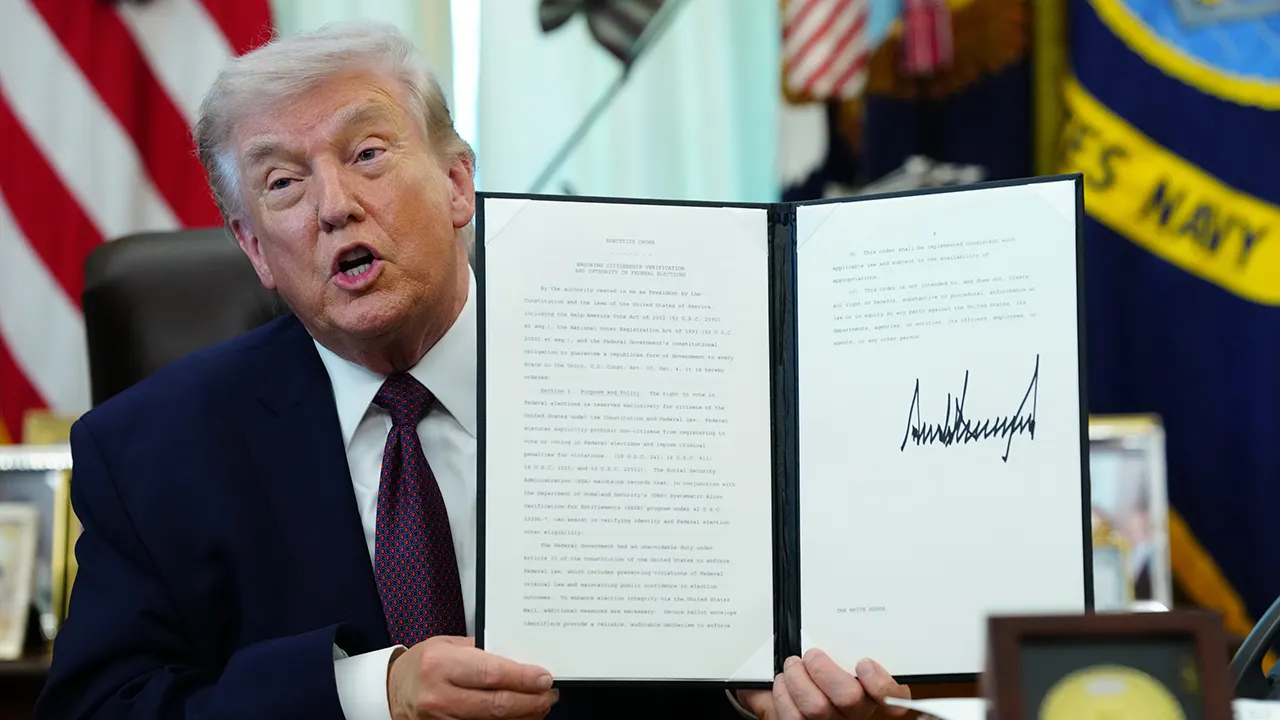
The Rule That Isn’t Yet a Rule
The USPS published a final rule Friday that would make a dramatic new demand on states: if you want to use the mail system to deliver and collect absentee ballots, you must hand over a list of every voter you intend to mail one to, at least 60 days before an election. The agency also requires notification at least 90 days out.
The requirement ties each voter to a uniquely serialized Intelligent Mail barcode (IMb) on both the outbound ballot envelope and the return ballot itself. The intent, according to USPS Postmaster General David Steiner, is simple on its face: match the ballots a state believes it sent against what actually crosses the counter.
But the rule cannot take effect. A federal court has already placed a permanent brake on it.
Who Won the Injunction Round
U.S. District Judge Indira Talwani, a Barack Obama nominee, issued a preliminary injunction against the rule in June, finding that two provisions of the underlying March 31 executive order — including the USPS/mail-in-ballot section — were likely unconstitutional. In July, she renewed that injunction in League of Women Voters of Massachusetts v. Trump, explicitly barring the USPS from enforcing the rule.
That puts the agency’s mandate in legal limbo heading into the 2026 midterms. The rule’s official publication date is August 26. It would only become operative if a federal court lifts the injunction — something neither side has asked for, and the Trump administration has not successfully moved to do so.
The Administration’s Argument Is Thin
In opposing the injunction renewal, the Justice Department leaned on the ripeness doctrine: plaintiffs cannot show harm because the rule has not taken effect. The DOJ’s Civil Rights Division argued in filings that the lawsuit targets “policymaking deliberations within the Executive Branch” rather than any concrete injury.
That is a familiar litigation posture for a government testing the limits of an executive order. But it sidesteps the more consequential question: if the injunction were lifted, which states would actually comply, and how? The source record does not identify any state-level data-sharing agreements — bilateral or otherwise — that currently exist between states and the USPS. No state has publicly acknowledged a standing arrangement to share voter-roll data with the Postal Service at the granularity the rule demands. That absence alone is a signal worth watching.
Who Loses If the Rule Takes Hold
The burden falls heaviest on states that rely on mail-in voting at scale. There is no indication in the source record of a comprehensive list of states lacking data-sharing agreements with USPS, but the operational logic is clear: any jurisdiction that does not already track and report voter contact information down to the barcode level would face a steep compliance curve.
States that have invested heavily in vote-by-mail infrastructure — not just sending ballots but tracking receipt, verification, and return — would find themselves feeding that data into a federal repository they never agreed to join. TheIMb serialization requirement, in particular, imposes a tracking layer on return ballots that most states do not currently operate.
Voters in those states bear the risk. If a state cannot meet the 60-day notification window, ballots could be rejected under the rule’s own terms. That creates a scenario in which eligible voters are disenfranchised not by a statute, but by an administrative cutoff they had no role in setting.
What States Will Do Next
The injunction buys states time, but not certainty. If the DOJ succeeds in having the injunction lifted — through appeal or a renewed motion — states will face a binary choice: comply or refuse.
Compliance means building or expanding a data-sharing pipeline to the USPS. Some states already transmit voter-roll data to other federal agencies; adding USPS to that flow would require technical upgrades, legal review, and likely new legislation in states where the governor or legislature opposes the mandate. A few states may attempt to negotiate narrower protocols, but the rule as written leaves no room for that.
Refusal means ballots may not be accepted. Under the rule’s framework, the USPS would not deliver mail-in ballots on behalf of non-cooperating states. That is a de facto block on mail voting in those jurisdictions, and it would trigger immediate legal challenges from voting-rights groups.
The White House has signaled it will press forward regardless. Spokesperson Lauren Bis stated the administration will “continue lawfully enacting the agenda President Trump was elected to enact,” including “safety and security of American elections.” That language points to continued legal momentum, not retreat.
The Timeline That Matters
The critical window is not August 26, when the rule publishes, but the period between now and the October midterm filing deadlines. If the injunction holds through the fall, the rule dies procedurally. If it falls, states will have weeks — not months — to reconfigure ballot operations.
Judge Talwani’s reasoning in the injunction rested on constitutional grounds, not on administrative feasibility. That means the appeals path, if the DOJ takes it, would turn on separation-of-powers questions about congressional delegation to the USPS and the scope of executive authority over election administration. Those are questions the Supreme Court has not clearly resolved in this context.
Why This Matters Beyond the Courts
The rule is significant regardless of the injunction’s fate. It establishes a framework for federal oversight of state ballot logistics that no prior USPS regulation has attempted. Even if struck down, it signals the administration’s preference for using the postal system as an enforcement lever over election procedure — a move that redefines the USPS from neutral carrier to gatekeeper.
For states, the lesson is operational: assume the rule could activate and prepare accordingly. For voters, the lesson is structural: mail-ballot access now depends as much on federal court dockets as on state election codes.
The midterms will not wait for the injunction to resolve. Whatever the courts decide, the pressure on states to either share voter data or lose ballot access is already reshaping the landscape.