The Valve Leak Is About More Than Half-Life 3
A 12TB archive of Valve development files has surfaced online, containing early builds of Portal 2 and Left 4 Dead. But the real story is what this leak reveals about the fragility of digital archives at the scale modern game studios depend on.
The Archive That Shouldn’t Exist
A 12 terabyte trove of Valve development files has surfaced online, and the gaming community is dissecting it frame by frame. Early builds of Portal 2. A fully playable Left 4 Dead beta from June 2008, complete with cut audio and work-in-progress UI. Assets from the cancelled Portal prequel F-Stop. And, potentially, something tied to the cancelled Half-Life 2: Episode Three.
The leak was flagged on X by a user called Gabe Follower — a name that suggests either someone with inside knowledge or someone who really understands how to generate traffic. What matters is that the files appear to originate from Valve’s legacy Steam2 infrastructure, the content-delivery system the studio phased out in favor of SteamPipe in the early 2010s.
This is not the same incident as the cyberattack Valve disclosed in early June, which compromised its European shipping partner CEVA Logistics and exposed hardware customers’ personal details. Those were logistics records, not development archives. This leak is something else entirely — and it comes from inside the house.
What the Files Reveal
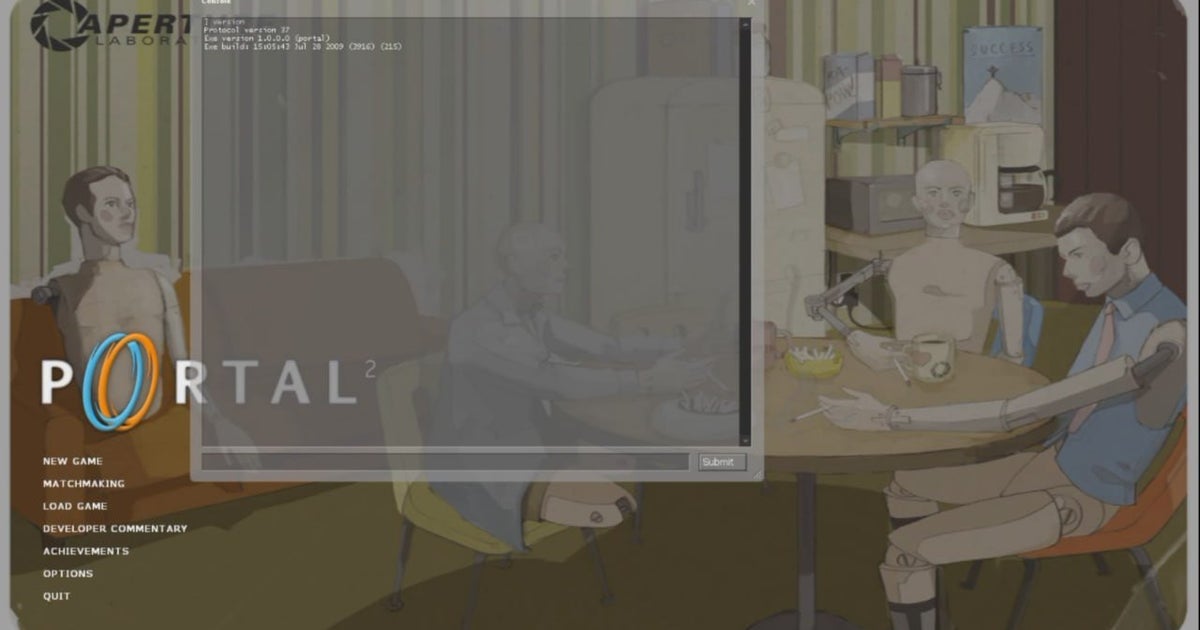
The most significant find so far is a 2009-era Portal 2 beta build alongside a model labeled “Weaponizer.” This asset was previously associated with Half-Life 2: Episode Three, though never confirmed in official material. Here, it appears repurposed as a placeholder within Portal 2 itself. That’s a telling detail: Valve was recycling assets across projects in ways that suggest both creative flexibility and a certain chaos in their pipeline.
The Left 4 Dead beta is equally revealing. It includes an early HUD, a lobby screen still in progress, and audio that was cut before release — including lines originally recorded by Alésia Glidewell for the character Zoey before Jen Taylor took over the role. For players who have spent two decades wondering about the alternate paths these games might have taken, these files are archival gold.
There are also whispers about Episode Three. No definitive proof exists yet — the community still has roughly 12 terabytes to comb through. But the mere possibility is enough to reignite a conversation that has simmered since the project was quietly shelved.
The Episode Three Question
Half-Life 3 was reportedly in development around 2013 and 2014. According to prior reporting, it was conceived as a procedurally generated, replayable title that would fuse Left 4 Dead-style cooperative gameplay with scripted narrative moments. It was cancelled because it was built on the unfinished Source 2 engine — a casualty of a studio that had long since committed its resources elsewhere.
That Valve is now reportedly working on a new Half-Life project codenamed HLX adds another layer to this moment. A 2024 datamine reportedly confirmed the project was playable end-to-end, backing up a leak from an actor who may have been involved. If the current leak contains any material tied to HLX or its predecessor, it could reshape understanding of how Valve’s internal priorities shifted over the past decade.
But it is impossible to confirm any of this without thorough verification. In leak culture, confirmation bias runs high — people find what they want to find. The community will need time, and Valve has not commented.
The Security Story Nobody Is Telling
The leak itself is the more important story, even if it is less exciting than any hypothetical Episode Three footage. Twelve terabytes of development files spanning a decade does not leak by accident. It requires access — to servers, to backups, to decommissioned infrastructure that was never properly wiped or archived.
Valve is notoriously private about its operations. It does not issue press releases about its internal structure, its development timelines, or its security practices. That tradition of opacity may feel protective, but it also means there is no public framework for understanding what went wrong here. The company has remained silent. That silence is itself a statement.
What the leak demonstrates is the fragility of digital archives at the scale modern studios require. Game development generates enormous volumes of data — assets, builds, source code, design documents, communication logs. Much of it is stored on legacy systems that outlive their intended lifecycle. When those systems are decommissioned, the question of what happens to the data often goes unanswered. It sits. It accumulates. And then it surfaces in places it was never meant to be seen.
This is not unique to Valve. It is a structural problem across the industry. Studios operate on infrastructure that evolves slowly, sometimes not at all. Backups persist beyond their purpose. Migration to new systems is incomplete. And the older the build, the less likely anyone is to verify whether it was properly destroyed.
Who Wins and Who Loses
For players, the leak is a gift — messy, uncurated, and potentially incomplete, but a gift nonetheless. It offers a window into Valve’s creative process that the studio would almost certainly prefer remain closed. That tension between public appetite and corporate control is as old as the industry itself, but it has never been this expansive.
For Valve, the leak is a liability. Not because any single file is commercially damaging — these builds are over a decade old and hold no competitive value — but because it exposes a failure in data governance that could, in theory, be replicated or exploited further. The company’s silence suggests it is assessing the scope before responding, which is the only rational move.
For the broader industry, the leak is a warning. If Valve, a company that built one of the most robust digital distribution platforms ever created, cannot guarantee the security of its own archival data, what chance do smaller studios have?
What Happens Next
The community will continue mining the archive. Some findings will prove significant; most will be false positives or benign details. Over time, the novelty will fade, and the focus will shift to whatever Valve eventually announces — or does not announce — about HLX.
But the underlying question will not fade: when development files outlive their usefulness, what responsibility does a studio have to destroy them? The industry has no standard answer. This leak will not create one. But it should force the conversation.
Valve’s next move — or continued silence — will set a tone. If the company treats this as a contained incident and moves on, the leak will become a curiosity in gaming lore. If it acknowledges the breach and addresses how such files were preserved and where they originated, it could become a case study in digital asset security.
The files are out there now. They will not go back in. The real question is what Valve decides to do with the exposure.