Vance’s Strait Doctrine: How Financial Weapons Reshape Hormuz Risk
The Trump administration’s blend of targeted sanctions and military posturing around Iran signals a new era of chokepoint enforcement—one that forces global insurers, shippers, and energy‑importing nations to price in a higher baseline of disruption.
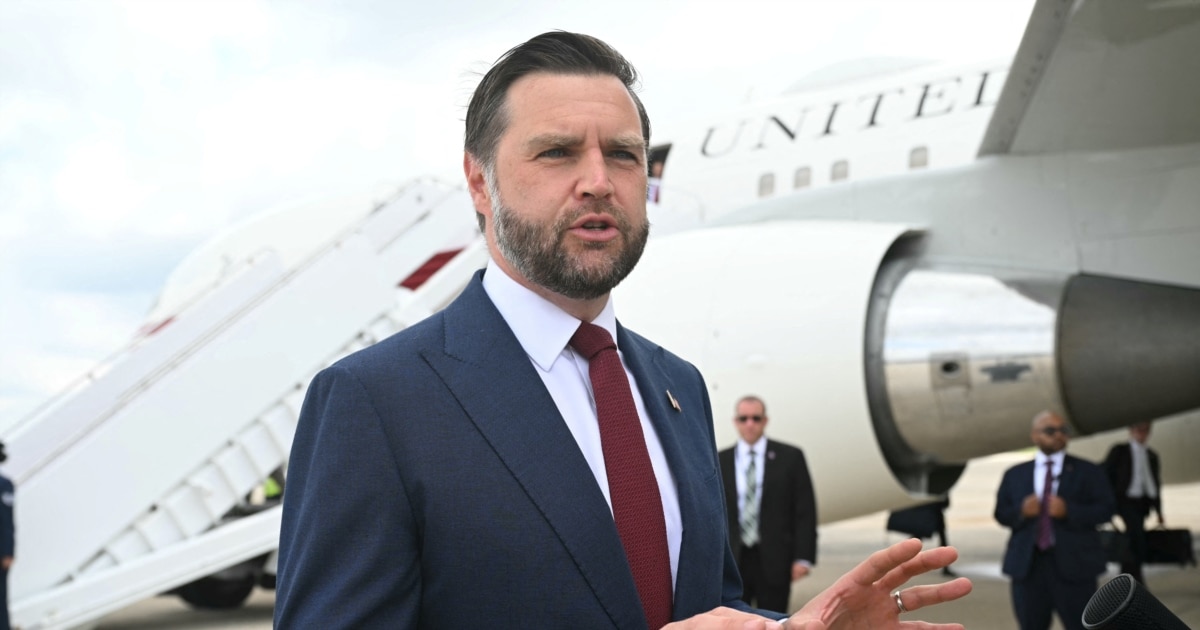
The Doctrine in Plain Sight
On August 31, Vice President JD Vance did not merely threaten to stop Iran’s ship‑attacks in the Strait of Hormuz. He announced a calibrated escalation that marries financial strangulation to military deterrence—a playbook that redefines how the United States intends to police the world’s most critical energy chokepoint.
The statement came hours after President Donald Trump posted an AI‑generated image of a strike on Karg Island, Iran’s principal oil‑export hub, on his Truth Social platform. Vance confirmed that the administration views the posting as a deliberate message: Iran is “acting like a terrorist state” by targeting commercial vessels, and the US retains “many means” to prevent or reduce such attacks. The military follow‑through arrived almost immediately. Central Command reported that US forces had hit two Iranian missile‑launch sites on Larak Island after detecting Revolutionary Guard Corps personnel preparing to fire rockets and lay mines in the strait.
What makes this moment distinct is not the rhetoric—it is the explicit linkage between economic warfare and kinetic action. Treasury Secretary Scott Bessent, speaking at the G20 finance ministers’ meeting in Asheville, North Carolina, stated that Iran’s economy could collapse within “weeks or months.” He pointed to long queues for gasoline at one of the world’s largest energy‑reserve holders as evidence of domestic strain. Meanwhile, the European Union signaled support for the US measures, tightening the diplomatic noose.
The Financial Front
The sanctions themselves are surgical, but their architecture is systemic. On August 28, the US Treasury designated Bank Misr’s UAE branch, accusing it of processing roughly $1.8 billion in transactions for 103 companies linked to Iran’s “shadow financial network” over two years. The branch’s access to US‑dollar clearing was blocked. Separate designations targeted Rez Mohammad Tayyebi, head of Bank Melli’s Dubai office, and a Hong Kong shell company alleged to have facilitated money laundering for sanctioned Iranian exchange dealers.
These moves target the plumbing of Iran’s oil sales, not just its government. By cutting off dollar‑denominated settlement channels, Washington is attempting to force a choice on third‑country banks: comply or face secondary sanctions. The EU’s public backing reduces the likelihood of a transatlantic split and raises the cost of non‑compliance for European institutions that still handle Iranian trade.
Iran’s response has been predictably sharp. The foreign ministry condemned the US for “weaponizing the dollar” and violating international law, calling the sanctions an extension of US‑Israeli military action. That framing suggests Tehran views the economic and military tracks as a single campaign—a point Vance’s remarks reinforce.
Who Wins, Who Loses
The United States gains short‑term leverage. By demonstrating both financial and military capacity to interdict Iranian aggression, Washington raises the threshold for Tehran’s next provocation. The message is clear: attacks on commercial shipping will meet a coordinated response that includes cutting off access to the global dollar system.
Iran faces immediate pain. Its already strained economy will feel the squeeze of reduced oil exports and restricted financial channels. The gasoline queues Bessent cited are a domestic warning sign. Yet history shows that external pressure often hardens rather than bends Iranian decision‑makers. The regime may calculate that demonstrating resolve in the strait preserves its revolutionary credibility, even at the cost of economic hardship.
Global supply chains bear the brunt of the uncertainty. Insurance premiums for vessels transiting the Hormuz corridor have already spiked. Shipowners are reassessing routes, some diverting to the longer Suez‑Mediterranean passage or relying more on overland pipelines that bypass the strait entirely. These adjustments are costly and slow to implement. For commodities markets, the risk premium attached to Persian Gulf oil is now priced in—but the floor has shifted upward.
Energy‑importing nations like South Korea confront an acute exposure. Roughly 70 percent of South Korea’s crude imports pass through the Strait of Hormuz. Any sustained disruption would trigger immediate supply concerns and price shocks. Korean business outlets are treating the Vance remarks as a direct domestic economic threat, not a distant geopolitical development. The risk calculus for Korean manufacturers and refiners has changed: the baseline assumption is no longer that the strait will remain open, but that it will be intermittently contested.
The New Risk Baseline
The strategic innovation here is the blending of tools. Previously, US policy in the region oscillated between diplomacy and limited military strikes. Now, financial sanctions and military posturing are deployed in tandem, creating a layered deterrent. The intent is to raise the cost of Iranian aggression across multiple domains simultaneously.
For global commerce, this means that risk assessment can no longer rely on historical patterns. The “baseline” of strait‑traffic safety is gone. Insurers will embed a persistent uncertainty premium into freight rates. Shippers will diversify sourcing and routes more aggressively. Nations dependent on Middle Eastern energy will accelerate strategic reserves and explore alternative suppliers—even at higher cost.
The Korean business press has already begun mapping the implications for its own economy. With almost no domestic energy resources, South Korea’s export‑oriented growth model is vulnerable to any spike in oil prices or shipping delays. Companies with long‑term contracts priced on the assumption of stable Hormuz transit may face margin compression or renegotiation. Government policymakers are likely to intensify diplomatic outreach to Tehran and Washington alike, seeking guarantees that are not yet on the table.
What Comes Next
Three scenarios emerge from the current posture.
First, a controlled de‑escalation. Tehran, feeling the economic pressure, backs down from further attacks, allowing traffic to normalize. The US claims victory for its combined economic‑military strategy. This outcome is possible but unlikely given the regime’s need to project strength.
Second, a cycle of tit‑for‑tat. Iran retaliates against additional US or Israeli strikes with renewed harassment of shipping, perhaps targeting vessels flagged to US allies. The strait becomes a recurring flashpoint, with periodic spikes in insurance costs and occasional closures. Global supply chains absorb repeated shocks, but adaptation mechanisms gradually develop.
Third, a miscalculation that opens wider conflict. A single attack causes significant casualties or environmental damage, prompting a disproportionate US response. Iran could then seek to close the strait entirely, either through mine‑laying campaigns or direct engagement with US forces. Such an event would send oil prices soaring and trigger a global economic shock far beyond the immediate region.
The Vance statement shifts the odds toward the second scenario. By openly linking sanctions and military options, the administration has lowered the threshold for escalation while raising the cost of Iranian aggression. That balance is fragile. The next Iranian decision—to attack a tanker, to ignore the threat, to retaliate against a different asset—will determine which path unfolds.
For the world’s economies, the lesson is stark: chokepoint security is no longer a given. It is a commodity that must be actively defended, priced, and insured. The Strait of Hormuz has always been a strategic linchpin. Now it is also a financial battlefield. Those who fail to adjust their risk models will pay the price when the next incident—inevitable, not accidental—strikes.