Machado's Return Tests Venezuela's U.S.-Backed Transition
María Corina Machado's arrival from exile upends Washington's carefully managed transition and forces a reckoning over who really leads Venezuela's opposition.
A Return That Rewrites the Script
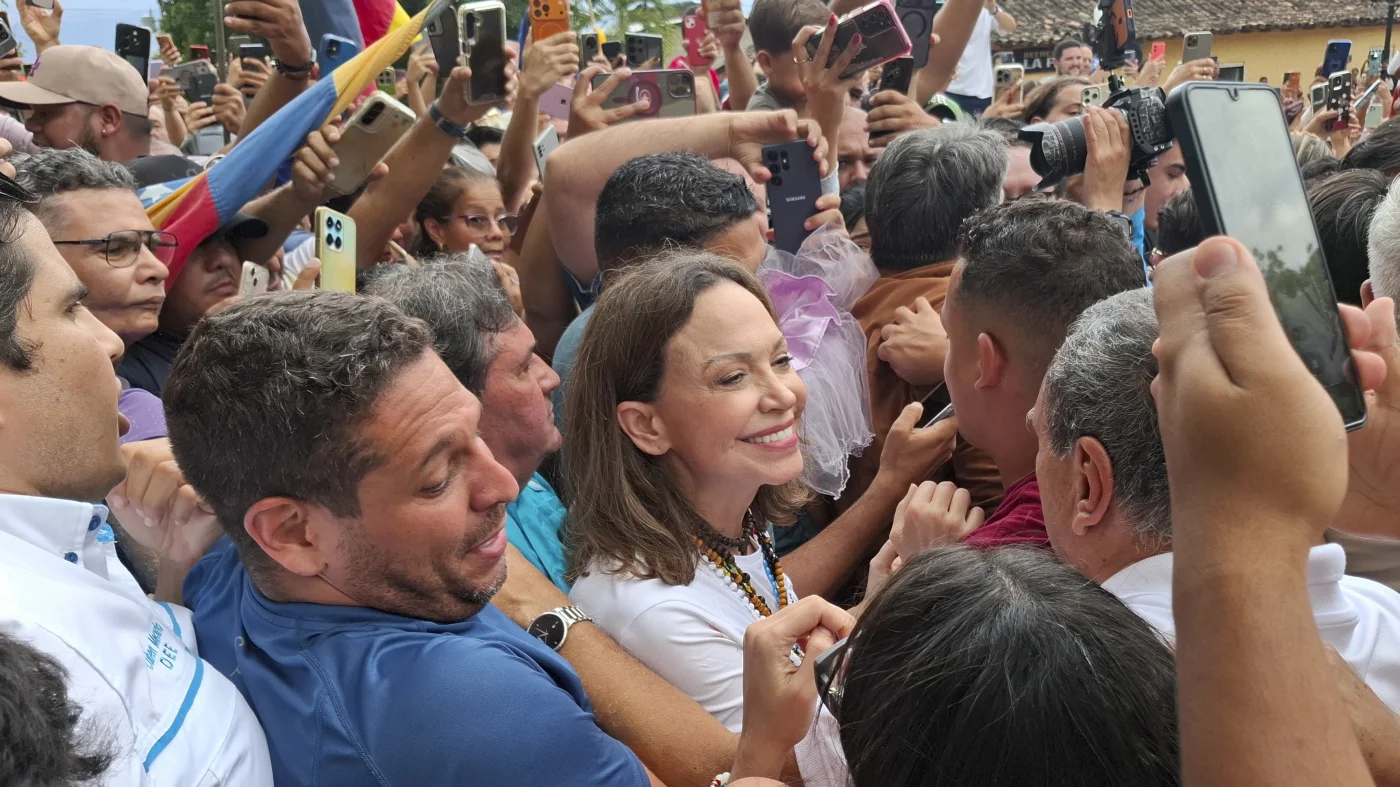
María Corina Machado did not come back to Venezuela quietly. After ten months in exile, she stepped off a plane into a crowd that roared her name, then walked into a church where worshippers pressed against the doors to touch her. She posted one line: “I’m here, with you all.” It was enough to fracture the tidy narrative Washington had built since January.
The United States had orchestrated a transition after U.S. forces captured Nicolás Maduro. In that vacuum, Delcy Rodríguez assumed the role of interim president—a figure Washington tolerated, if not fully embraced, because she promised stability and a path to elections. Then came Machado’s Nobel Peace Prize in Norway, then her clandestine exit from Venezuela, then her sudden reappearance on Venezuelan soil. Suddenly, the transition looked less like a managed handoff and more like a race with a finish line no one had drawn yet.
The non-obvious implication is not that Machado’s return is a triumph for democracy. It is that her return exposes the limits of U.S. influence over Venezuela’s political future. Washington had decided that stabilization came before elections. Machado had decided that elections were the only thing that mattered. Now the two timelines collide.
Who Wins, Who Loses
Wins: Machado and the grassroots opposition she represents. For years, she has been the face of resistance that Maduro’s regime could not erase and that the U.S. could not fully co-opt. Her Nobel Prize gave her moral authority; her return gives her physical presence. Supporter Edmundo González, who ran against Maduro in the disputed 2024 election, called her return “a very important day for Venezuelans” and said he would soon join her in Venezuela. The message is clear: the opposition’s moral center has landed back on home soil.
Loses: The interim government’s claim to uncontested leadership. Delcy Rodríguez now shares the stage with a figure who commands more genuine popular support than any provisional leader Washington has backed. If Machado pushes for early elections, Rodríguez’s mandate looks borrowed. If she pushes for negotiation, she steals the spotlight from the reconciliation talks Washington frames as the only path forward.
Also loses: The U.S. policy of sidelining Machado. Trump called her “a very nice woman” and said she had given him her Nobel Prize—a comment that revealed both familiarity and detachment. Secretary of State Marco Rubio tried to reframe the return as a “direct result” of U.S.-supported talks, but the timing betrays that story. Machado returned because she chose to, not because Washington invited her.
The Numbers Behind the Moment
This is not just symbolism. In the 2024 presidential election, Machado’s party collected more votes than Maduro’s, though the results were annulled. She spent months in hiding after a brief detention in early 2025, fled clandestinely, and waited ten months in exile before returning. During that time, Venezuela’s economy staggered, inflation remained high, and migration continued to swell—with over 7 million Venezuelans now abroad. The interim government has struggled to deliver visible improvements in security or public services.
Machado’s return coincides with a regional shift: leftist governments are losing ground from Bolivia to Brazil’s opposition resurgence. Yet Venezuela remains the hardest case. Maduro’s fall in January did not end the crisis; it displaced it. Now a new question replaces the old one: who governs?
What Happens Next
Three scenarios are plausible, none of them smooth.
First, accelerated elections. Machado has called for votes soon. If she galvanizes protests and international pressure, the interim government could face a legitimacy crisis that forces an early ballot. That would benefit her camp but risk chaos if Maduro’s allies mobilize.
Second, negotiated stagnation. Washington may insist on sticking to its timeline—stability first, elections later. That would placate the U.S. but frustrate Venezuelans who have waited a decade for change. Machado could be absorbed into talks, rendered decorative but powerless.
Third, fragmentation. The opposition is not monolithic. González and Machado share a goal but not necessarily a strategy. Other figures may seek deals with the interim government or strike out alone. If the opposition splinters, Maduro’s remnants could exploit the divide.
None of these outcomes are guaranteed. What is certain is that the old playbook—Washington managing a transition, regional powers observing, the opposition united in exile—no longer fits.
The Regional Ripple
Venezuela’s drama is rarely isolated. A successful opposition return could embolden critics of leftist governments across the continent. A muddled transition could reinforce the argument that authoritarian resilience is harder to dislodge than elites assume. Brazil, Colombia, and Mexico will watch closely. The U.S. will want to claim credit either way.
For English-language readers, the missing context is often this: Machado is not just another opposition leader. She is a Nobel laureate who survived imprisonment, exile, and a regime that erased her from public life. Her return is a test of whether democratic momentum can survive when external actors treat Venezuela as a chessboard rather than a country.
The Real Question
Does Venezuela belong to those who wait for permission, or those who return? Washington chose Rodríguez as a bridge. Machado chose the church and the street. The clash between institutional patience and popular urgency may define the next chapter.
If the interim government marginalizes Machado, it risks looking like a puppet arrangement. If Machado overrides the transition framework, she risks accusations of recklessness. The narrow path is neither. It is a recognition that democracy in Venezuela cannot be imported, scheduled, or safely managed from abroad.
Machado’s comeback is not the end of the story. It is the moment the story starts again.
What to Watch
- Timing of elections: Will the interim government hold to its schedule, or concede to Machado’s demand for speed?
- U.S. posture: Will Washington pivot from supporting Rodríguez to engaging Machado directly, or double down on the current framework?
- Regional response: Will Latin American governments push for mediation, or let the U.S. lead?
- Street pressure: Can Machado’s return translate into sustained mobilization, or will fatigue set in?
One thing is clear: the decade-long struggle between Maduro and his opponents has entered a new phase. The exile is back. The Nobel is real. The transition is uncertain. And the world is watching to see whether Venezuela’s democracy will be shaped by those who wait, or those who return.