Venezuela's Oil Surrender and the Asian Energy Equation
The Trump administration's deal giving U.S. control over a fifth of Venezuela's reserves is more than a bilateral power play. It signals a potential realignment of global oil flows that could reshape energy dynamics for Asian refiners.
The Deal on Paper and the Deal in Fact
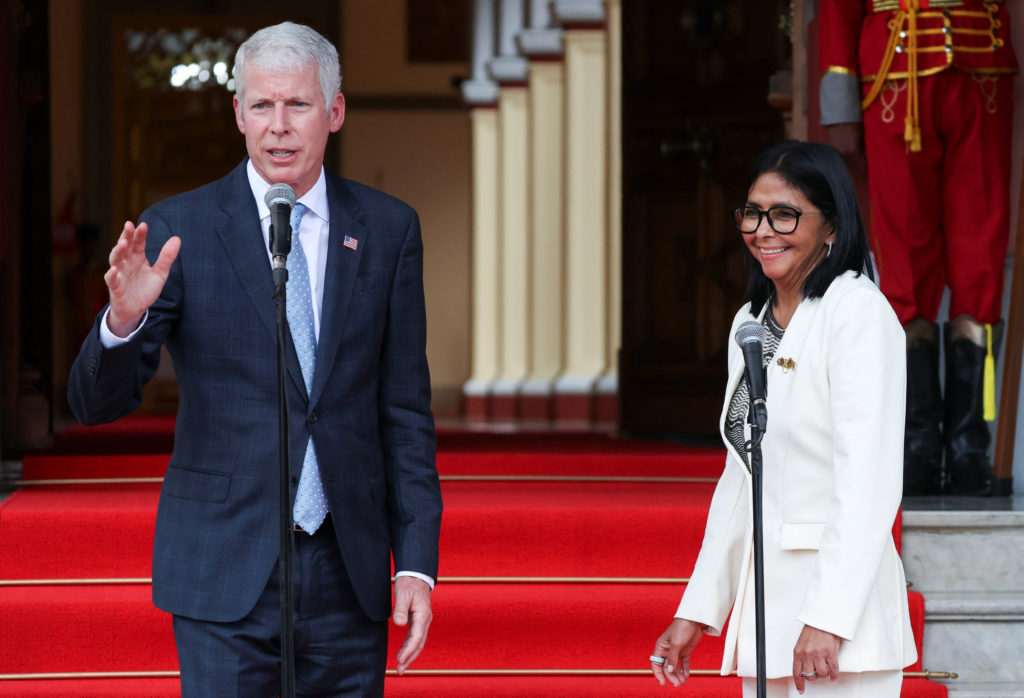
On paper, the agreement reached last week between the United States and Venezuela represents a historic pivot in energy geopolitics. Acting President Delcy Rodríguez has ceded control of roughly one-fifth of the world’s largest proven oil reserves to a U.S.-backed joint venture. In concrete terms, the deal grants a century-long lease on 17 oil fields containing approximately 65 billion barrels — out of Venezuela’s estimated 300 billion-barrel total.
But the deal’s significance extends well beyond Caracas or Washington. For Asian economies — Japan, South Korea, Taiwan, and the broader region — this arrangement introduces a structural shift in how global oil flows may be redirected, and who ultimately benefits from Venezuela’s vast but neglected reserves.
The Oil Identity of a Nation
Oil has always been more than an industry in Venezuela. It is identity. Since its discovery in the 1920s, petroleum reshaped the country from an agrarian backwater into a regional powerhouse. At its peak in the 1970s, Venezuela boasted the highest per-capita income in Latin America. The state-owned PDVSA became a symbol of national pride — and a major beneficiary of it.
Hugo Chávez’s nationalization of the oil industry in the early 2000s was both economically calculated and politically theatrical. Under his leadership, PDVSA generated an estimated $981 billion in revenues between 1999 and 2011. Those revenues funded social programs, subsidized fuel, and paid for scholarships abroad. The money built a sense of entitlement: every Venezuelan, from the highlands to the coast, saw oil as theirs.
That sense of ownership is what makes the current deal so explosive. When Rodríguez agreed to hand over control of the Aramuro field and 16 others to Blue Energy Partners — a company that ranks as the second-largest private oil operator in Venezuela, behind Chevron — many citizens did not see investment. They saw expropriation by another empire.
The Chinese Factor Was Never in the Room
One of the most striking omissions in this deal is China. Beijing has been Venezuela’s primary economic lifeline since the mid-2000s, extending tens of billions in loans in exchange for oil. Under the Chávez and Maduro governments, Chinese state-owned enterprises like PetroChina operated significant joint ventures in Venezuela. When the United States imposed sanctions on PDVSA in 2017, China continued buying Venezuelan crude — often at discounted prices and through intricate shipping arrangements.
The Trump administration’s decision to bypass Chinese interests is deliberate. It is also risky. China’s presence in Venezuela’s energy sector is deep and institutional. U.S. firms entering now are not simply competing for market share — they are displacing an entrenched partner that Beijing considers strategically vital.
For Asian refiners, the implication is double-edged. On one hand, a ramp-up in Venezuelan production under U.S. management could flood the market with heavy crude — a type that is particularly valuable to refineries in Japan and South Korea, which are configured to process dense, sour crude. On the other hand, the geopolitical friction between the United States and China over Venezuela could disrupt supply chains and introduce volatility into pricing.
What This Means for Asian Energy Markets
Japan and South Korea are among the world’s largest importers of crude oil. Both countries lack significant domestic resources and depend on Middle Eastern and Latin American suppliers for the bulk of their needs. Venezuela, despite holding the largest reserves on the planet, has been a marginal player in global exports due to sanctions and years of underinvestment.
The deal changes that calculus. If U.S. companies can bring production back to meaningful levels — even a fraction of the 3 million barrels per day Venezuela produced in the late 1990s — the additional supply would flow primarily westward, toward the United States and its allies. That means less heavy crude available for Asian buyers on the open market.
Consider the numbers. Venezuela currently produces roughly 1 million barrels per day. To reach 2 million — a modest target given the state of the infrastructure — would require billions in investment and years of operational work. U.S. Energy Secretary Chris Wright has framed the deal as a path to prosperity. But prosperity for whom?
The timing is also telling. The deal was announced in the context of broader U.S. efforts to reduce dependence on Middle Eastern oil and strengthen energy partnerships in the Western Hemisphere. For countries like South Korea and Japan, which already navigate complex energy security dilemmas with Russia, the Middle East, and Southeast Asia, a consolidation of Venezuelan output under U.S. control adds another layer of strategic uncertainty.
Who Wins, Who Loses
The winners in this arrangement are clear. Chevron, which already holds a license to expand operations in Venezuela, stands to gain from the deal’s framework. Blue Energy Partners, the joint venture partner, will benefit from guaranteed access to some of the world’s richest fields. The United States gains leverage over a neighboring country that has been a source of migration, instability, and diplomatic friction for decades.
The losers are more diffuse but no less real. Venezuelan citizens, who already struggle with inflation that has eroded monthly wages to roughly $160 in the public sector and $237 in the private sector, face the prospect of watching their country’s wealth managed by foreign interests. PDVSA, once the crown jewel of Venezuelan industry, has been reduced to a bargaining chip.
And China? Beijing loses influence in a region where it has invested heavily and patiently. The displacement of Chinese energy interests in Venezuela is not merely an economic loss — it is a geopolitical one. China has long positioned itself as an alternative partner to the United States in Latin America, offering loans without political conditionalities. This deal undermines that narrative.
The Road Ahead
Infrastructure decay will be the first hurdle. Venezuela’s oil fields, pipelines, and refineries have suffered from decades of mismanagement and underinvestment. Restoring production at any scale will take years, not months. Sanctions relief will be incremental, and U.S. companies will move carefully, aware that political winds in both Washington and Caracas can shift rapidly.
For Asian refiners, the immediate impact will be limited. Venezuela’s current export volume remains small, and most of it has already found its way to China and India through shadow fleets and discounted deals. The structural shift — if it materializes — will be gradual.
But the symbolic shift is already complete. The idea that Venezuela’s oil belongs to Venezuela, however idealistic, has been supplanted by a new reality: the country’s reserves are now part of a U.S.-led energy strategy with global implications. Whether that strategy delivers prosperity to Venezuelans or merely redirects their wealth along new geopolitical corridors remains the open question.
The people of Cabimas, the oil workers, the architects and students — they know their country sits on a fortune. What they are still trying to understand is who gets to spend it.