Volkswagen's 100,000 Job Cuts Signal the Death of Old Automotive Europe
Volkswagen is cutting 100,000 jobs and slashing half its model range — the largest restructuring in automotive history. The move is a stark signal of the existential crisis gripping European carmakers caught between Chinese competition, sluggish EV demand, and US tariffs.
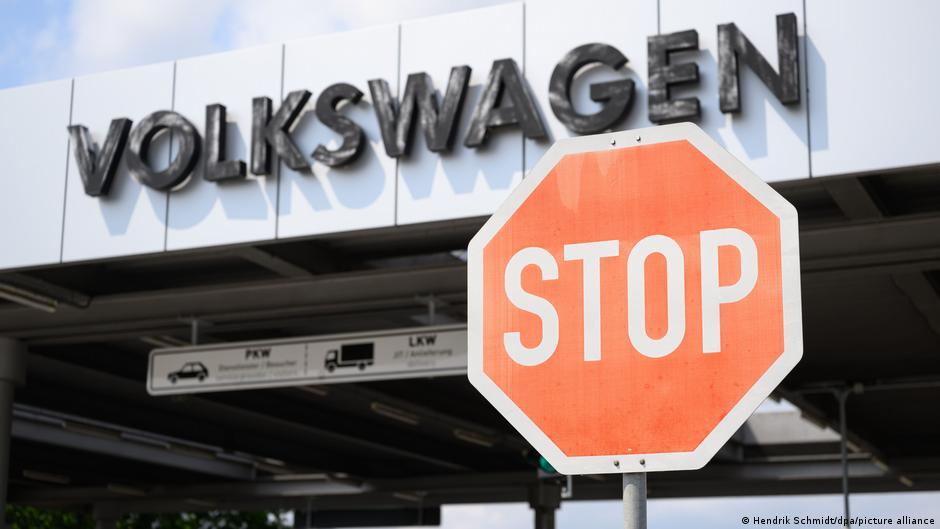
The arithmetic of collapse
Volkswagen announced on Thursday what amounts to the largest restructuring in global automotive history. One hundred thousand jobs — roughly 15% of its worldwide workforce — will be cut by 2030. That dwarfs the 50,000 redundancies General Motors imposed during its 2009 bankruptcy fire-sale. This is not a cost-cutting exercise. It is a strategic surrender to the shape of a world that no longer rewards the old model.
The company also confirmed it is halving its model range. Management and trade unions, after a public row over the timing of the announcement, signed off on the plan. CEO Oliver Blume called it a strong signal for the future. Workers in Zwickau called it a black spot on the map.
The two descriptions are not as different as they sound.
Four plants on the block
The most consequential detail buried in Thursday’s announcement is that four German factories — Hannover, Emden, Zwickau, and Neckarsulm — face closure. This would be the first time Volkswagen has shuttered a full-scale plant in its home country. Zwickau, which produces the ID.3 and ID.4 electric models, is already described by one long-term employee as the motor of the entire region. Close it and you do not just lose a factory. You lose the supply chain web that has grown around it, the supplier towns, the municipal tax base.
Neckarsulm houses Audi’s premium operations. Hannover is the group’s administrative heart. Emden has been a diesel stronghold now facing an uncertain conversion path. The simultaneous threat to all four sends a message that the restructuring is not about pruning fat — it is about amputating limbs.
The trilemma squeezing European autos
Volkswagen’s crisis is not unique to the company. It is the symptom of a structural collision hitting every legacy European automaker from three directions simultaneously.
First, Chinese manufacturers are outcompeting them on the metric that matters most in the EV era: cost. BYD, MG, and a growing roster of Chinese brands are selling electric vehicles at prices European carmakers cannot match without running at a loss. The European Commission has responded with tariffs, but those tariffs protect nothing if consumers simply stop buying cars.
Second, demand for electric vehicles across Europe has stalled. After the hype cycle of 2021–2023, adoption rates flatten out as buyers confront high prices, inadequate charging infrastructure, and a growing sense that the transition is being forced faster than the market can absorb. The IEA’s latest data shows European EV growth decelerating sharply through 2024 and 2025. Volkswagen can build the cars. The question is who will buy them at the price the old cost structure requires.
Third, the Trump administration’s tariff regime adds a fourth wall to the squeeze. Volkswagen’s North American operations — however modest compared to its German core — now face the prospect of exporting into a market that has made tariffs a recurring weapon. The company’s stated pivot toward expanding exports to the Global South reads less like strategy and more like desperation.
The numbers underneath the announcement
Volkswagen did not disclose the distribution of the 100,000 cuts across regions or the exact timeline. It did, however, confirm a three-digit-billion euro investment program focused on R&D and technological competitiveness. It also said the group will cut its number of businesses and holdings by about one-third — a clear signal that years of acquisitions and subsidiary sprawl have become a liability rather than an asset.
The math is brutal but simple. A company that once commanded roughly a fifth of European car sales is now fighting to remain profitable in a market where the growth segment — electric vehicles — is dominated by lower-cost competitors. Halving the model range is not vanity pruning. It is the recognition that running twenty platform variants is no longer sustainable when the margins on each one are collapsing.
What happens next
The immediate fallout will be industrial tension. German unions have already accused management of dishonesty over the sequencing of the announcement. Expect more of that as the specific cut numbers per site become clear. The political dimension will follow quickly — the German government cannot ignore the prospect of its largest industrial employer dismantling itself, particularly in eastern states like Saxony where Zwickau is located.
On the broader industry level, Volkswagen’s move is a canary. If the group — with its scale, its brand portfolio spanning VW to Porsche, its global footprint — cannot navigate the transition, then the remaining European automakers are in even worse shape. Stellantis, Renault, and BMW are all watching. None have the same cash cushion.
The companies that survive will be the ones that either match Chinese cost discipline — which requires a radical rethink of manufacturing, platform architecture, and supplier relationships — or niche down into segments where volume does not matter as much. The middle ground, where Volkswagen has operated for decades, is disappearing.
The human cost written in steel and concrete
The language of corporate restructuring is cold. Workforce alignment with economic realities. Structural efficiency gains. Faster decision-making cycles. But the reality in Zwickau, Emden, Hannover, and Neckarsulm is not abstract. It is towns where the plant is the employer, the employer is the taxpayer, and the taxpayer is everything. Close these factories and you do not just change a balance sheet. You hollow out communities that have existed for decades around a single industry’s gravity.
Volkswagen’s CEO insists the plan sends a strong signal. The question Europe should be asking is whether the signal is reaching the right audience — and whether there is enough political will to match the scale of the problem with anything other than tariffs and job-cut announcements.
One hundred thousand jobs is not a number. It is a city’s worth of people. And the fact that it takes a single announcement to make that clear says something about how far the transition has already gone before anyone noticed.