Waymo Bets on Japan — and the Streets That Could Break It
Waymo plans driverless robotaxis in Tokyo by 2027, the first non-US rollout. But Japan's narrow streets, pedestrian-first culture, and unique regulatory landscape will test whether American autonomy tech can scale beyond Silicon Valley's assumption set.
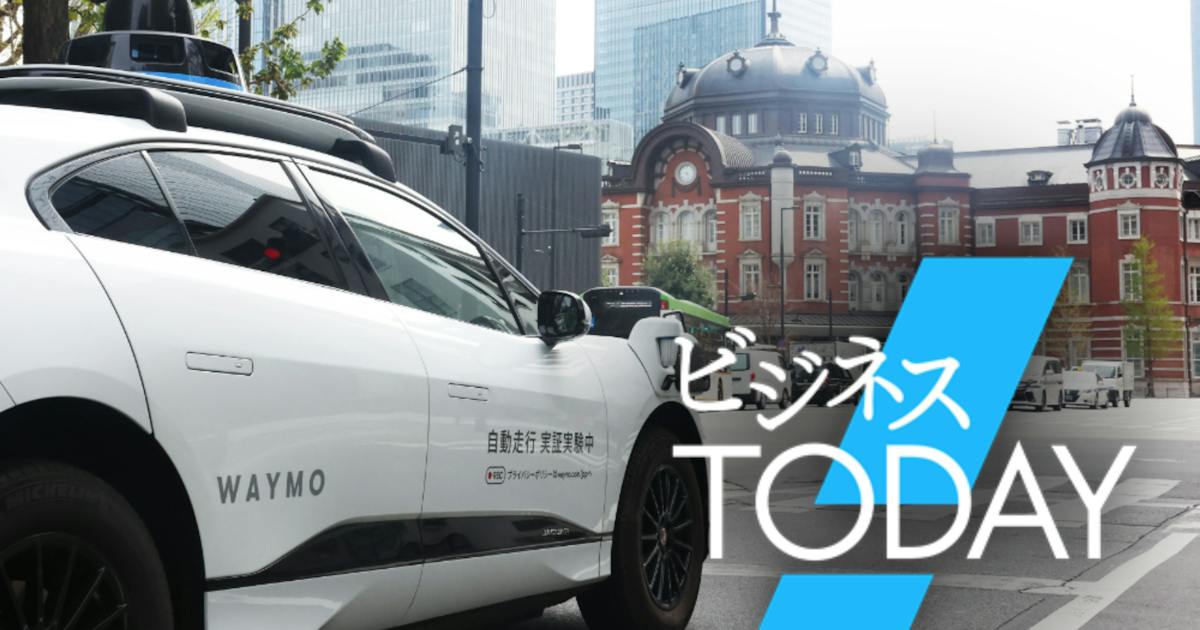
The Street Test No One Expected
Waymo announced on September 15, 2026 that it will begin commercial driverless taxi operations in Tokyo by 2027. The headline facts are straightforward: Alphabet-owned Waymo is expanding beyond its four US cities — San Francisco, Los Angeles, Phoenix, and Austin — into its first market where the driving environment looks nothing like America. The non-obvious fact is why this matters far beyond Tokyo.
Japan is not a soft landing. It is the most demanding stress test for autonomous driving technology ever presented to a US company. Narrow streets, pedestrian-priority right-of-way, complex intersections without clear lane markings, parked cars that intrude into travel lanes, and a driving culture that relies on eye contact and subtle human negotiation rather than traffic signals alone — these are the conditions Waymo must master if its technology is to scale globally. Success here would make Japan the proving ground for every dense Asian megacity from Seoul to Manila to Mumbai. Failure would signal that American autonomy tech is geography-locked to wide, regulated, signal-dense American roads.
What Changes in Japan
The urban geometry alone is transformative. San Francisco hills and wide avenues gave Waymo a running start. Tokyo’s streets in many wards are barely wide enough for two cars to pass. Parking culture means vehicles routinely occupy what Americans would call travel lanes. Pedestrians step into crosswalks without waiting for signals. Cyclists weave through traffic without hierarchy. None of this appears in Waymo’s California training data at meaningful scale.
Texdra Mawakana, Waymo’s co-CEO, confirmed to reporters that the company plans fully driverless operation from the start — no human in the passenger seat to intervene. That is a significant escalation from the phased approach used domestically, where Waymo initially deployed safety operators before removing them city by city. Removing the human entirely on day one in Tokyo signals confidence, but also removes the graceful degradation path that protected American regulators during early US rollouts.
The regulatory environment adds another layer of complexity. Japan’s Ministry of Land, Infrastructure, Transport and Tourism has been developing a framework for autonomous vehicles, but it is fundamentally different from California’s approach. Japanese regulation emphasizes consensus among stakeholders — taxi companies, municipal governments, insurance providers, and infrastructure managers — rather than the permit-and-proceed model that governs US deployment. Waymo will need to navigate a system where regulatory speed is tied to social agreement, not technical validation.
The Taxi Industry Factor
Japan’s taxi industry is one of the most regulated in the world. Meter systems, licensing, fare approval processes, and dispatch networks are tightly controlled. Paradoxically, that regulation could make integration easier for Waymo than in the US, where taxi and rideshare battles have been messy and litigious. The industry already has established mechanisms for approving new operators and technologies. The question is whether existing taxi companies will embrace Waymo as a partner or treat it as a threat to be contained.
Some analysts argue that robotaxis in Tokyo represent capture — a way for large taxi firms to lock up demand through proprietary app ecosystems rather than open competition. If Waymo’s service becomes available only through a single dispatch app owned by an incumbent, the consumer experience may look less like American-style rideshare disruption and more like a technological upgrade to the same old system. That would dilute the value proposition for riders and limit the pressure on incumbent carriers to improve service.
The Rural Question Everyone Is Avoiding
There is a growing argument among Japanese mobility experts that robotaxis matter more for rural Japan than for Tokyo. The country faces a driver shortage crisis in rural communities where population decline and aging have made regular taxi service economically unviable. A robotaxi that runs profitably on low-demand routes could preserve mobility for hundreds of thousands of elderly residents who already lack transportation alternatives.
Yet Waymo’s economic model points in the opposite direction. Driverless vehicles achieve profitability through high utilization — long operating hours, dense ride demand, short pickup-to-dropoff distances. Tokyo provides all three. Rural routes provide none. The economics favor urban density so strongly that any robotaxi service launched in Japan will almost certainly concentrate in metropolitan areas for years.
This creates a tension that Japanese policymakers have not yet resolved. Should the government subsidize robotaxi deployment in rural areas as a public service obligation, the way it subsidizes rural bus routes today? Or should it accept that autonomy technology will initially serve only the wealthy and mobile, widening the transportation gap between urban and rural Japan?
Who Wins, Who Loses
If Waymo succeeds in Tokyo by 2027, the winners are clear: Alphabet and its autonomous driving division gain a crucial international reference case. Japanese consumers in Tokyo gain a new transportation option that undercuts both traditional taxis and rideshare on price. International investors gain confidence that US autonomy tech can adapt to non-American conditions.
The losers are equally predictable: incumbent Tokyo taxi operators who cannot match Waymo’s cost structure. Human taxi drivers who face displacement in high-density corridors. Municipal governments that hoped autonomy would be slower to arrive and easier to regulate incrementally.
There is also a third group that stands to lose regardless of the outcome: Japanese rural communities. Every year that Waymo and its competitors focus on Tokyo, the transportation gap between urban and rural Japan widens. The technology that could solve rural mobility requires policy intervention that has not yet materialized.
The Asian Megacity Test
The real story here is not Tokyo. It is what Tokyo proves or disproves about autonomous driving in dense Asian cities. Singapore, Hong Kong, Seoul, Bangkok, and Jakarta all share the same fundamental challenge: narrow streets, mixed traffic, pedestrian priority, and regulatory systems that prioritize social consensus over rapid deployment. If Waymo can operate safely and profitably in Tokyo, it has a credible case for every one of those cities. If it struggles — and early indicators suggest it will — then American autonomy technology remains trapped in the geography that created it.
The timeline matters. Waymo’s 2027 target leaves roughly fifteen months from the September 2026 announcement to complete vehicle adaptation, regulatory approval, infrastructure preparation, and operational testing. That is aggressive for any market, and especially aggressive for a market where the driving environment demands fundamentally different sensor fusion and decision-making approaches than those honed in California.
Whether Waymo makes that deadline or stumbles through a delayed rollout, the attempt itself is significant. It marks the moment when autonomous driving stopped being an American experiment and became a global infrastructure challenge. Tokyo is the first city where that truth will be tested.