A Wedding Blast Reveals the Human Cost of the US-Iran Escalation
A US missile struck a wedding venue in southern Iran, killing four including a child and wounding more than 50. The detail cuts through the policy framing dominating Western coverage.
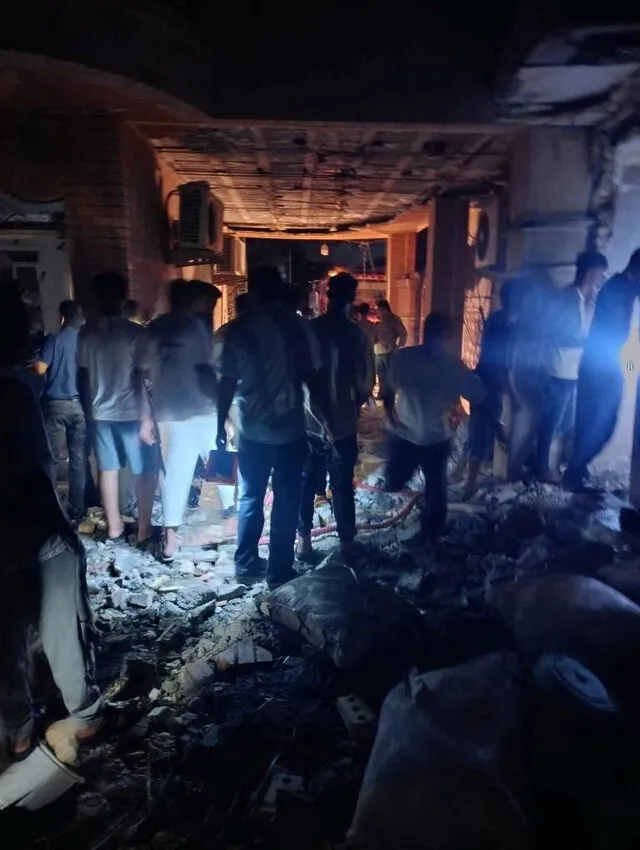
A wedding, a missile, and a casualty count that won’t fit neatly into a press briefing
Four people died. One was a child. More than 50 were wounded. The target was not a military base, a weapons cache, or a command center — it was a house hosting a wedding in Kuhistak, a town in Iran’s Hormozgan Province, along the southern coast near the Strait of Hormuz.
This is the detail that has emerged from the US-Iran escalation, and it matters precisely because it resists the framing that dominates Western coverage. American military statements describe precision strikes against the Islamic Revolutionary Guard Corps. Policy analysts discuss deterring shipping attacks and securing the strait. The numbers most English-language readers encounter are aggregate — strike counts, ship interceptions, official casualty ranges. What Korean outlet Hankyoreh reported through AFP paints something more specific and harder to dismiss: a community celebration turned fatal by missile debris.
The mechanics of the strike matter
The report does not describe a direct hit. It describes missile fragments falling onto a residential building where a wedding was taking place. That distinction is critical. It means the strike may have been aimed at a nearby IRGC target and the wedding venue was in the danger zone, or it could indicate a much broader engagement pattern where proximity to military infrastructure does not guarantee civilian safety. Either way, the result is the same: thirty or forty families in that town are now counting bodies they did not expect to count.
Iran’s Hormozgan province vice governor Ahmad Nafisi told state media IRNA that some of the wounded are in critical condition and the death toll could rise. Fifteen ambulances were dispatched. Debris clearance and search operations were reported complete. This was not a distant report from a hospital ward — it was an active emergency response unfolding in real time.
The US response: denial, deflection, and the policy frame
CENTCOM confirmed the strike and justified it as a response to IRGC attacks on commercial shipping and US personnel in the region. Spokesman Lt. Col. Tim Hawkins told reporters the military had received reports of civilian casualties but stood by the line that the US does not target civilians, unlike the IRGC. The formulation is deliberate. It puts the responsibility for civilian deaths on Iranian military behavior rather than on the consequences of US strike patterns. It is also a formulation that collapses under the weight of a single image: a child among the dead at a wedding.
Western wire services often carry this kind of exchange — accusation, denial, procedural language — without fully interrogating what the underlying imagery communicates. The Korean press is simply passing the same raw information through a different lens. Where a US or European outlet might lead with CENTCOM’s statement and file the civilian toll as a subordinate paragraph, the Asian reporting foregrounds the human event itself. The difference is not editorial bias. It is attention allocation.
The lawnmowing strategy makes this repeatable
The broader context is what makes the wedding story structurally significant rather than a singular tragedy. Trump has floated a “mowing the lawn” approach to Iran — periodic, calibrated strikes designed to create sustained pressure without triggering full-scale war. The strategy assumes US forces can repeatedly engage Iranian targets with acceptable collateral damage. The wedding in Kuhistak is the test case for that assumption.
If lawnmowing works as a deterrence model, it requires a threshold of civilian harm that commanders and policymakers are willing to absorb. If it does not work, the alternative is escalation — and escalation is exactly what the past month of confrontation has already produced. Iran has responded to previous US strikes with its own attacks. The cycle is not hypothetical; it is operational.
Why this story arrives from Korea
Korean media do not cover this conflict with the same institutional proximity as American outlets. They do not field correspondents in CENTCOM’s public affairs office. They do not share a strategic alliance framework with Washington. That distance is precisely what makes their framing useful here. Without the imperative to translate military statements into legible policy narratives, the Korean press is free to let the human detail stand on its own. The wedding detail is not a soundbite. It is a headline for a reason.
What happens next
The death toll in Hormozgan is likely to increase. The vice governor warned that critically wounded patients may not survive. Iran’s IRGC will almost certainly cite the incident — the presence of a child, the nature of the target — in its own justification for retaliatory strikes. The US will reiterate that civilians are not targeted. The cycle continues. What changes is the vocabulary used to describe it.
The Strait of Hormuz remains one of the world’s most vital energy chokepoints. Its stability is not abstract to the global economy. But stability enforced through periodic bombing campaigns that kill civilians at weddings is not the same thing as security. It is a different metric entirely. The question this story forces is not whether the US will strike again. It is whether anyone is measuring the cost of those strikes in anything other than tactical terms.
Four dead. Fifty wounded. One child. The numbers from Kuhistak do not fit into a briefing. They fit into a life that ended in a house decorated for a celebration. That is the reality the policy framing is designed to obscure.