The Wedding-Party Strike That Changes Everything
Iran claims a U.S. strike killed civilians at a wedding party in the south. Whether true or not, the accusation is a deliberate escalation that narrows off-ramps for both Washington and Tehran — and the oil market is already pricing in the worst.
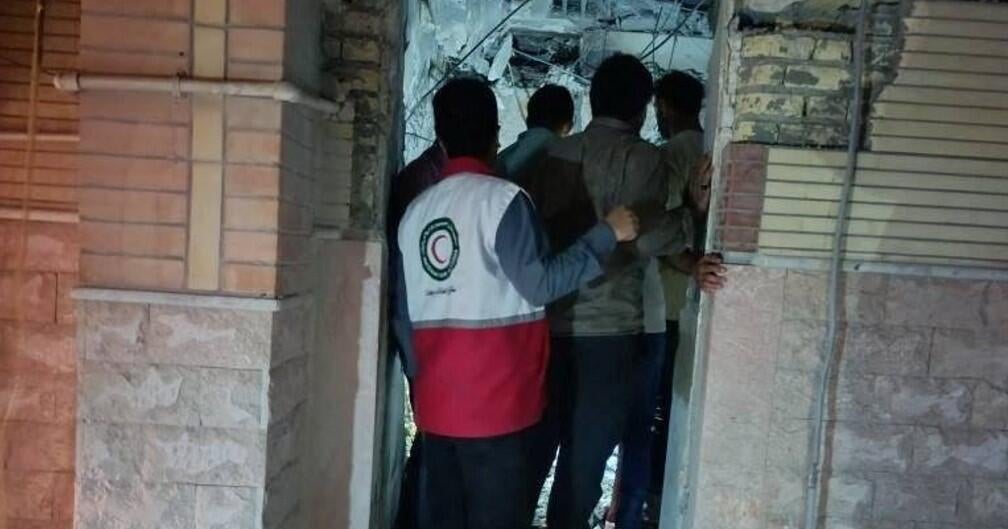
The moment the war changed shape
Iranian state television showed a five-foot crater in the floor of a house where a wedding had been taking place. Videos carried by the IRIB depicted wounded children in hospital beds and the father of the bride, Ali Mallahi, telling a reporter he did not know what to say. Iranian officials put the death toll at four. The foreign ministry later raised that figure to more than 50 killed or wounded. U.S. Central Command said it was looking into the reports and repeated its standard line — the American military does not target civilians.
The sequence matters more than the casualty count. Whether the strike was accidental, the result of bad intelligence, or deliberate, Iran has now anchored its retaliation narrative to civilian suffering on Iranian soil. That is a different calculus from the missile exchanges over Jordan and the drone swarms toward Kuwait. Civilian casualties inside Iran give Tehran a harder edge to negotiate with its own public and with the Revolutionary Guard, whose legitimacy rests partly on the claim that it shields Iranians from foreign attack.
The Gulf front opens
What the wire reports make clear is that Iran has widened the battlefield beyond U.S. forces. The IRGC and the Iranian armed forces claimed strikes on at least seven bases across the region — Camp Tabrin and Prince Hassan Base in Jordan, Erbil in Iraq, Ali Al Salem in Kuwait, Naval Base Bahrain, and Al Dhafra and Al Minhad in the UAE. Jordan confirmed a missile attack, saying thirteen ballistic missiles were launched from Iranian territory, ten were intercepted, and three landed in remote areas. Bahrain said its drones were intercepted. The U.S. dismissed claims that personnel were killed at Jordanian facilities.
But the Saudi shipping company Bahri confirmed something harder to dispute: two Filipino sailors were killed when its vessel SIDR was hit while transiting the Strait of Hormuz on Monday night. Iran also reported that two oil tankers caught fire after striking mines outside a designated corridor, accusing them of following U.S. guidance to use an illegal route. Kuwait said a residential fire caused by an Iranian drone was brought under control with no casualties, but the message was unambiguous — Iranian weapons are reaching into Gulf population centers.
Jordan and Bahrain are American partners, not coalition of the willing variables. When Iran fires missiles at bases hosting U.S. troops on their sovereign territory, it is forcing those governments into a position they have spent months avoiding. Amman and Manama have every reason to want the conflict contained. They do not have the luxury of staying neutral now.
The Trump paradox
President Trump told Fox News that if Iran retaliates, it will be hit much harder, and if it continues, it will be no longer. He told reporters the U.S. had taken out Iran’s new equipment along the Strait of Hormuz and was prepared to strike again anytime. On Truth Social he floated renaming the strait the Trump Strait and asked when the Iranian people would rise up and fight. The administration’s position is internally contradictory in ways that matter for escalation management.
The president has alternated between regime-change rhetoric and willingness to negotiate with what he called the country’s new leadership in June. He told oil executives in the Oval Office that he wanted retail gasoline prices down, then called any agreement with Tehran worthless. The message to Iran is that retaliation will bring overwhelming force. The message to the market is that the Strait remains contested. The message to the Iranian public is that the United States wants your government gone — which is exactly the message that makes the wedding-strike claim resonate.
There is also the question of what the Pentagon can sustain. The USS Abraham Lincoln docked in Thailand on Wednesday after more than 250 days at sea, its crew reporting deteriorating mental health and shortages of food and hygiene products. A carrier that long without relief is a carrier that cannot simply rotate back into the Gulf on demand. That logistical constraint is not discussed in Oval Office soundbites, but it shapes what the U.S. can credibly promise and what Iran can bet against.
Oil at $95 and climbing
Brent crude traded around $95 a barrel on Wednesday morning, up roughly 40 percent over the past year. The increase reflects a market that has absorbed the initial shock of the Strait’s closure and is now pricing in the possibility that the conflict will not contract but expand. Two tankers on fire, a Saudi vessel hit, mines laid and unmarked — these are not scenarios that disappear with a ceasefire announcement. The Strait of Hormuz carries roughly 20 percent of global oil consumption through a channel only about 21 miles wide at its narrowest point. Even a partial disruption reverberates through Singapore, Rotterdam, and Houston.
Iran is simultaneously confronting a domestic fuel crisis. The government arrested 11 foreign nationals accused of smuggling diesel after border guards seized 382,000 liters from a tugboat. Parliament Speaker Mohammad Bagher Ghalibaf urged citizens to curb gas consumption as long lines formed at Tehran filling stations. The U.S. naval blockade of Iranian ports, imposed in retaliation for the Strait closure, has made fuel imports harder. Iran is fighting a war while its own downstream supply chain is fraying.
Who wins, who loses
Iran gains nothing from a broader war it cannot sustain logistically. It loses fuel, it loses shipping, it loses the chance to rebuild the economic foothold that kept the regime stable before the conflict. But the wedding-strike narrative gives the IRGC a domestic rallying point that may be worth more in the short term than the strategic losses it incurs.
The United States gains tactical destruction of IRGC infrastructure along the Strait but loses diplomatic cover. A civilian casualty event — confirmed or not — makes it harder for allies in the Gulf to publicly call for de-escalation without appearing to side with Tehran. It also makes it harder for the Trump administration to claim the operation was precision-targeted.
Gulf states lose the most. Saudi Arabia, Kuwait, the UAE, and Bahrain are geographic neighbors to a conflict they did not start and cannot contain by themselves. Every missile intercepted over Amman or Manama is one that could have been aimed elsewhere. The attack on the Bahri tanker is a preview of what happens when the Strait becomes a free-fire zone for commercial shipping.
What happens next
The next ten days will determine whether this escalates into a sustained regional war or finds a pressure valve. Iran has signaled it will respond to further U.S. strikes. Trump has signaled he will deliver them. The wedding-strike claim gives Tehran justification it can point to domestically and internationally. The U.S. military investigation, whatever its findings, will not reach conclusions fast enough to prevent the next round of fire.
Oil prices will test whether the market believes the Strait can be kept partially open under fire. If Brent moves past $100, the cost hit spreads far beyond energy traders into inflation data and central-bank calculations. The Lincoln’s departure for Thailand removes a carrier from the immediate fight line at a moment when another strike cycle is being debated in the Oval Office.
Diplomacy, when it returns, will look very different from the negotiations the administration described in June. The wedding footage on Iranian television changes the emotional temperature of every room where a deal might eventually be discussed. Whether the strike was an error or a choice, its political consequences are already writing the next chapter.