When the Generals Say No to Iran
US military leaders have formally objected to extending troop deployments for the Iran war through a rare public dissent. The signal sent to allies from Seoul to Riyadh is stark: America may be fighting one war while leaving others dangerously under-resourced.
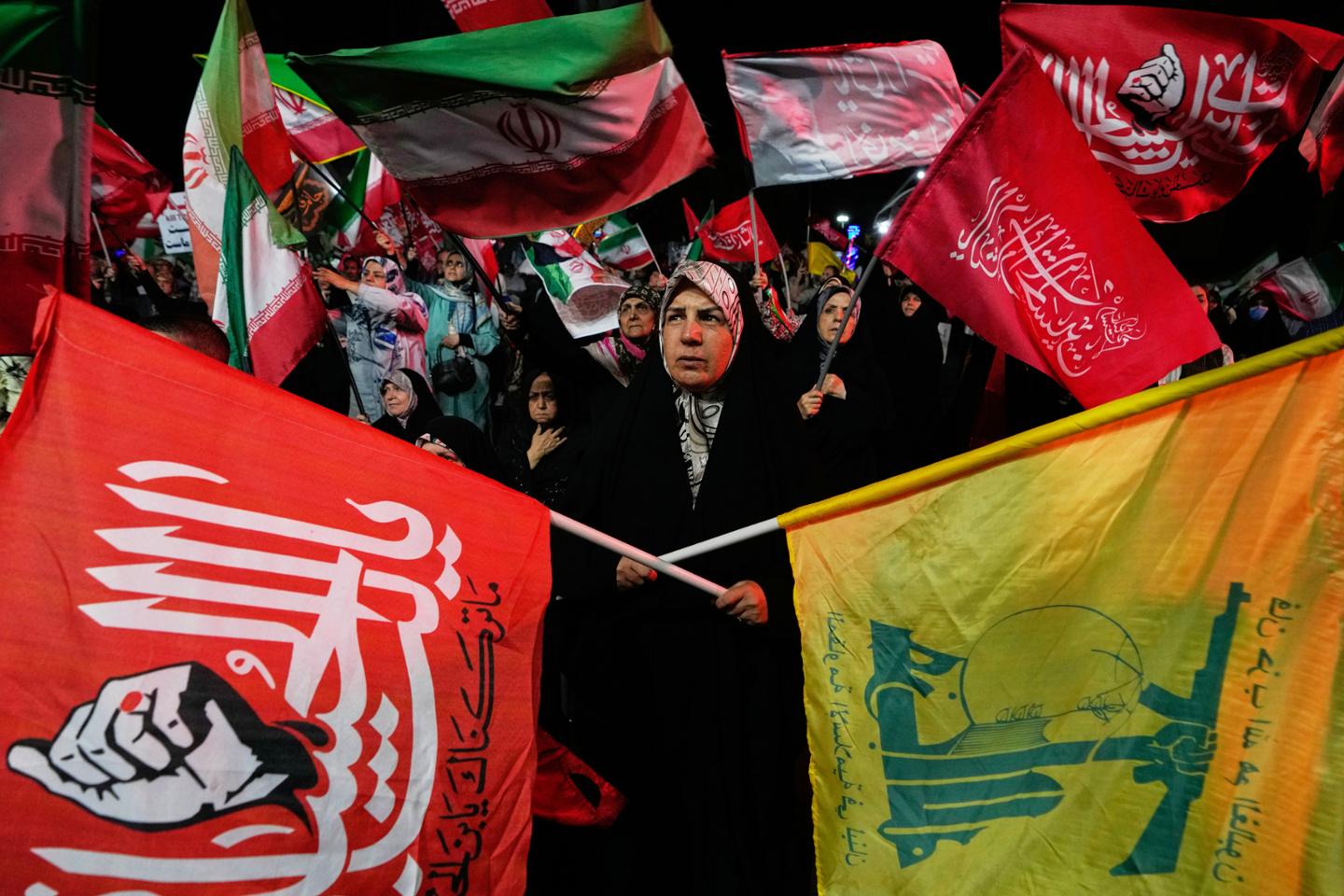
A dissent that arrived on paper
The Pentagon does not usually broadcast its fractures. But on August 14, four regional commanders and the service chiefs used a bi-monthly internal document called the Secretary of Defense Directive Order — known by the acronym SDOB — to file a formal non-concur. They agreed to obey the order to extend deployments through 2027. They made it unmistakably clear they opposed it.
According to reports citing sources familiar with the matter, the signatories were the commanders of US European Command, US Indo-Pacific Command, US Southern Command, and the Navy’s top admiral. Two of them — the Pacific and European commanders — didn’t just object to the timeline. They said the force packages offered fell short of what would be required, and that lending ships and surveillance aircraft to Central Command was eroding their own area’s defensive posture.
The Navy delivered the starkest warning. Chief of Naval Operations Admiral Daryl Caudle said the current level of support for the Iran campaign is unsustainable and that only a quarter of the Navy’s destroyer fleet is deployment-ready — a figure well below pre-conflict baselines. The reason, insiders say, is simple: there is no end date in sight.
The Army and Air Force agreed to the extension, but both flagged significant risk. The disagreement was not tactical. It was existential — about whether the US military can sustain one major war while holding the line in two other theaters.
Why this matters beyond Washington
Civilian-military tension over war scope is not unusual. What makes this episode notable is the institutional channel through which it surfaced. The SDOB is an internal planning document, not a press-release vehicle. For four theater commanders and the service chiefs to embed a dissent there is to force the objection into the record at a moment when public statements from active-duty officers carry legal restrictions. It is a bureaucratic form of shouting.
For allies, the signal is difficult to ignore. South Korea, Japan, the Philippines, and Gulf partners all watch US force posture the way traders watch oil prices. A military that concedes it cannot simultaneously fight a war in the Middle East and maintain deterrent depth in Asia is a military that has implicitly chosen one crisis over the others.
Indo-Pacific Command commander Admiral Samuel Paparo’s resistance was not abstract. He was asked to provide an aircraft carrier strike group and a squadron of destroyers to Central Command — assets his own command depends on for freedom of navigation operations and contingency response. European Command issued a parallel complaint: ships and reconnaissance aircraft lent to the Middle East leave flanks thinner. Southern Command, responsible for the Caribbean and Latin America, joined the objection as well. This was not one unhappy service chief. It was a coalition of regional commanders telling the civilian leadership that their areas of responsibility were being hollowed out.
The ammunition cliff
The readiness warnings predate the SDOB dissent. Reports indicated that Chairman of the Joint Chiefs Dan Caine warned before the Iran conflict began that US munitions stocks were insufficient for a protracted campaign and that allied burden-sharing was inadequate. Within weeks, the situation appears to have worsened. The Washington Post reported that President Trump and Defense Minister Pete Hegseth had a direct confrontation over ammunition shortages during a Cabinet meeting at Camp David on August 31.
The numbers matter. A quarter of the Navy’s destroyers in forward-ready status is not a marginal dip. Destroyer battlegroups are the backbone of US power projection. When only one in four is deployment-ready, the math of extended combat operations changes quickly. Munitions depletion does not rebuild itself. Supply chains for precision-guided weapons and missile defence interceptors cannot be rushed without sacrificing quality or paying a steep premium — both of which have ripple effects on allied procurement and industrial policy.
Energy markets and the price of uncertainty
Oil markets do not trade on declarations. They trade on expectations of disruption. A US military that has admitted it cannot sustain prolonged deployment in the Middle East changes those expectations in two ways.
First, it raises the probability that the conflict could escalate if the US cannot commit sufficient force to contain Iranian proxies and strategic assets. Houthi attacks on shipping, Iranian militia strikes on Gulf infrastructure, and wider regional spillover become more likely when the US deterrent is visibly strained.
Second, it raises the probability of a hurried exit. A military that has formally objected to long-term deployment is a military that may accelerate withdrawal when political pressure mounts — even if the battlefield conditions have not improved. Both scenarios are bullish for oil. The difference is whether the price spike comes gradually or in a single shock.
Traders pricing in a longer conflict should also factor in the secondary consequence: if the US pulls ships and aircraft from Europe and the Pacific to reinforce the Middle East, those regions face a heightened risk of opportunistic aggression. Russia has tested that calculus before. China has studied it. That dynamic creates a risk premium that extends well beyond the Strait of Hormuz.
The alliance test
For East Asian allies, the dissent carries a specific anxiety. South Korea hosts roughly 28,500 US troops and relies on the forward-deployed Seventh Fleet for deterrence against North Korea. Japan depends on US carrier strikes and missile defence layers anchored in the region. The Philippines has opened new bases under the Enhanced Defence Cooperation Agreement. All three count on the assumption that the US can credibly commit forces to the Pacific even while engaged elsewhere.
The SDOB dissent undermines that assumption in plain language. It says: we cannot do both at this level. The question allies will ask is not whether the US will fight in the Middle East — it already is — but whether it will fight there alone. If the answer is yes, then Seoul, Tokyo, and Manila must decide whether to hedge their own defences, expand indigenous capabilities, or negotiate more explicit security guarantees with Washington before the next crisis hits.
What happens next
The military has filed its objection. It will not reverse the deployment orders. But the record now exists. Any future failure to sustain the campaign — in readiness, in munitions, in allied confidence — will carry the weight of a warning that was documented, not whispered. That is politically durable. It constrains the civilian leadership the same way it informs the public.
Expect the dissent to resurface. The SDOB cycle is bi-monthly. The next update will either reflect a change in posture or amplify the same objections with updated data. If the Navy’s destroyer readiness figure deteriorates further — and there is no reason to think it will improve without a pause in operations — the next non-concur will carry even more gravity.
For markets, the take-away is straightforward. A US military that is publicly signaling strain is a US military that may not be able to cap a prolonged Middle East conflict on its own terms. The energy and security consequences of that reality will unfold slowly at first, then all at once.