The Flawed System Behind Trump’s Mail-Ballot Order — and Why It Matters Beyond Elections
A USPS whistleblower alleges the agency built a mail-ballot verification system in a fraction of the time normally required, with a design that would reject entire batches over single scanning errors. The case exposes a familiar pattern: rushed federal tech rollouts under political pressure.
A System Built for Speed, Not Reliability
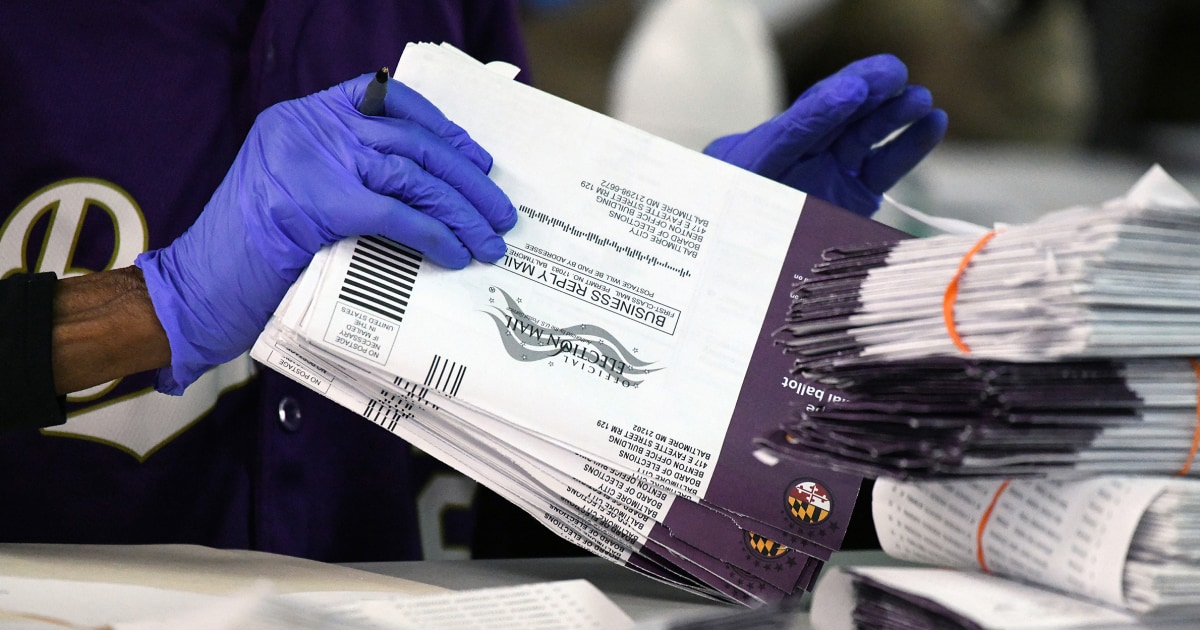
An anonymous federal official has filed a whistleblower complaint alleging that the U.S. Postal Service constructed a new mail-ballot verification system in roughly three months — a process that typically demands nine to twelve for comparable government IT deployments. The timeline alone raises questions any agency undergoing standard software development cycles would struggle to defend. But the complaint, sent to Senator Richard Blumenthal of Connecticut and forwarded to Postmaster General David Steiner, goes further: it says the system was designed in a way that would effectively halt the delivery of entire batches of mail ballots whenever a single barcode failed to scan.
That is the kind of detail that matters enormously if this system is ever implemented. Large-scale mailings of ballots are routine in many states. A single misread barcode in a batch of ten thousand should not stop the other nine thousand nine hundred ninety-nine from reaching voters. Yet that is precisely how the portal appears to be configured, according to the complaint. The system would treat a partial read failure as a blanket rejection, not as a flag for manual review — a design choice that collapses when confronted with the messy reality of physical mail processing, where labels tear, fold, smudge, or become unreadable through normal handling.
What the Whistleblower Said
The whistleblower, represented by the nonprofit Whistleblower Aid, described the development process as “rushed, chaotic, and fundamentally flawed.” Workers reportedly feared the system would crash before launch. Days before the projected public release, the complaint characterizes the internal atmosphere as a “s— show.” Multiple sources within the agency have told reporters that technical staff raised concerns about the rigid rejection logic and were told to proceed regardless. The complaint states the agency continued developing the system despite a federal court order blocking implementation.
President Donald Trump signed the executive order in March directing the creation of federal voter lists and instructing the Postal Service to transmit mail ballots only to those on them. A federal judge has since blocked the order while litigation over its constitutionality proceeds. The whistleblower complaint highlights problems that could surface if the courts ultimately allow the program to move forward. Even if the order itself is struck down, the system was built with enough momentum and institutional commitment that dismantling it entirely may prove just as difficult as deploying it.
The USPS has traditionally acted only as a carrier between election officials and voters. It has never maintained a central registry of American citizens. The Trump administration’s directive asked the agency to take on a role it was neither designed nor tested for — one that requires not just logistics expertise but deep integration with state-level voter databases, each operating on different systems, timelines, and standards.
The Bigger Pattern
This story is not simply about ballots. It is about a recurring failure mode in federal technology modernization: political urgency overriding technical reality.
The government’s Information Technology Management Reform Act of 1996 — known as Clinger-Cohen — and subsequent OMB guidance require structured acquisition processes, security reviews, and testing phases. A system meant to vet the eligibility of millions of voters against a newly constructed federal database, under a tight deadline and with court orders in play, would normally face intense scrutiny at every stage. None of that appears to have happened here, according to the complaint.
The same pattern has appeared across other federal agencies in recent years. The Treasury Department’s pandemic payment-processing failures, the IRS’s delayed upgrade to its taxpayer-facing platform, the Department of Veterans Affairs’ chronic IT bottlenecks — all share a common DNA. IT projects have launched without adequate testing. Legacy systems have been patched rather than replaced. Deadlines imposed by political leaders have collapsed into technical crises. The result is a recurring cycle: announce a bold initiative, rush the build, encounter unexpected failures, issue a corrective order, repeat.
Second-Order Consequences
The damage from this system, if deployed, would extend well beyond immediate ballot rejections. State election officials — already managing complex logistics under constrained timelines — would face a sudden and massive new administrative burden: verifying individual eligibility against a federal list that did not exist until months ago. Counties would need to establish points of contact with USPS data systems, train staff on a platform that was never stress-tested, and handle appeals from voters whose ballots were erroneously blocked. The cost in staff hours, legal challenges, and voter confusion could dwarf the original purpose of the system.
There are also downstream effects on public trust. When voters discover their ballots were delayed or rejected due to a technical glitch — rather than fraud or ineligibility — the narrative will be shaped by those who benefit from distrust in the electoral process. Legal challenges will multiply. Some states may refuse to cooperate with a system they view as unreliable or politically motivated. Others may attempt to work around it, creating patchwork compliance that further destabilizes the mail-ballot infrastructure. The Postal Service itself, long criticized for operational inefficiencies, risks compounding its reputation problems by becoming the face of a botched election-tech rollout.
Who Wins, Who Loses
If this system goes into effect as described, voters lose. States with high volumes of mail ballots would see large numbers of ballots rejected or delayed due to barcode scanning errors. Election officials would face a sudden and massive new administrative burden. The administration wins politically if the system creates enough disruption to justify further claims about election integrity, regardless of whether the claims are substantiated. The Postal Service loses credibility. Its leadership faces scrutiny over whether it followed proper procedures or simply carried out directives without adequate pushback.
Senator Blumenthal, who sits on the Homeland Security and Governmental Affairs Committee, called the effort “blatantly incompetent and incapable of actually delivering ballots that are lawful in this midterm election.” He also accused the administration of being “hell-bent on changing the framework of casting ballots in this country, clearly for political reasons.”
Why This Should Alarm Everyone
The specific mechanics of the USPS system are alarming, but the institutional precedent is more dangerous. An agency has been asked to perform a function it was never designed for, with a timeline that made proper testing impossible, under pressure that appears to have overridden standard safeguards. If courts allow the program, the next question will be whether any of these failures can be undone quickly enough to matter. Even if the executive order is ultimately invalidated, the infrastructure built around it — the assumptions, the procedures, the willingness to bypass normal oversight — will leave a residue that future administrations can replicate.
The USPS and White House declined to comment on the whistleblower complaint. No timeline has been set for the underlying litigation.
What is clear is that the same dynamics producing this story — rushed development, political pressure, inadequate review — appear in federal IT projects far beyond elections. The next flawed system may not involve ballots. It may involve benefits distribution, cybersecurity infrastructure, or healthcare exchanges. The pattern is already visible, and the costs are already being measured in failed rollouts and lost public trust. The real question is whether any institutional lesson will be drawn before the next crisis arrives.