Why Chubu Electric's Data Fraud at Hamaoka Matters Beyond One Utility
Chubu Electric's president is stepping down after seismic data was found manipulated at the Hamaoka nuclear plant. The scandal reveals a systemic credibility crisis that could reshape Japan's post-Fukushima nuclear policy.
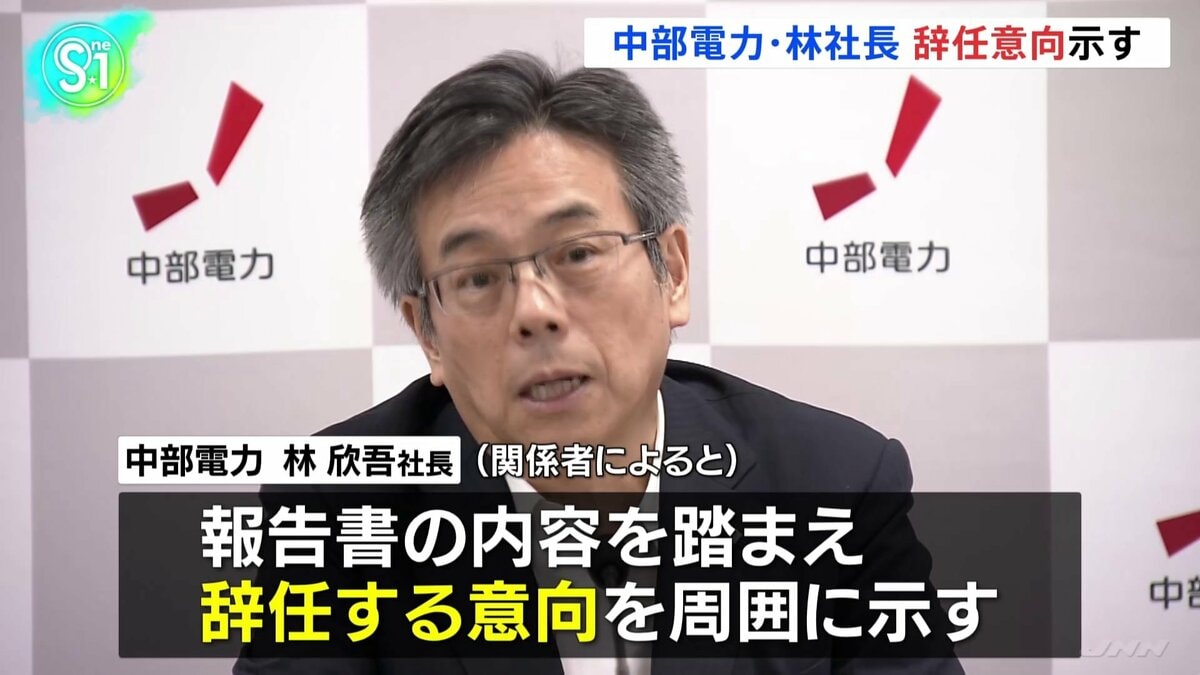
A President Steps Down. The Question Is What Comes Next.
Chubu Electric’s president, Shinko Hayashi, has signaled his intention to resign. The reason: data manipulation uncovered during the reactivation review of the Hamaoka Nuclear Power Station. The advisory director, Mizuno, is also reportedly considering stepping down. A replacement is being weighed around Minoru Yasui, a current director.
On the surface, this reads like standard corporate fallout—a CEO takes the fall for bad data. The story is bigger than that.
Hamaoka Was Always Japan’s Nuclear Problem Child
Hamaoka sits in Shizuoka Prefecture, directly in the shadow of the Nankai Trough—Japan’s most anticipated seismic threat. The plant has been a lightning rod since it opened because the very fault line scientists have warned about for decades runs off its coastline. That geography made it the symbolic and practical linchpin of Japan’s nuclear debate long before the 2011 Fukushima disaster.
The current crisis centers on the so-called design basis earthquake—the seismic threshold engineers use as the floor for safety certification. When that number gets adjusted, even slightly, it changes whether a plant passes or fails its reactivation review. And if the data behind those adjustments is suspect, the entire credibility of the regulatory process unravels.
What makes Hamaoka distinctive from other nuclear facilities under review is not merely its location but the volume of seismic work involved in its certification. The plant requires repeated re-evaluation of ground motion parameters because the Nankai Trough scenario represents one of the most complex seismic models in Japan’s regulatory framework. That complexity, historically, created ambiguity—and ambiguity, as operators have repeatedly discovered, can be leveraged.
The Real Damage Is to Institutional Trust
Japan’s nuclear restart mechanism depends on the Nuclear Regulation Authority reviewing each plant against updated safety standards. The process was designed precisely because the pre-Fukushima framework had failed—literally—in 2011. Every episode of data irregularity now feeds directly into public skepticism, and not without reason.
What happened at Chubu Electric is not an isolated glitch. It is a pattern that has emerged across Japan’s nuclear industry: operators treating regulatory benchmarks as flexible targets rather than hard constraints. The 2015 disclosure that Tokyo Electric Power Company had falsified inspection records for decades set the template. What makes Hamaoka distinctive is the location. A seismic data scandal at a plant perched on the edge of the Nankai Trough carries a weight that no amount of corporate apology can neutralize quickly.
Second-order consequences are already visible. Local governments along the Nankai Trough coast have begun asking whether their emergency evacuation plans—designed around worst-case Hamaoka scenarios—can hold up under renewed public scrutiny. Shizuoka Prefecture’s governor has called for an independent investigation, a move that signals political vulnerability for any administration pushing restarts forward without addressing the trust gap.
The Energy Mix Is Already Shifting—This Will Speed It
Japan’s post-Fukushima energy calculus has been agonizing. The country shut down nearly all of its 33 operational reactors. Coal and LNG imports surged. Carbon emissions climbed. The government has been trying to walk a narrow path between restarting sufficient plants to maintain grid stability and keeping enough public trust to avoid political blowback.
Each new scandal complicates that balance. If Hamaoka cannot restart—or if its restart is delayed by renewed scrutiny—the burden falls on the remaining operating reactors and on fossil fuel imports. Chubu Electric serves the Nagoya region, one of Japan’s industrial heartlands. Power supply anxiety in that corridor is not abstract.
The timing matters. This story broke in mid-September 2026, during a period when the government had been pushing for additional reactor restarts to meet winter demand forecasts. A delay at Hamaoka ripples outward: suppliers face tighter margins, consumers face higher bills, and policymakers face an uncomfortable choice between energy security and regulatory credibility.
There is also a quieter secondary effect. Renewable energy investors and grid planners, who have been waiting for clarity on Japan’s nuclear trajectory, will interpret the Hamaoka scandal as confirmation that nuclear cannot be the backbone of a decarbonization strategy. That shifts budget priorities and strengthens the case for accelerated investment in offshore wind and storage—sectors that may now receive more political support precisely because nuclear has become unreliable as a planning variable.
Who Wins and Who Loses
The winners are difficult to identify beyond the abstract—regulators who can point to tighter oversight and politicians who can campaign on anti-nuclear or pro-transparency platforms. The losers are more concrete: Chubu Electric’s shareholders, who will absorb the cost of leadership turnover and potential plant idling; the company’s employees, caught between professional duty and institutional shame; and the regional economy that depends on reliable baseload power from a plant that may not restart for years.
Hayashi’s resignation, while expected, does not resolve the underlying problem. If anything, it exposes how the system still treats executive accountability as a ritual rather than a structural fix. The question is whether the new leadership under Yasui will bring genuine operational change or simply perform the choreography of reform while the same practices continue behind closed doors.
What Happens Next
The Nuclear Regulation Authority will almost certainly intensify its review of Hamaoka’s remaining reactivation applications. Other utilities watching this closely will brace for similar pressure. A precedent is being set: data manipulation at one plant means heightened scrutiny for all of them. The Korea Peninsula Engineering Corp., the U.S. Nuclear Regulatory Commission’s precedents, and the IAEA’s own guidelines on data integrity all offer frameworks that Japan’s regulators will likely invoke to justify a tougher stance.
The government will face a difficult conversation about whether the nuclear restart timeline is realistic given the current trust deficit. Expect louder demands for transparency, possibly new statutory requirements for independent data verification, and likely political friction between the energy ministry and regional communities that do not want another Hamaoka-style scandal on their doorstep.
For global readers, the lesson is straightforward. Japan’s nuclear industry cannot simply engineer its way back to normalcy. The technical fixes are necessary but insufficient. The harder work—restoring institutional credibility in a sector where a single data point can determine whether a reactor runs or rusts—is far slower, and far less forgiving. The Hamaoka scandal is not the end of Japan’s nuclear story, but it is a reminder that credibility, once eroded, demands more than a resignation to rebuild.