Why Congo's Ebola Outbreak Is Exceeding All Records
Congo's Ebola outbreak is on track to surpass the deadliest on record, yet health-worker shortages and unpaid-strike fallout are crippling the response. The real story is not just the case numbers—it is who is left standing to fight them.
The Numbers Are Only Half the Story
The Democratic Republic of Congo is fighting the fastest-growing Ebola outbreak in history. More than 7,700 cases and 3,700 deaths have been recorded. The outbreak could soon pass the 2014-2016 West Africa epidemic—the deadliest on record—with over 11,000 fatalities. But behind those figures is a quieter crisis that may determine whether Congo contains this outbreak or watches it spiral further into the region’s most catastrophic health emergency.
Congo does not lack treatment beds. It lacks the people to staff them.
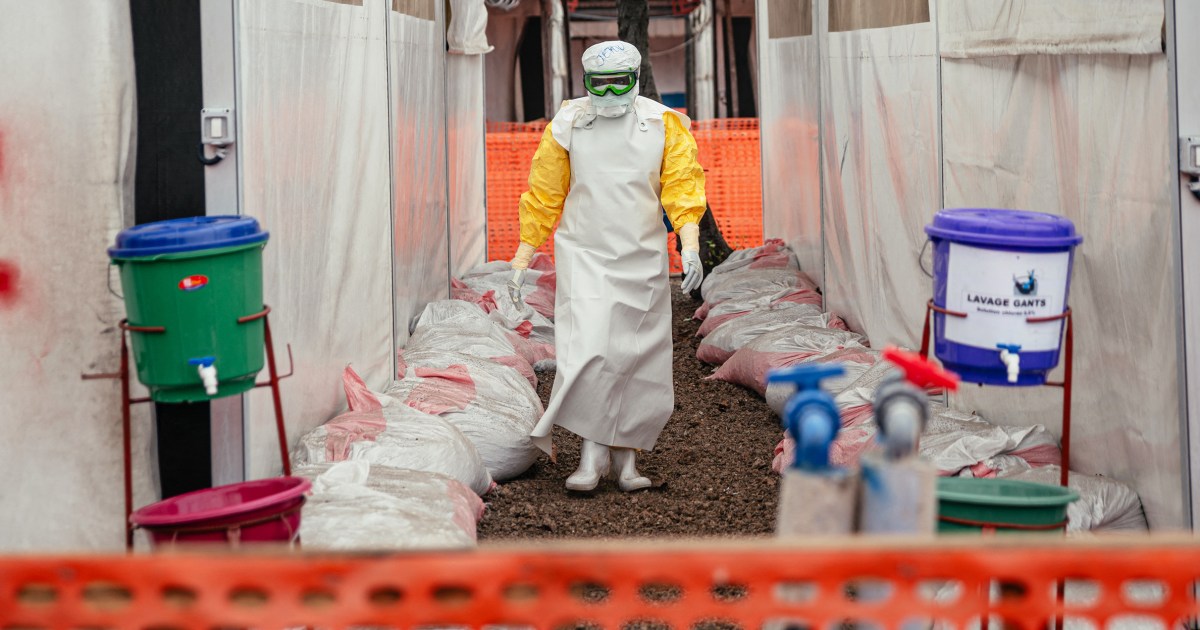
The gap between infrastructure and human capacity is not a minor logistical detail. It is the single most decisive factor shaping whether this outbreak stabilizes or expands. Treatment centers have been constructed across the affected provinces—some funded by the WHO, others by bilateral partners and NGOs. But beds without trained nurses, isotopes without anesthesiologists, isolation wards without contact tracers are structural monuments to a response that has prioritized capital over workforce development.
A Geographic Whack-a-Mole
The outbreak has reached seven provinces, and the map of transmission is changing by the week. In Ituri—the original epicenter—cases fell 26 percent between Aug. 31 and Sept. 20. Nearby Haut-Uele dropped 15 percent. Those declines deserve recognition; containment efforts are working in pockets, and the data suggests that ring vaccination and aggressive contact tracing can suppress transmission when conditions allow.
But in North Kivu, cases surged 73 percent over the same period. The WHO’s Marie Roseline Belizaire put it plainly: the outbreak remains spread across a wide geographic area and is not under control. Every percent that falls in one province can be offset by a spike in another.
This pattern is characteristic of outbreaks in conflict zones, where population displacement, insecure roads, and militia activity make contact tracing nearly impossible. North Kivu has been a warzone for decades. Ebola is now exploiting every crack.
The second-order effects are already visible. Communities that once cooperated with health teams have grown hostile, not because they reject medicine but because they distrust institutions that appear to arrive only when danger reaches their doors and leave as soon as funding cycles shift. Neighborhoods adjacent to active Ebola zones have seen flight patterns accelerate, pushing displaced families into neighboring health districts with little or no preparedness. Each new arrival is a potential vector, and each village absorbed into the displacement stream loses its own health infrastructure to the exodus.
This geographic whack-a-mole dynamic means that provincial-level case counts provide a misleading sense of progress. A 26-percent drop in Ituri does not mean the outbreak is shrinking. It means the virus has migrated.
The Human Resources Gap
WHO Ebola incident manager Catherine Smallwood identified the human resources gap as one of the largest obstacles. A single Ebola treatment center requires roughly 300 health professionals—anesthetists, hygienists, nurses, general practitioners. The DRC is building facilities faster than it can fill them with trained staff.
“We are building Ebola treatment centers but do not always have the human resources needed to operate them,” said WHO representative Anne Ancia. “Those health workers must be paid.”
That last sentence carries enormous weight. The government’s own payroll was found to include names of people not involved in the response—a problem known as “fantôme” workers, ghost employees who draw salaries without rendering services. Health Minister Roger Kamba acknowledged the problem in July and said the government was verifying lists. Frontline workers say promises to pay wage arrears were only partially fulfilled—some received nothing, others a fraction of what they were owed.
This is not a new failure. The DRC has struggled with payroll integrity for years. But in a disease outbreak where staff turnover means new workers must be trained from scratch, unpaid wages are not an administrative grievance. They are an operational failure that directly kills patients. When health workers walk off the job, treatment centers close or operate with skeleton crews. Patients who might have survived under full staffing die in reduced-capacity wards. The downstream cost of unpaid wages is measured in lives, not budget line items.
There is also a trust dimension that compounds the staffing crisis. Even among workers who continue to show up, morale has eroded. Promises of payment that go unfulfilled signal to frontline staff that their sacrifice is not valued by the institutions meant to protect them. Retention becomes a secondary concern to survival. Some health workers are quietly preparing exit strategies, whether that means transferring to non-Ebola assignments within the same facility or leaving the public health system entirely.
The Children Who Cannot Speak
Perhaps the most alarming detail emerging from the WHO briefings is the fatality rate among children under five: more than 60 percent, compared with roughly 40 percent among adults.
Detection is the first barrier. Young children cannot describe their symptoms. Fever, vomiting, and diarrhea look like malaria, cholera, or common childhood illnesses that are far more familiar to community health workers. By the time an Ebola infection is suspected, it is often too late. The window for early intervention—when antiviral treatments and supportive care are most effective—has already closed.
“The presentation of symptoms can be confusing,” Belizaire noted. The implication is stark: the true pediatric death toll is likely higher than reported. Children who die from unrecognized Ebola infections are never counted in the official figures, making the outbreak appear smaller than it is.
The second-order effects of pediatric mortality are especially damaging. When mothers and fathers lose young children to a disease that arrives quietly and is misdiagnosed as something routine, community trust in the health system degrades further. Grief hardens into suspicion. Families begin to hide sick children rather than bring them to treatment centers, fearing that admission means separation, stigma, or death without the possibility of saying goodbye. This behavior creates silent transmission chains that epidemiologists cannot trace and public health officials cannot quantify.
There is also a genetic and immunological dimension that researchers are only beginning to understand. Children may respond differently to the same treatments approved for adults. The dosing protocols, the side-effect profiles, the pacing of intravenous rehydration—all of these are calibrated for adult physiology. The high pediatric fatality rate may partially reflect a treatment gap, not just a detection gap.
Why This Matters Beyond the DRC
The 2014-2016 West Africa Ebola outbreak killed more than 11,000 people and exposed the catastrophic consequences of a slow global response. This current epidemic is unfolding under worse conditions: active conflict, greater population displacement, and a health system already strained by years of underfunding. The borders of the DRC touch eight countries. An uncontrolled outbreak in North Kivu is not a contained national emergency—it is a regional threat with direct pathways into Uganda, Rwanda, South Sudan, and Burundi.
If Congo surpasses the West Africa death toll, it will not be because the virus is deadlier. It will be because the system designed to stop it is breaking under pressure. The gap between what the WHO can plan and what it can execute on the ground is widening—and the people caught in that gap are Congolese health workers and patients.
The financial architecture of the response has also drawn criticism. Donor funding has consistently fallen short of WHO appeals, leaving a persistent shortfall that forces triage decisions at the operational level. Not every suspected case can be tested. Not every contact can be traced. Not every treatment center can be fully staffed. These are not abstract budget gaps—they are decisions that determine who lives and who dies.
What Happens Next
The WHO has warned that the outbreak remains uncontrolled. Treatment beds continue to open, but without staff they remain empty. Wage disputes are being verified, but trust among frontline workers has eroded. The geographic spread suggests the virus is finding new pathways through displaced populations and informal care networks.
Several scenarios are plausible in the coming months. The most optimistic involves rapid wage resolution, sustained donor funding, and successful deployment of additional international health workers to fill the staffing gap. In this scenario, the outbreak could stabilize within a quarter and begin a sustained decline.
The more likely scenario involves partial progress—some wage payments restored, new staff trained and deployed, but persistent gaps in coverage. Under these conditions, the outbreak continues to grow slowly, crossing the 11,000-fatality threshold before eventually plateauing. The death toll exceeds the West Africa epidemic, but the geographic spread does not escalate into a regional crisis.
The worst-case scenario combines unresolved wage disputes, continued militant interference with health operations, and further pediatric transmission through undetected community chains. In this outcome, the outbreak expands into additional provinces and neighboring countries, triggering a regional emergency that requires measures far beyond the current response toolkit.
None of these scenarios are predetermined. The trajectory depends on decisions made in the next few weeks—whether governments honor payment commitments, whether donors close the funding gap, whether international health workers can be deployed at scale fast enough to matter. The virus does not negotiate. It exploits every failure in the system designed to stop it. Until that system is reinforced, Congo will keep fighting its worst epidemic with one hand tied behind its back.