Why GPT-6 Astra's AGI Framing Changes Everything
OpenAI's GPT-6 Astra isn't just another model update — it's a deliberate repositioning of AI as a task executor, not a chatbot. The pricing, benchmarks, and Japanese media's serious treatment of AGI claims reveal a strategy that could redraw the competitive landscape.
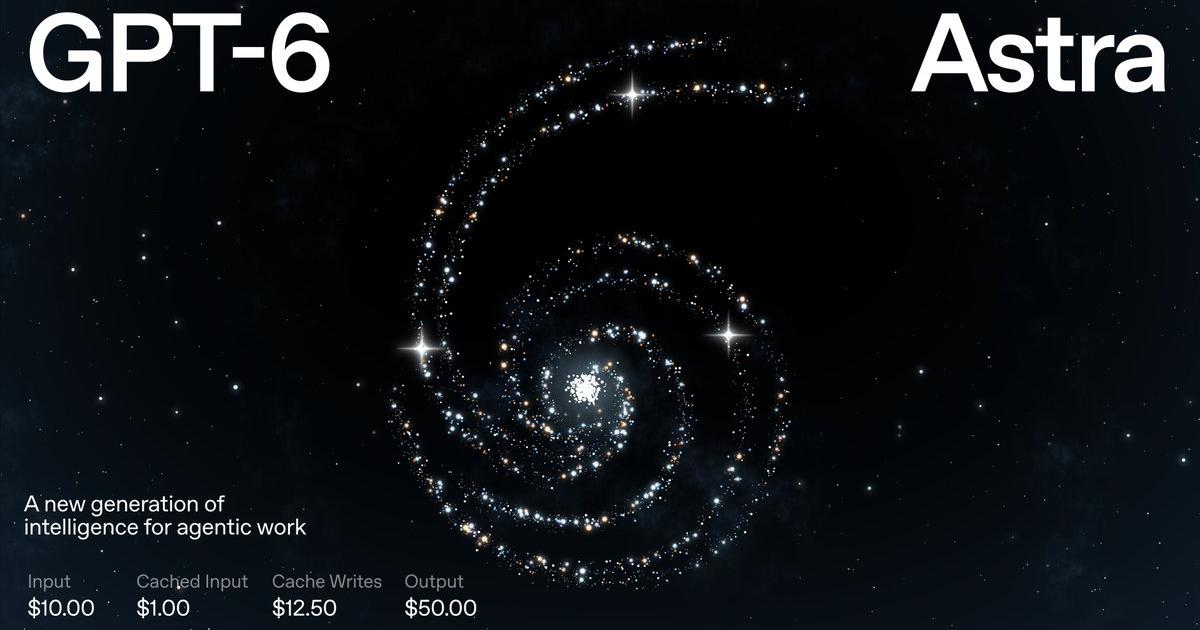
GPT-6 Astra Isn’t a Product Launch. It’s a Positioning Move.
OpenAI released GPT-6 Astra on September 3 with a video that showed something far more ambitious than a smarter chatbot. People talked to a large screen. The AI translated speech into Blender 3D models, game assets, 3D prints sitting on actual desks, product listings on flea markets — all without a single keystroke. Greg Brockman called it “welcome to the AGI era.”
The Japanese tech press, notably Gizmodo Japan, took that claim seriously enough to frame Astra not as an incremental upgrade but as a cultural inflection point. That reading matters. It signals how one of the world’s most tech-savvy markets is interpreting OpenAI’s message — and whether that interpretation is likely to hold water elsewhere.
The Benchmarks Tell a Different Story Than the PR
Let’s cut through the launch video first. On ARC-AGI 3 — the benchmark most directly tied to AGI claims — Astra scores 63%. OpenAI’s own harness pushes that to 99%, but the article itself notes the top score came under special conditions and is technically “not evaluated.” That’s the difference between a milestone and a proof of concept.
On AutomationBench, Astra jumped from 18.1% to 41.4%. OSWorld moved from 65.7% to 72.6%, and task completion time dropped from roughly 75 minutes to 40. These are real improvements in multi-step task execution. They are not, however, evidence of human-level general intelligence.
The Artificial Analysis composite score for Astra sits at 61 — identical to GPT-5.6 Sol. Claude Fable 5.1, Anthropic’s competing release, scores 66. Astra is not the best model on the market by conventional metrics.
So why the AGI language? Because Astra is optimized for something specific: long-horizon, multi-tool tasks that require chaining operations together. It does not uniformly outperform on code, science, or reasoning. It outperforms on the kind of work that actually occupies knowledge workers — the kind of work that turns a prompt into a finished product across multiple applications.
This optimization comes with trade-offs. Where Astra gains in autonomous workflow execution, it cedes ground on specialized reasoning tasks. Its 63% on ARC-AGI 3 is respectable but not dominant — well below the 80%+ thresholds some researchers have tentatively associated with true generalization. The model is not solving novel puzzles faster than humans; it is stringing together existing tools more reliably. That distinction is everything.
The Price Signal Is Part of the Strategy
Astra’s API pricing is steep: $10 per million input tokens, $50 per million output tokens. That’s 2.5 times the cost of Sol. But the token efficiency tells a different story. Code generation uses roughly one-third the tokens of Sol for comparable results. The premium pricing is a deliberate positioning move — Astra is being sold as the expensive, high-reliability option for work that used to require a human operator sitting at a keyboard.
This is the model that OpenAI wants companies to run when they can’t afford a mistake. The “difficult work gets the premium execution” framing from the source article is accurate. OpenAI is not trying to win on price. It’s trying to win on trust for autonomous task completion.
The pricing strategy sends a second-order signal to the market. By charging a premium, OpenAI is effectively saying: the value of Astra isn’t in raw intelligence — it’s in the reduction of human oversight cost. Companies that would have needed two or three junior developers to shepherd a multi-step project now need one plus Astra. The math changes even at these higher per-token rates. That’s the real pitch, and it’s aimed squarely at enterprises that have been holding back on AI adoption because the reliability bar hasn’t been met.
Why the Japanese Media’s Reading Matters Globally
Gizmodo Japan’s coverage treats the AGI framing as substantive, not marketing. That’s notable because Japanese tech media tends to be more cautious about American AI hype cycles than their Western counterparts. When Tokyo outlets are taking AGI milestones seriously, it suggests the capability narrative is shifting in ways that global readers should track.
The broader implication: if the Japanese market — and markets that follow its lead, including South Korea and parts of Southeast Asia — begin pricing AI adoption around autonomous task execution rather than chat capabilities, the competitive dynamics change. The model that wins isn’t the one with the highest benchmark score. It’s the one that operators trust to finish a job without supervision.
Japanese business culture places extraordinary weight on reliability and error minimization. A model that occasionally hallucinates in a report-writing task might be tolerable in a creative context, but in a market where process discipline is a competitive advantage, that tolerance evaporates. If OpenAI can position Astra as the model that doesn’t make the mistakes that derail workflows, it captures a segment of the market that previous generations of AI tools simply couldn’t reach. That’s not a benchmark story. It’s a deployment story.
Anthropic’s Response Is the Real Story
Claude Fable 5.1 currently leads on composite scores. But Astra leads on the dimension that matters for enterprise deployment: the ability to complete long, multi-step workflows autonomously. Anthropic has every incentive to counter this framing, and every reason to avoid the AGI language that OpenAI is deploying so aggressively.
Anthropic’s positioning has always been anchored in safety and interpretability. Going head-to-head on AGI claims would mean playing on OpenAI’s turf. The more strategic move is to sharpen the contrast: Fable 5.1 is the model you trust because you can understand why it made each decision. Astra is the model you use because it finishes the work before you notice it hasn’t checked in. Those are different value propositions, and Anthropic knows its audience prefers the former — at least publicly.
The competitive question isn’t which model scores higher on ARC-AGI-3. It’s which company can convince enterprises that their AI can replace a human workflow, not just assist one. Astra is the first model OpenAI has explicitly designed for that transition. Fable 5.1 may still edge it out on raw intelligence benchmarks, but Astra is being sold as infrastructure, not a tool.
The Hidden Metric: Human Oversight Reduction
What neither side is benchmarking directly is the metric that will actually determine market share: how many human intervention points a model eliminates in a typical workflow. Astra’s OSWorld improvement — cutting task time from 75 minutes to 40 — suggests it removes roughly two-thirds of the supervisory touches that previously accumulated across a multi-step project. That’s not incremental. It’s structural.
When a model can go from prompt to deployed asset without pausing for human confirmation at each step, the economics of AI adoption flip. The question stops being “Can this model help me?” and becomes “Do I still need a person in the loop?” The answer to that question is what enterprises will be paying for — whether OpenAI admits it or not.
What Happens Next
OpenAI will roll out Astra to ChatGPT Plus, Pro, Business, and Enterprise users within days. The ARC Prize leaderboard will keep updating. Anthropic will respond with its next iteration. But the real test won’t come from benchmarks. It will come from deployment data — how many companies actually move Astra from pilot to production, and whether the reduction in human oversight justifies the premium pricing over time.
If Japanese and similar markets begin valuing AI by autonomy rather than intelligence, the entire framing of the AGI race shifts. We’re not watching a competition to build the smartest model. We’re watching a competition to build the most dependable one. And dependability doesn’t show up cleanly on a leaderboard. It shows up in whether a workflow completes without a human having to step in and fix what went wrong.
OpenAI is betting that the market will reward that bet. The price, the benchmarks, the AGI language — it all points the same direction. The question is whether Anthropic and the rest of the field will follow, or whether they’ll double down on a different definition of what matters. Whoever defines the metric wins the market. Whoever follows loses it.