Why Korea's Market Chaos Should Terrify Wall Street
The KOSPI's 300% surge and 40% crash shocked US markets — but the real danger isn't volatility itself. It's the leveraged retail infrastructure that makes Korean markets a contagion risk for global emerging-fund flows.
The headline says one thing. The numbers say another.
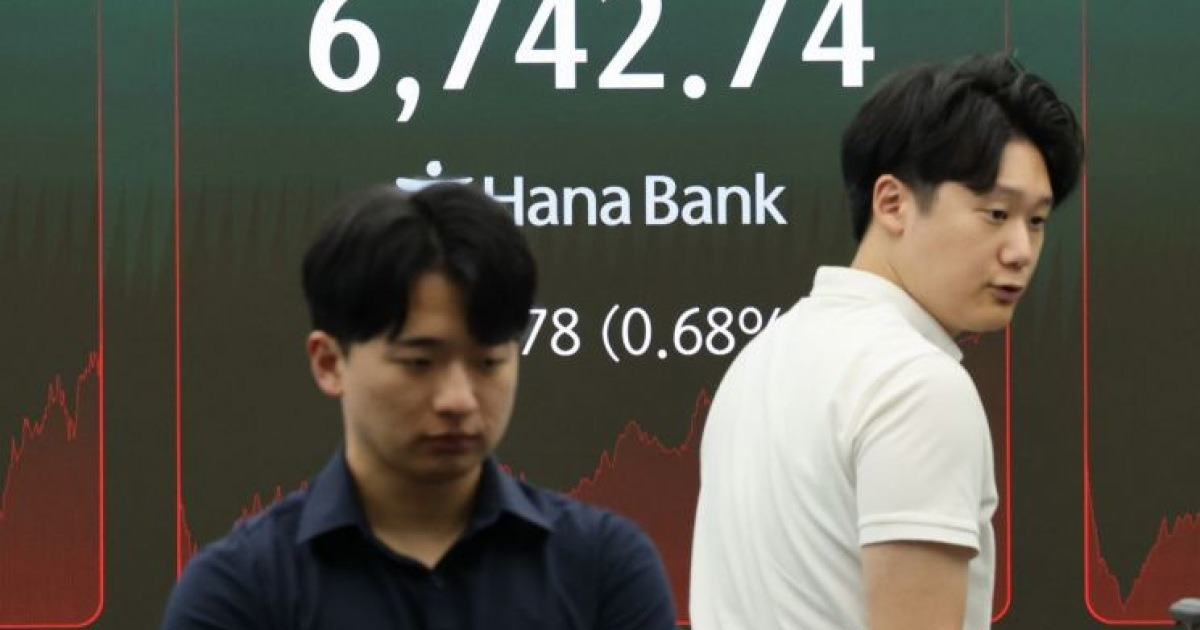
The Wall Street Journal called it this week: the world’s craziest stock market. Korea’s KOSPI index more than tripled over the past year, then surrendered roughly 40% of its gains between June and July. It has bounced nearly 20% from those lows since, but intraday swings of 4% or more have become routine. A 25-year-old retail investor in Seoul reportedly lost his entire portfolio in a single leveraged ETF tied to one stock — SK Hynix, the memory-chip giant.
The WSJ story is accurate but incomplete. It treats Korean volatility as an exotic curiosity, a side effect of a country that exports K-pop and squid games but apparently cannot export sensible risk management. That framing lets Western investors off the hook. The chaos in Seoul is not isolated. It is a preview.
What drove the 3x run and the 40% crash
The KOSPI rally was concentrated. SK Hynix, riding the global AI memory-demand supercycle, became a proxy for the entire market. Korean retail investors — colloquially known as gam-ant, or ant investors — piled into single-stock leveraged ETFs that amplify daily moves two- to threefold. When chip prices surged, those products compounded gains. When sentiment reversed in June, they compounded losses at the same ferocious speed.
The mechanics matter more than the direction. Leveraged ETFs in Korea are structured to deliver multiplied daily returns, not multi-day returns. Over volatile stretches, compounding works against holders even when the underlying asset is flat. A stock that drops 20% over two days can erase far more than 20% of a two-times leveraged ETF’s value. This is basic math that does not discriminate by nationality. But Korea’s retail participation rate is among the highest in advanced economies, and the product mix tilts far more heavily toward leveraged and derivative instruments than equivalent markets in Europe or North America.
That tilt is not accidental. It is the product of a financial ecosystem where brokerages profit from trading volume, where retail accounts are pushed toward high-turnover strategies, and where regulatory guardrails have lagged product innovation. The result is a market where a single-name leveraged bet can move billions in a session and where exits are structurally difficult.
The hedge fund that learned the hard way
Situational Awareness, a US-based AI-themed hedge fund that concentrated its positions in SK Hynix, lost 67% in July alone, according to the WSJ. The fund was forced to sell most of its listed holdings to repay bank loans. That sequence — concentrate, get leveraged, get squeezed, liquidate into a falling market — is the textbook recipe for a margin spiral.
What Western observers are only now noticing is that the feedback loop runs both ways. American and European funds are not passive spectators. They entered Korean equities with the same concentrated, leveraged convictions that Korean retail investors brought to leveraged ETFs. When the KOSPI reversed, the selling was simultaneous across borders. The hedge fund did not lose because Korea is weird. It lost because the product architecture rewarded conviction and punished it with equal intensity.
The ELS time bomb no one is pricing in
The WSJ focused on leveraged ETFs. It barely mentioned ELS — equity-linked securities — which are structured products sold aggressively by Korean banks to retail clients over the past decade. ELS pay higher coupons but expose investors to downside protection failures when the underlying index drops below predetermined barriers. When markets fall sharply, ELS trigger automatic losses that force retail holders to take real losses at the worst possible moment, often after they have already been shaken out of their positions through more visible vehicles like ETFs.
This is the hidden layer of Korea’s volatility engine. ETFs show up in headlines. ELS do not. But ELS amplify the same dynamics on a larger balance sheet. Korean banks’ ELS exposure is measured in hundreds of trillions of won. A sustained decline does not just hurt retail portfolios — it creates settlement and liquidity frictions that can spillover into money markets and bank funding.
No one in London or New York is building ELS contagion into their emerging-market risk models. That is a gap with consequences.
Who wins, who loses, and who gets left holding the bag
The WSJ quoted a Korean investor-union leader who called the market a casino and suggested a moment of silence for retail participants. The sentiment is shared across the street. But the architecture that produces casino outcomes is not random. It is designed.
Brokerages win on volume. Banks win on structured-product fees. Asset managers win on flow during rallies. Retail investors win when leverage compounds in their favor and lose everything when it does not. The institutional side of the market — including foreign funds — sits somewhere in between. They can enter and exit faster, but when the circuit breakers hit and the leveraged products force liquidations, speed becomes an illusion.
The 25-year-old who put his life savings into a SK Hynix leveraged ETF is the most visible casualty. He is also the least protected. Korean retail investors do not have the hedging tools, the tax advice, or the regulatory safeguards that institutional investors take for granted. They have smartphones and margin accounts.
Why this should matter to every emerging-market fund
Korea is not an outlier. It is an early adopter. The combination of high retail participation, easy access to leveraged products, concentrated sector bets, and opaque structured-product exposure is replicable. Thailand, Taiwan, and Vietnam are already showing thinner margins and higher retail-driven turnover. The difference is that Korea’s market cap and dollar volume make the moves visible. Smaller markets will move the same way quietly, then surprise.
For global portfolio managers, the lesson is blunt. Korean volatility is not a regional quirk. It is a stress test for the entire emerging-market leverage stack. When KOSPI swings 4% in a session because a single-name leveraged ETF triggers chain liquidations, that selling does not respect time zones. It hits the same funds that are long Mexico, short Brazil, and underweight Taiwan. The contagion channel is not trade flow. It is balance-sheet deleveraging.
What happens next
The KOSPI has bounced 20% from its July lows. That does not mean the risk has passed. It means the first wave of leveraged sellers is exhausted. The next wave could come from ELS barrier breaches, margin calls on institutional book positions, or a chip-cycle slowdown that reduces SK Hynix’s earnings power. Any of those events would reactivate the same dynamics at scale.
Regulators in Seoul have hinted at tighter rules on leveraged products. That is necessary but insufficient. Without structural changes to how retail investors access derivatives, how banks distribute structured products, and how foreign funds price Korean volatility, the rollercoaster will keep running. The WSJ’s headline captures the spectacle. The real story is the machinery underneath — and the fact that it is already wired into global fund flows.