Why Korea's Resource Push Is a Signal for East Asia
South Korea's energy-dependent economy can no longer afford to buy LNG on the spot market when chokepoints like Hormuz seize up. SK and Posco are buying production stakes abroad—and the play has implications across Asia.
The Strait That Controls Everything
Roughly one-fifth of the world’s liquefied natural gas passes through the Hormuz Strait. When that chokepoint clogs, Asia feels it first.
That’s the uncomfortable reality South Korea is now pricing into its energy strategy. Since Middle East tensions disrupted shipping through the strait in March, cargo volumes have never returned to pre-conflict levels. The International Energy Agency reports that Qatar and the UAE alone shipped around 112 billion cubic meters of LNG through Hormuz last year. Most of that gas was headed east — toward Japan, South Korea, and Taiwan.
South Korea imported 48 million tons of LNG in 2025, making it the world’s third-largest buyer after China and Japan. The math is unforgiving: the country has no domestic gas fields of significance, no pipeline alternatives to the Middle East, and a coastline that makes it acutely vulnerable to any disruption in the Gulf.
For decades, Seoul’s approach was simple enough — buy on the spot market, diversify suppliers, hope for the best. That calculus is changing.
SK’s Barossa Bet
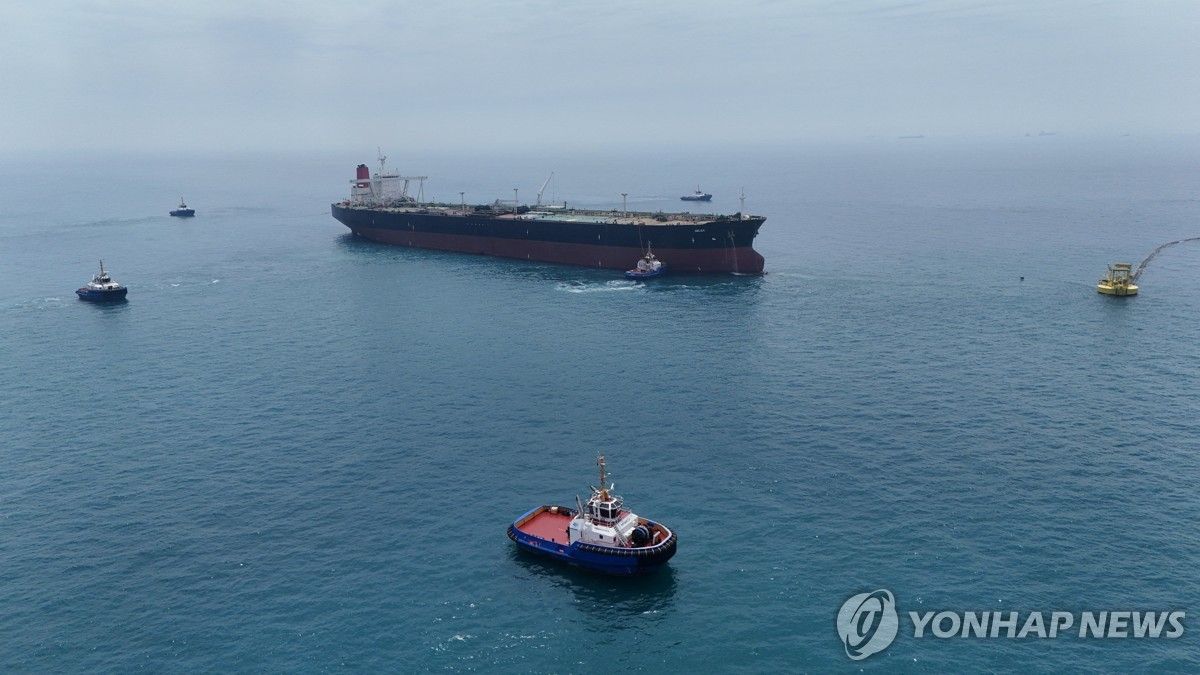
The clearest signal came in February, when the first cargo of Australian LNG from the Barossa gas field docked at the Boryeong terminal in South Chungcheong Province. This was not a trading deal. SK Innovation’s E&S subsidiary holds a production stake in Barossa and has committed to taking 1.3 million tons of LNG annually for the next 20 years, totaling roughly 26 million tons.
To put that in perspective, 1.3 million tons represents about three percent of South Korea’s entire annual LNG import volume. It is not a game-changer by itself. But it is a template.
The company is also bringing condensate — a liquid hydrocarbon byproduct — back to Korea. In August, 300,000 barrels of Barossa condensate arrived at Incheon’s North Port. SK plans to secure around 1.1 million barrels per year going forward, feeding its Incheon petrochemical complex and reducing reliance on Middle Eastern crude derivatives.
Barossa is only the beginning. SK’s resource strategy stretches across the region. Its subsidiary SK Earthon operates production fields in China’s 17/03 block and is developing multiple offshore blocks in Vietnam, including the 15-1/05 field, which is scheduled to begin oil production in the fourth quarter of this year.
Posco Follows
Posco International is making a parallel play. The company produces gas from offshore fields in Myanmar and has been building capacity in eastern Australia since acquiring Senex Energy in 2022. It is also exploring new gas fields in Malaysia and Indonesia.
The pattern is unmistakable: Korean industrial giants are shifting from buyers to producers. Not full-scale producers, but participants with equity stakes and long-term offtake agreements in fields far from the Hormuz corridor.
What This Actually Changes
Ownership stakes in overseas fields do not guarantee that the gas will flow to Korea. Contracts vary by block. Some production is sold locally; some is redirected to third-country buyers. No Korean executive would claim that Barossa output is exclusively earmarked for South Korea.
That is not the point.
What matters is optionality. When spot prices spike during a supply crunch — and they have, repeatedly this year — having a production stake and a long-term contract means you have a floor. You can take your allocation from your own asset and hedge the rest on the market. A pure spot buyer has no such cushion.
One industry source told Financial News that the lesson is straightforward: repeated disruptions through critical routes like Hormuz make it impossible to manage price and supply risk through spot purchases alone.
The Bigger Picture
This shift is not unique to South Korea. Japan and Taiwan are pursuing similar strategies, though with different pacing. But Korea’s move is notable because it comes from a country that has historically treated energy security as a government responsibility, not a corporate one. The state-managed oil company KOCC managed most overseas resource investments. Now private conglomerates — SK, Posco — are driving the strategy themselves.
That decentralization has advantages. It brings capital and commercial urgency to resource acquisition that state bodies often lack. But it also raises questions about coordination. Are these companies working toward a unified national energy strategy, or are they competing with each other for the same assets?
Who Wins, Who Loses
South Korean consumers and industry win if this strategy holds. A diversified supply base and production stakes reduce exposure to single-corridor disruptions and spot-market volatility. The Incheon petrochemical cluster, which depends on Middle Eastern condensate, gains a partial alternative stream from Australia.
The losers are harder to name explicitly, but they exist. Middle Eastern LNG exporters lose a degree of pricing power as Asian buyers reduce their spot-market dependence. Shipowners who specialized in Middle East-to-East Asia routes may see volume pressure if more gas flows via alternative corridors through Australia and Southeast Asia. And Korean competitors without overseas production stakes — smaller refiners, industrial users without balance-sheet depth — remain fully exposed.
What Happens Next
The Barossa project will produce for two decades. That timeline outlasts most geopolitical cycles, but it also means SK and Posco are locking in commitments that assume Hormuz disruptions are the exception, not the rule. If the strait reopens smoothly within a year, these projects look expensive. If disruptions continue or worsen, they look like the only rational move.
Vietnam’s 15-1/05 block, coming online this quarter, adds another variable. The South China Sea is itself a contested waterway. Production there introduces a new set of geographic risks on top of the Hormuz problem.
East Asia’s energy security question is no longer about finding alternative suppliers. It is about owning a piece of the supply chain — far from the chokepoints that have always dictated the region’s fate.