Why Samsung Is Welcomeing Apple Into Foldables — On Its Own Terms
Samsung's VP publicly welcomed Apple's impending foldable iPhone launch — not out of charity, but because the former market leader has already rewritten the rules of the category and is now betting that ecosystem depth beats hardware novelty.
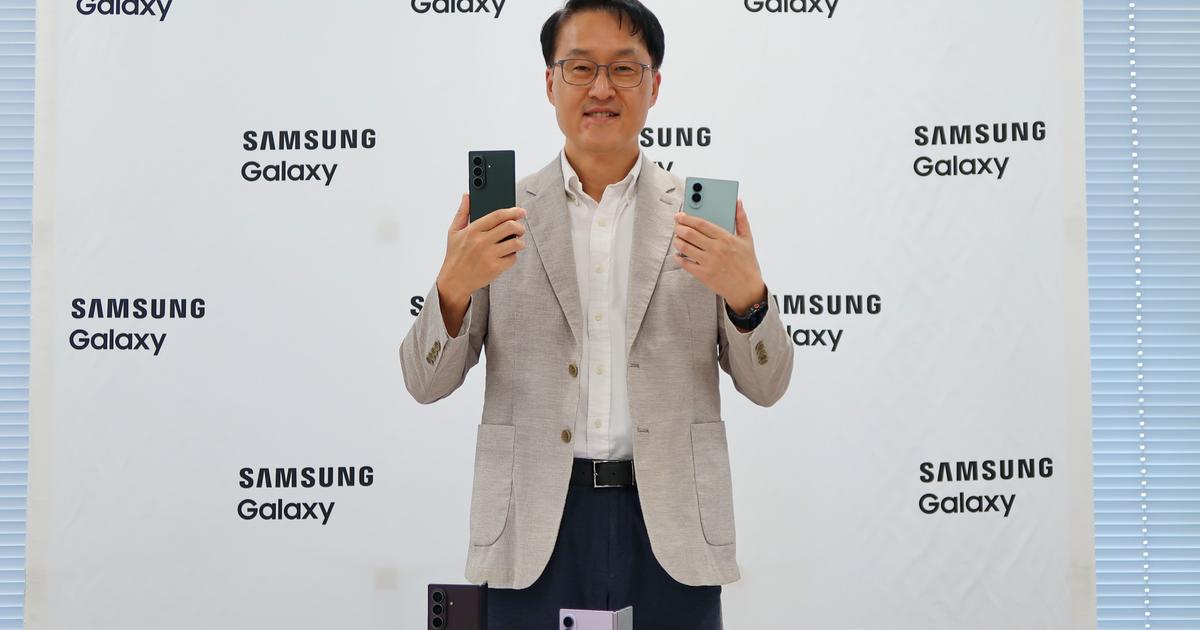
The welcome that isn’t a welcome
When Samsung Electronics VP Yang Byung-deok was asked directly whether Apple’s rumored foldable iPhone influenced the timing of the new Galaxy Z Fold8, he didn’t bristle. He smiled. “We welcome many companies entering this market,” he said. “It’s healthy competition.”
The timing of that remark — days before Apple’s September 9 event, where the foldable iPhone is expected to debut — was no accident. It was a calculated display of confidence from the company that has dominated the category since the original Galaxy Fold launched in 2019. Samsung isn’t just comfortable with an Apple entrant. It is telling Apple exactly what form that competition will take.
Samsung has already standardized itself into the lead
Yang’s core argument is one most readers will miss if they focus only on the product specs. “The foldable structures and materials we’ve built are now used as industry standards,” he said. In other words: Apple isn’t entering a greenfield. It’s entering a field Samsung planted, irrigated, and then patented the irrigation system.
The new Galaxy Z Fold8 and Fold8 Ultra showcase what Samsung calls Flex Titanium Technology — a hinge and display structure that uses a titanium alloy film roughly one-third the thickness of a human hair. The result: the Fold8 Ultra opens to 4.1mm, the thinnest Samsung has ever achieved in that configuration, and the standard Fold8 weighs 201 grams, the lightest in the category.
But here is the part Samsung wants the world to notice: those titanium films required processing capabilities that, according to Yang, only Japanese suppliers could deliver at the required scale and consistency. Samsung internally nicknamed the effort the “Private Ryan Project” — a reference to the difficulty of the mission. No company names were disclosed, but the acknowledgment is significant. Samsung is admitting that even its own breakthrough depends on a supply chain it did not build alone.
That admission cuts both ways. It signals ambition and global reach. But it also reveals the thinness of Samsung’s moat. If the critical differentiator in a premium foldable is a Japanese-made titanium film, then Samsung’s advantage is less about raw invention and more about系统集成能力 — the ability to assemble dozens of specialized components into a coherent product.
The real bet: ecosystem over hardware
This is where Yang’s answer to the competitive question becomes the most interesting part of the entire briefing. When pressed on what gives Samsung an edge over newcomers, he pointed to seven years of accumulated real-world usage data — over 100 reliability tests simulating drops, hinge pressure, and daily wear patterns. He framed this as the irreplicable asset: not a single component, but the institutional knowledge of how millions of people actually use foldables.
In a follow-up written response, Samsung took the argument further. It explicitly contrasted its approach with Apple’s. Samsung described its strength as “system engineering” — the vertical integration of display, hinge, materials, battery, thermal design, and One UI, all optimized together. Apple, by contrast, was characterized as a company that excels at integrating hardware and software within a single product line, but one that is now starting from scratch on a form factor Samsung has been refining for half a decade.
The subtext is clear: Samsung is shifting the battleground from “who makes the best foldable phone” to “who understands foldable phones best.” The first question is winnable by anyone with sufficient R&D budget. The second requires time — and Samsung has it in abundance while Apple does not.
What this means for Apple
Apple’s foldable iPhone is expected to launch around September 9. Rumors suggest a large-screen format similar in aspect ratio to Samsung’s latest offerings. Samsung’s insistence that its own design decisions were driven by user data rather than competitor observation is a direct counter-narrative: we got here first, and we got here for the right reasons.
For Apple, the challenge is not building a functional foldable. It is building credibility in a category where Samsung can point to seven generations of iteration, millions of hours of failure data, and a hinge mechanism that has survived more stress tests than any Apple product ever will. Samsung’s welcome is genuinely confident because it believes the competition will expose that gap.
But Apple brings something Samsung cannot replicate overnight: an ecosystem lock-in that no amount of hinge engineering can match. The question is whether ecosystem depth matters as much as foldable depth when consumers are evaluating a entirely new form factor. Early foldable adopters bought Samsung for the novelty and the engineering. Apple’s potential customers may buy for the same reasons — or they may buy simply because they already live inside Apple’s walled garden.
Who wins, who loses
Samsung wins if the conversation stays about hinge mechanisms, titanium films, and reliability testing. That is its home turf, and it has fortified it aggressively with the Fold8 series.
Apple wins if the conversation shifts to ecosystem integration, app experience, and brand loyalty — areas where Samsung’s system engineering argument rings hollow against the iPhone’s entrenched position.
The Japanese suppliers who made the titanium film possible win regardless. Their role, acknowledged publicly by Samsung for the first time, signals that the foldable supply chain is becoming a strategic asset in its own right.
What happens next
Samsung’s diplomatic tone is unlikely to last. As Apple’s foldable moves from rumor to product, expect the public courtesy to evaporate. Samsung will start publishing more detailed comparisons. Apple will likely respond with its own ecosystem play — emphasizing how the foldable integrates with iPhone, iPad, Mac, and Apple Watch in ways Samsung’s Android-based approach cannot match.
The next twelve months will determine whether foldables remain a Samsung-dominated niche or become a genuinely contested category. Samsung’s welcome was polite, but it was also a declaration: the house has been built. Apple is still looking for the钥匙.