Why Starship Flight 14 Matters for Every Rocket Builder on Earth
The FAA has greenlit SpaceX's most ambitious Starship test yet, one that could either validate a revolution in orbital economics or expose the staggering cost of getting there. What happens on September 28 ripples far beyond Texas.
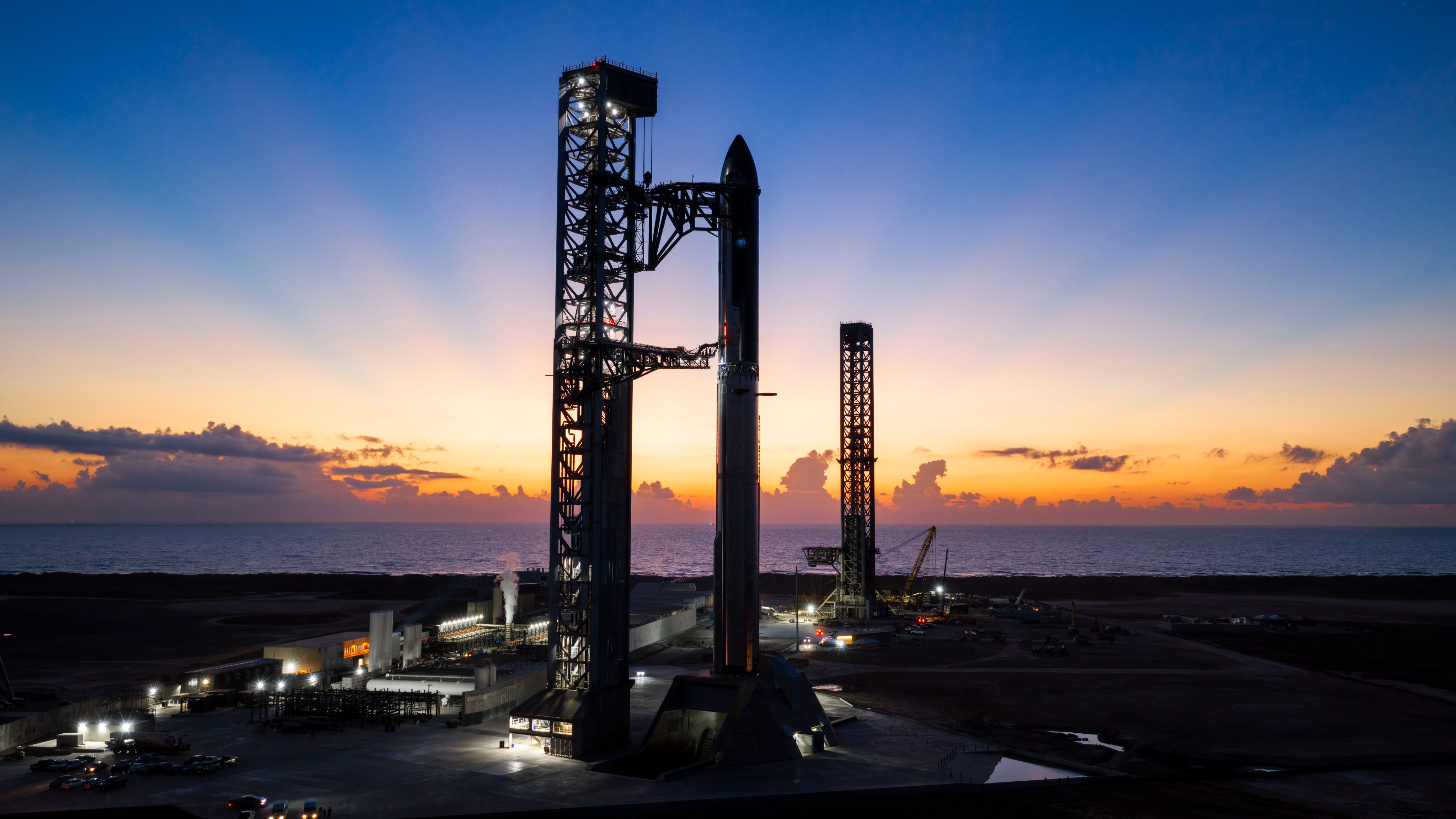
The Most Expensive Coin Flip in History
The FAA handed SpaceX its launch license on September 26, clearing Flight 14 for a window between 8:15 and 9:30 a.m. EDT on September 28. The event itself — an orbital debut for the Starship-Super Heavy stack, the most powerful rocket ever constructed — is what every aerospace firm on the planet has been watching since 2019. But the stakes go well beyond celebration or disappointment for SpaceX fans.
Flight 14 is a coin flip worth roughly $2 billion in development costs, carrying 26 next-generation Starlink satellites that would become revenue-generating assets if they reach orbit. A successful flight reorients global launch economics. A failure reallocates billions and buys time for every rival trying to catch up or outrun the program.
What Flight 14 Actually Is
After thirteen suborbital attempts — the most recent ending in July with an unexpectedly gentle splashdown in the Indian Ocean — SpaceX is finally aiming for orbit. The sequence is deliberate and revealing: after the initial ascent burn, Flight 14 will follow the same passively safe trajectory used in earlier tests. Controllers will evaluate vehicle health during a coast phase and decide whether to proceed to orbit or let the stack reenter and splash down. It is, in essence, a go-or-no-go hinge built into the flight profile itself.
If the judgment is go, Starship fires a single Raptor sea-level engine for a nineteen-second burn at T-plus 25 minutes and 17 seconds. That circularization maneuver places the vehicle into a roughly 171-mile orbit. The plan calls for six orbits over about eight hours before deployment begins.
The payload tells the real story. Twenty-six Starlink Version 3 satellites unfold over thirty minutes. These are not test articles. They are operational broadband assets designed to join SpaceX’s constellation and generate recurring subscription revenue — assuming they survive the trip and the deployment sequence. Three carry cameras that feed heat shield imagery back to engineers, giving SpaceX its first in-flight thermal protection data from an orbital trajectory.
The return leg is equally significant. An eleven-second deorbit burn kicks in just under nine hours after liftoff, and the entire stack splashes down in the Pacific Ocean. Neither the Super Heavy booster nor the Starship upper stage will return to the launch site — that ambition has already slipped to Flight 15. Flight 14 is about proving orbit is achievable, not proving recovery is routine.
Who Wins If It Works
SpaceX wins first, obviously. Orbital insertion would transform Starship from an expensive experimental vehicle into the only rocket in history to demonstrate powered orbit insertion followed by controlled ocean reentry in a single flight cycle. The company would have proven its central thesis: that a fully reusable two-stage-to-orbit system is viable.
But the broader winners are harder to spot. Every satellite operator that has priced access to orbit at Falcon 9 rates or above suddenly faces a new baseline. Starship’s design target is hundreds of tons to orbit with full reusability. Even if SpaceX achieves only a fraction of that capacity on day one, the mere existence of a working orbital Starship recalibrates every contract negotiation, every cost model, and every business plan built around current launch economics.
Starlink V3 satellites in orbit also accelerate SpaceX’s broadband monopoly. Each satellite is a node in a mesh that becomes more valuable as density increases. More satellites in lower-cost orbits means faster expansion into underserved markets and stronger pricing power against competitors like Amazon’s Project Kuiper, which is still years from deploying at scale.
NASA is watching too. The Artemis program — targeting its first crewed lunar landing in early 2028 — depends entirely on Starship as the lunar lander. A failed orbital debut delays that timeline. A successful one keeps the 2028 target on the board and strengthens SpaceX’s negotiating position as the sole provider of NASA’s crewed lunar transport.
Who Loses If It Fails
A failure — whether on ascent, in orbit insertion, or during deployment — redistributes advantage to everyone building launch vehicles outside SpaceX’s orbit. ULA, Arianespace, Rocket Lab, and China’s Long March family all benefit from a pause. Contracts currently on hold while buyers wait for Starship pricing get re-signed with incumbents. Government programs that had Starship slotted into their timelines move to alternative providers at higher cost and with schedule pressure.
Blue Origin, NASA’s second Artemis lander contractor, gains breathing room. Its own timeline is already years behind SpaceX’s. A Starship failure does not make Blue Origin ready — it simply makes the competitive gap wider for a longer period.
Perhaps most importantly, investors and partners who have bet heavily on SpaceX’s orbital capability face a credibility reset. The company has spent a decade selling the vision of orbital Starship. A failure does not kill the program — the physics do not change — but it confirms what many competitors have assumed: that reusable orbital rockets are harder to build than anyone publicly admits.
The Number That Changes Everything
The deployment of twenty-six Starlink V3 satellites is the metric that matters most. Not orbital insertion alone, but a successful payload release and checkout. If Starship reaches orbit but cannot deploy its satellites, the commercial thesis takes another hit. The constellation’s expansion slows. Revenue growth decelerates. Every quarter of delay compounds against a company that prices its future on launch cadence.
Conversely, twenty-six operational V3 satellites in orbit would prove not just that Starship flies, but that it delivers payloads on schedule — the operational standard that separates hobby projects from commercial infrastructure.
Flight 14 is not the end of the road. It is the point where the road either appears or does not. The FAA license means the regulators have reviewed the environmental impact, the safety analysis, and the flight termination plan. It does not mean SpaceX has solved the engineering problems. It means September 28 is the date on which those problems either resolve themselves or reveal their full scope.
For an industry that has spent decades promising reusable rockets, Flight 14 is the moment the promise gets tested at full scale.