Why the USPS Mail Vote Block Could Reshape Midterms
Trump's team is pushing the Supreme Court to lift a federal judge's restraining order on the Postal Service's plan to deny ballot delivery to noncompliant states. The outcome could tighten mail voting in more than a dozen states just weeks before the midterms.
The Supreme Court Is About to Decide Who Gets to Vote by Mail
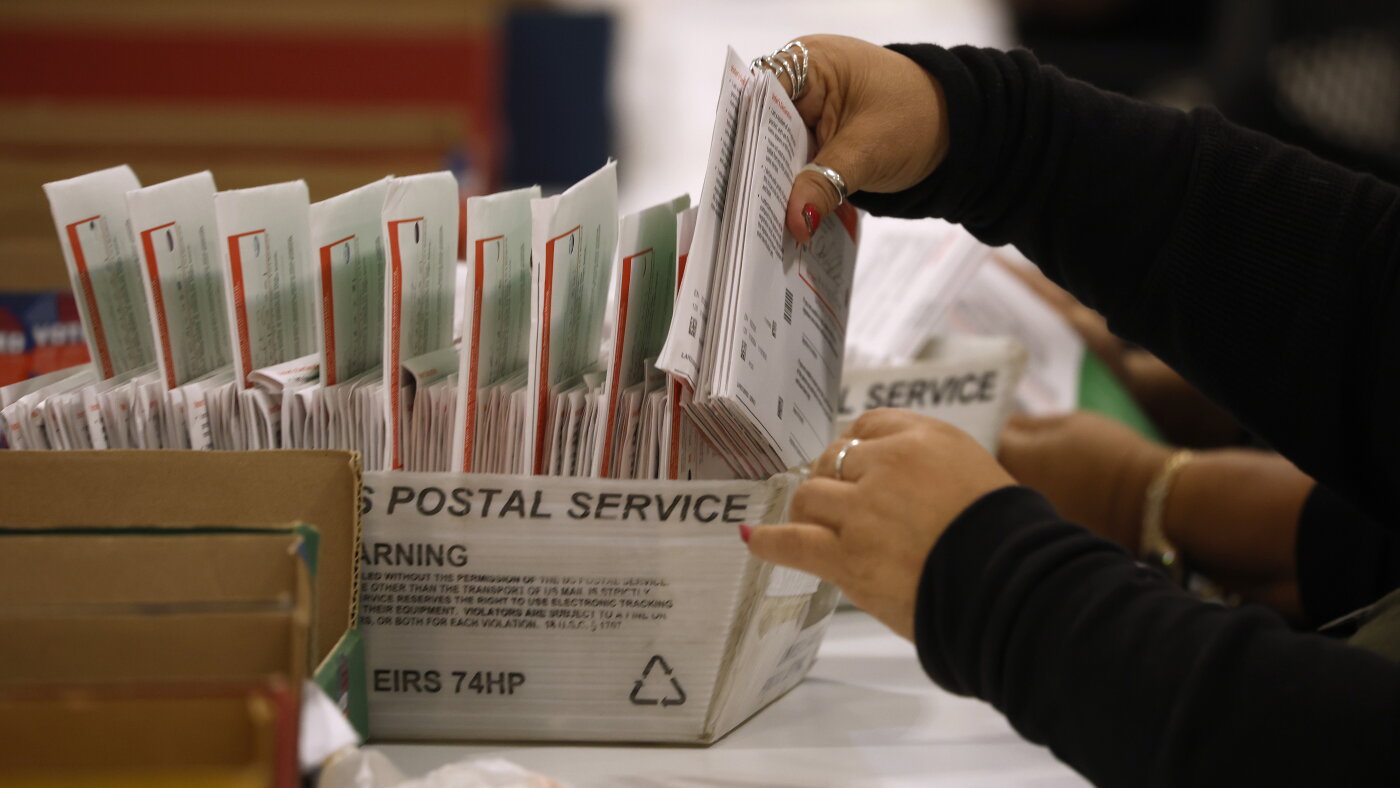
North Carolina starts mailing out its absentee ballots on Friday. It is the first domino in this year’s midterm voting season, and the race to deliver paper to doors has never faced a more unusual obstacle. The Trump administration has asked the Supreme Court to lift a temporary restraining order that is currently blocking the U.S. Postal Service from enforcing a new set of rules on how states must prepare and ship election mail. If the Court agrees, the effect could be immediate and disruptive. If it does not, the status quo holds and mail-in voting proceeds under the existing framework that dozens of states have already built.
The question is no longer abstract. It lands directly on the docket at a moment when many states are weeks away from printing and postage-stamping ballots for millions of voters. That timing is what makes this case so consequential for the 2026 midterms and far beyond.
What the USPS Plan Actually Requires
The Postal Service issued a revised rule for federal ballot mail in August, responding to an executive order from President Trump that directed the agency to crack down on illegal voting by non-U.S. citizens. The rule has two main pillars. First, state election officials would have to turn over lists of mail-in voters’ names and addresses to the Postal Service. Second, those officials would be required to place certain barcodes on mail ballot envelopes.
The enforcement mechanism is stark. USPS says it will not deliver ballots to voters in states whose election officials do not meet those requirements. In practice, that means a state that refuses or cannot comply could see its entire mail-ballot pipeline stalled by the agency responsible for moving the votes.
A federal judge in Boston put a hold on key parts of that plan with a temporary restraining order. The Trump administration now wants the Supreme Court to vacate that block so the rules can take effect before the midterms.
Why the Timing Makes This Dangerous
Election experts say it is too late for USPS to carry out this plan without causing major disruptions. The logistics of redesigning ballot envelopes, retrofitting processing equipment, and rerouting mail across thousands of post offices do not compress neatly into a few weeks. North Carolina is already on its schedule. Other states are set to begin sending mail ballots later this month.
A whistleblower report adds another layer of concern. It claims USPS has not properly tested the online portal system that would collect mail-in voter information from the states. The report also alleges the agency has set up a policy for verifying ballot envelopes that could result in many voters not getting their ballots in time for the midterm election or at all.
If those allegations are accurate, the practical result of lifting the restraining order would not be a smoother voting process. It would be a chaotic one, with ballots stuck in transit, envelopes rejected at sorting facilities, and voters who missed a window that was suddenly narrowed without warning.
The Legal Battle Over Authority
The legal arguments cut in opposite directions and touch on a basic question of federalism. USPS argues the revised rule is within its authority to regulate how mail is prepared and processed. The agency frames the barcode and data-sharing requirements as standard operational adjustments for a specific type of mail.
Challengers of the USPS plan argue the opposite. They contend the mailing agency has no authority to control voting by mail. Elections are primarily administered by the states, and imposing new conditions on how ballots are packaged and tracked, backed by the threat of non-delivery, is seen as an overreach that intrudes on state election administration.
The Supreme Court already ruled on a procedural question in August, but it has not yet weighed in on the legality of the executive order or the USPS plan itself. That leaves the restrictive order from the Boston judge in place and the final resolution hanging in the balance.
What the Data Says About the Justification
President Trump said he issued the directives to USPS to stop illegal voting by non-U.S. citizens. That is a serious allegation in principle, but the record on the ground does not support it as a widespread problem. Multiple studies and audits have found that such fraud is incredibly rare. Election integrity scholars across the political spectrum have documented that voter impersonation fraud, the kind this policy targets, occurs at rates measured in fractions of a percent.
That gap between the stated justification and the empirical evidence is central to the case. If the goal is to prevent a nonexistent epidemic, then the means — threatening to withhold ballots from entire states — look disproportionate at best and punitive at worst. If the goal is something else, then the public rationale may be a cover for a different objective: making mail voting harder to access.
Who Wins and Who Loses
The winners and losers here are predictable. States with robust mail-voting systems that do not want to comply with the new requirements — including states with long histories of election-by-mail like Oregon, Colorado, and Utah — lose the most. Their voters face the risk of delayed or undelivered ballots. Election officials lose the ability to run their processes without outside interference from an agency that has rarely been involved in election administration.
Voters lose because uncertainty replaces certainty. Mail voting works because it is predictable. Voters know when to expect their ballot, when to fill it out, and when to return it. A last-minute regulatory change that can hold up delivery shatters that predictability. People who rely on mail voting because of disability, distance, work schedules, or simply preference end up bearing the cost.
The administration wins if the Court lifts the block. It gets to test a theory of postal authority that would let USPS set conditions on how states administer federal elections. That is a significant expansion of federal power over a domain traditionally reserved to the states.
What Happens Next
There are several possible paths from here. The Supreme Court could grant certiorari and hear the case on the merits before the midterms, but the Court’s term and the proximity of Election Day make that unlikely. More plausibly, the justices could rule on an emergency application to lift or maintain the restraining order. Either way, a decision is needed soon enough to matter for November.
If the block stays, mail voting proceeds as it has in recent cycles. States continue to print, postage, and track ballots under the rules they already follow. If the block is lifted, chaos is the most likely outcome given the whistleblower allegations and the compressed timeline.
This case will not end with the midterms. Even if the Court resolves it before Election Day, the legal and administrative fallout will stretch forward. Questions about USPS authority, about state autonomy over elections, and about the propriety of using the mail system as an election-control lever will persist. Lower courts will have to address them. Congress could respond with legislation. And the next administration could revisit the rules all over again.
Why This Matters Beyond the Ballot Box
The deeper issue is what this case says about the boundaries of federal power and the protection of voting access. The Postal Service is one of the oldest federal institutions in the country. It moves everything from bills to birthday cards to medication. The idea that it can now condition the delivery of ballots on state compliance with new data and labeling rules is a departure from how the agency has operated for decades.
It also raises a basic democratic question. When the federal government can withhold mail from entire states because of policy disagreements with their election officials, what stops it from using that leverage against any state that disagrees with federal priorities? The answer should be the Constitution, the separation of powers, and a judiciary willing to enforce those limits. The current case tests whether those checks are strong enough.
The Bottom Line
The Supreme Court’s decision on whether to lift the block will shape mail voting in at least a dozen states for this year’s midterms. It will determine whether millions of voters receive their ballots on time or become collateral damage in a legal battle over postal authority and election control. It will set a precedent that either constrains or empowers the USPS to dictate terms to state election officials.
North Carolina is mailing ballots on Friday. The clock is ticking. Whatever the Court decides, the midterms will be the first election held under these contested rules — and the effects will ripple through every cycle after.