Why Trump's Battery Pickets Could Reprice Korean EV Makers
The US government is pressing Ford to cut ties with Chinese battery maker CATL — a move that could lift the value of Korean-made cells. But winning that trade-policy shift requires Korean suppliers to bring lower-cost LFP and mid-nickel production to US soil, something they have not yet committed to at scale.
The Pressure Is Real
The US Department of Transportation secretary, Shawn Duffy, sent an open letter to Ford CEO Jim Farley on September 8 warning that the company’s plan to license battery technology from Chinese maker CATL created a national-security conflict. Duffy cited CATL’s presence on a Pentagon list of firms linked to China’s military — a designation that makes any contractual relationship structurally risky under US law.
The political framing is striking. Republican Senator Rick Scott called the letter a wake-up call. Congressman John Moolenaar said Ford should cooperate with US allies, not adversarial states. In effect, Washington is steering demand away from Chinese cells and toward Korean suppliers — at least in the political discourse.
What Ford Was Planning
Ford had been moving toward a lower-cost strategy for its next-generation pickup truck, tentatively called the Fathom. The starting price Ford revealed in August was $28,350 — more than $10,000 below the $40,000 electric pickup target it set in 2023. To hit that price, Ford chose an LFP cell from CATL, produced under license at BlueOval Battery Park in Marshall, Michigan.
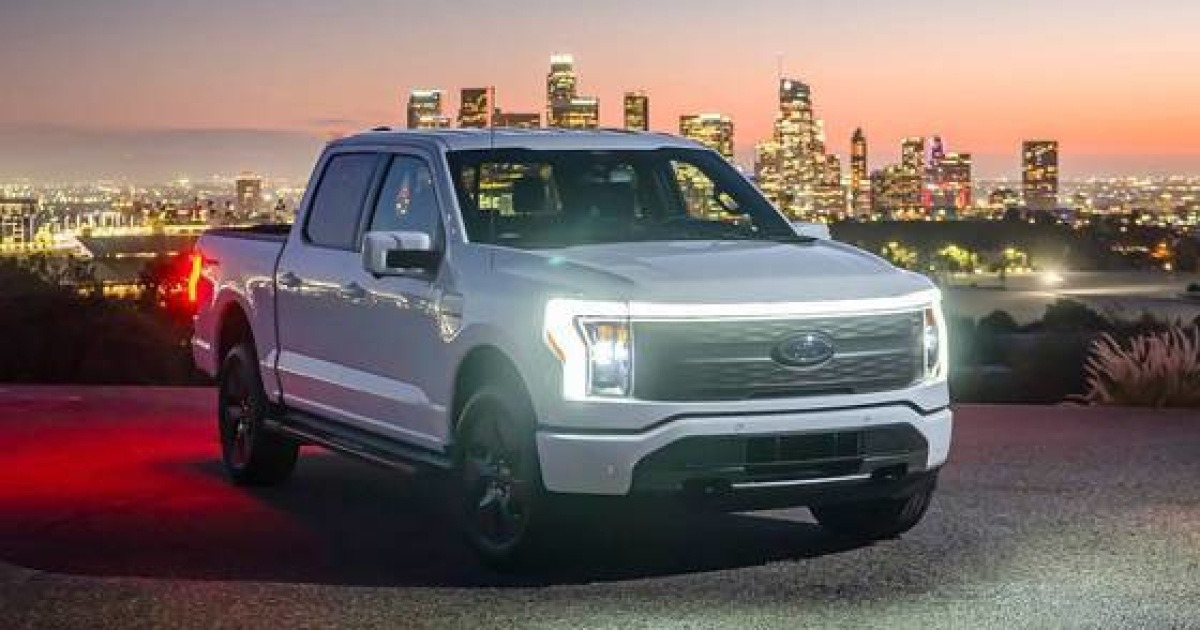
The existing F-150 Lightning, by contrast, used pouch-style NCM cells from SK On, manufactured at SK On’s Georgia facility and later at the BlueOval SK joint venture in Kentucky. Ford abruptly ended the Lightning in December 2025 and dissolved the SK On partnership in May 2026 — a clear pivot toward lower-cost chemistry and lower total cost.
The Broader Shift
Ford is not alone. GM revived the Chevrolet Bolt for 2027 and switched from LG Energy Solution’s NCM pouch cells to CATL’s prismatic LFP cells made in China, dropping the starting price to $28,955. Slates Auto, an American EV startup, also replaced SK On cells with Gotion High-tech LFP cells from a factory in Illinois after confirming the production specification in June, citing a roughly 40 percent cost advantage.
The pattern is unmistakable: when the price target drops below $30,000, LFP wins. Korean NCM cells simply cannot compete on cost at that level.
Where Korean Makers Stand
The political pressure on CATL creates a theoretical opening for Korean battery producers. But the opening is narrow and conditional.
LG Energy Solution is converting a production line at its Ultium Cells plant in Spring Hill, Tennessee, from NCM to LFP, targeting commercial volume by late 2027. It is also developing a prismatic lithium-manganese-rich cell — a mid-tier chemistry positioned between NCM and LFP on both energy density and cost — for US production starting in 2028, intended for GM pickups and large SUVs.
SK On is reportedly preparing to begin volume production of a mid-nickel cell next year, reducing nickel content to improve cost competitiveness. However, SK On has not announced a US production site for this cell. Its LFP efforts are still in the technology-development stage, with customer conversations underway but no signed supply agreements for US-made LFP cells announced to date.
The Gap Between Politics and Production
The US government can send letters and invoke national-security lists. It cannot manufacture cells. If American automakers need lower-cost batteries to hit sub-$30,000 price points and Korean suppliers do not have affordable US-made capacity ready, those automakers will look elsewhere — including Chinese suppliers operating through third countries or via technology licenses that do not trigger the same legal exposure.
The risk for Korean makers is not that Washington will suddenly reverse course. It is that Washington will apply pressure faster than Korean suppliers can bring LFP or mid-nickel volume to American factories.
What Changes the Equation
Several factors could widen or narrow the window.
First, the pace of US policy enforcement. Duffy’s letter targeted Ford specifically, but similar pressure could extend to GM, which already sources LFP cells from CATL in China. If enforcement broadens, the supply-gap question becomes sharper: who fills the LFP demand that US assembly lines require?
Second, the speed of Korean cell-scale production in the US. LG Energy Solution’s Tennessee LFP line is the most concrete commitment on record. If SK On and Samsung SDI announce comparable US LFP or mid-nickel facilities within the next twelve months, the trade-policy shift translates into supply-contract shifts. If they do not, Chinese cells — regardless of political friction — retain cost leadership in the volume-segment market.
Third, the election cycle. Battery policy is becoming a bipartisan talking point in the United States. Both parties have expressed concern over Chinese EV supply chains. That political consensus favors Korean suppliers as the politically acceptable alternative. But political consensus does not lower cell costs.
Who Wins and Who Loses
Korean battery makers win if Washington enforces restrictions on CATL and they respond with US-based LFP or mid-nickel volume at competitive prices. Korean battery makers lose if Washington applies pressure but Korean suppliers cannot deliver affordable cells on American soil quickly enough — because American OEMs will source from China anyway, just through channels that evade the specific legal restrictions Duffy’s letter targeted.
Chinese battery makers lose in the direct-supply scenario but may gain through license arrangements, third-country assembly, or technology partnerships that do not place them on the Pentagon list. CATL’s license model with Ford in Michigan is one example of a structure that attempts to separate technology transfer from equity ownership — a distinction Washington is now scrutinizing.
American automakers win if they secure a reliable domestic supply of lower-cost cells from Korean partners. They lose if those partners cannot scale US production fast enough, forcing them to accept higher vehicle costs or look elsewhere.
The Bottom Line
The US government is trying to reprice Chinese battery dependence in favor of allied suppliers. That policy direction benefits Korean makers in principle. But the principle only becomes a contract when Korean companies prove they can produce LFP and mid-nickel cells in the United States at prices that underwrite sub-$30,000 vehicles.
Right now, LG Energy Solution is the closest thing to a credible answer. SK On and Samsung SDI remain in the announcement-and-development phase for the cell types that matter most in this price bracket.
The trade-policy shift is real. The supply-chain consequence is not yet written.