Why Trump's Push to Rename AI 'SI' Is More Than Wordplay
Donald Trump's proposal to replace 'artificial intelligence' with 'super intelligence' may seem like cosmetic rebranding. But the linguistic fight over AI naming reveals real stakes in how technology is perceived, regulated, and funded around the world.
The Name Game No One Asked For
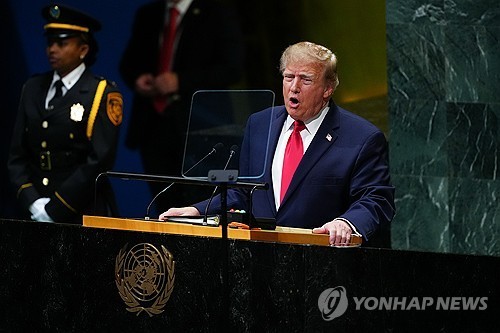
Donald Trump stood at the UN General Assembly podium on September 22 and made a suggestion that should have been dismissed as mere presidential petulance. He proposed replacing “artificial intelligence” with “super intelligence,” arguing that the word “artificial” made the technology sound fake. The White House has already begun using “SI” in official communications. The tech world is bracing.
What looked like a branding exercise from day one is turning into something more consequential. Language shapes policy. Policy shapes markets. When the most powerful nation on Earth starts calling its technology by a different name, everyone from Washington to Seoul is listening for what comes next.
Why Experts Are Worried
The term “superintelligence” did not originate in a press briefing. It comes from Nick Bostrom’s 2014 book “Superintelligence: Paths, Dangers, Strategies,” which became a foundational text in AI risk studies. Bostrom defined superintelligence as a mind vastly superior to the best human brains in practically every field, from scientific creativity to social intelligence. The concept describes a hypothetical future state, not a present-day tool.
By calling current AI systems “SI,” Trump’s administration is borrowing authority from a term that already carries specific academic meaning. That creates a direct conflict between political messaging and technical reality.
Simon Collier, an associate professor at the University of Melbourne who teaches digital ethics, told the BBC he doubts the label will stick because it exaggerates what current AI can actually do. Kokil Jaidka, also at the University of Melbourne, put it bluntly: today’s AI platforms do not exhibit the qualities of superintelligence. Ben Leong from the National University of Singapore warned that experts will likely preserve the term for whatever comes next, not use it to describe today’s technology.
The Real Stakes of a New Name
Calling a thing something else does not change what it does. But it changes how people perceive it, which changes how they regulate it, which changes where money flows. That chain matters enormously.
A technology branded as “super” implies a higher degree of autonomy, capability, and risk than one branded as “artificial.” The label signals intent to regulators, investors, and competing governments. If Washington officially adopts “SI” as its preferred term, it is sending a message that the United States views its AI advantage as broader and more advanced than competitors assume. That is a strategic claim wrapped in a vocabulary choice.
Governments around the world are already drawing their own AI rules. The European Union has enacted the AI Act. China has published its own generative AI regulations. South Korea is debating its framework. The terminology each country adopts will reflect how seriously it treats the technology as a distinct category requiring oversight. Renaming AI could subtly shift how aggressively regulators pursue restrictions. A tool called “superintelligence” may invite different policy responses than one called “artificial intelligence.”
What Other Countries Should Watch For
For nations outside the United States, the Trump proposal raises a practical question: does terminology from Washington set a global standard? The answer is likely yes, at least in the short term. America’s tech sector dominates the AI landscape, and its policy choices ripple through supply chains, research funding, and market expectations worldwide.
South Korea sits at the center of this dynamic. Korean chipmakers like Samsung and SK Hynix supply the hardware that runs AI systems. Korean firms are heavily invested in AI infrastructure. When the United States shifts its official language, Korean companies face immediate recalibration. Their investors will ask whether the new terminology signals expanded government support, increased regulatory focus, or both. The timing is critical. The 2026 technology calendar includes major investment decisions and R&D budget allocations that will be influenced by how governments define the field.
Japan and Taiwan face similar pressures. Taiwanese semiconductor manufacturers supply the leading AI chips. Japanese firms are building AI capabilities in automotive and electronics. All three economies depend on American policy direction, even when that direction comes in the form of a vocabulary change.
The Bostrom Problem
Bostrom himself has spent years warning about the risks of superintelligence. His work is not cheerleading for the current generation of AI systems. It is a cautionary framework about a hypothetical future milestone. Using “SI” to describe today’s technology inverts his entire thesis.
That inversion matters. It risks normalizing a hype cycle that outpaces reality. If policymakers, investors, and the public begin treating current AI as “superintelligence,” they may underestimate both the limitations of the technology and the seriousness of the long-term risks that Bostrom and other researchers have identified. The danger is not just confusion. It is a failure to prepare for what actually exists, wrapped in enthusiasm for what does not yet exist.
Who Wins, Who Loses
The administration gains a rhetorical victory. The terminology shift makes American AI sound more impressive to foreign audiences and domestic constituents alike. White House officials have already embraced the language. Michael Waltz, the U.S. ambassador to the United Nations, told reporters the president is “entirely correct” to use the term.
Researchers lose. Their carefully constructed taxonomy, which distinguishes between narrow AI, general AI, and hypothetical superintelligence, gets flattened into a political label. Academics who spend decades building precise definitions now face a public discourse that treats those definitions as optional.
Regulators face a complicated middle ground. They must decide whether to adopt the new terminology for consistency or maintain their existing frameworks based on the established definitions. The choice will shape how thoroughly they scrutinize AI systems.
What Happens Next
No one expects the tech industry to abandon “artificial intelligence” overnight. The term is embedded in decades of academic literature, industry products, and public understanding. But official usage matters. Government contracts, research grants, and regulatory documents will reflect the new terminology, and those decisions will guide where billions of dollars flow over the next decade.
Watch for three things. First, whether other governments follow Washington’s lead or resist. Second, whether the terminology shift correlates with changes in AI regulation or funding priorities. Third, whether researchers find a way to reclaim the language or accept a political compromise that blurs the distinction between current systems and hypothetical superintelligence.
The debate over a name is really a debate over perception, power, and preparedness. Trump’s proposal may sound like wordplay. But language is never neutral when it comes to technology that reshapes economies and geopolitics.