JERA’s $14B Play to Fuse Power Plants With AI Data Centers
JERA is betting that the fastest path to powering AI means bypassing Japan’s congested electricity grid entirely. The plan — a 400,000-kilowatt data center co-located inside a Chiba gas-fired power plant — is part of a global shift underway among Google, Meta, and SoftBank.
The Grid Is Too Slow for AI
Japan is hitting a wall that the United States felt first. Demand for AI data centers is so large and so urgent that the transmission grid cannot keep up. Applications for new connections are piling up at utilities, and the wait can stretch to a decade. That delay is not a planning problem. It is a physical one — cables, substations, and permitting simply cannot be built fast enough to match the pace of AI investment.
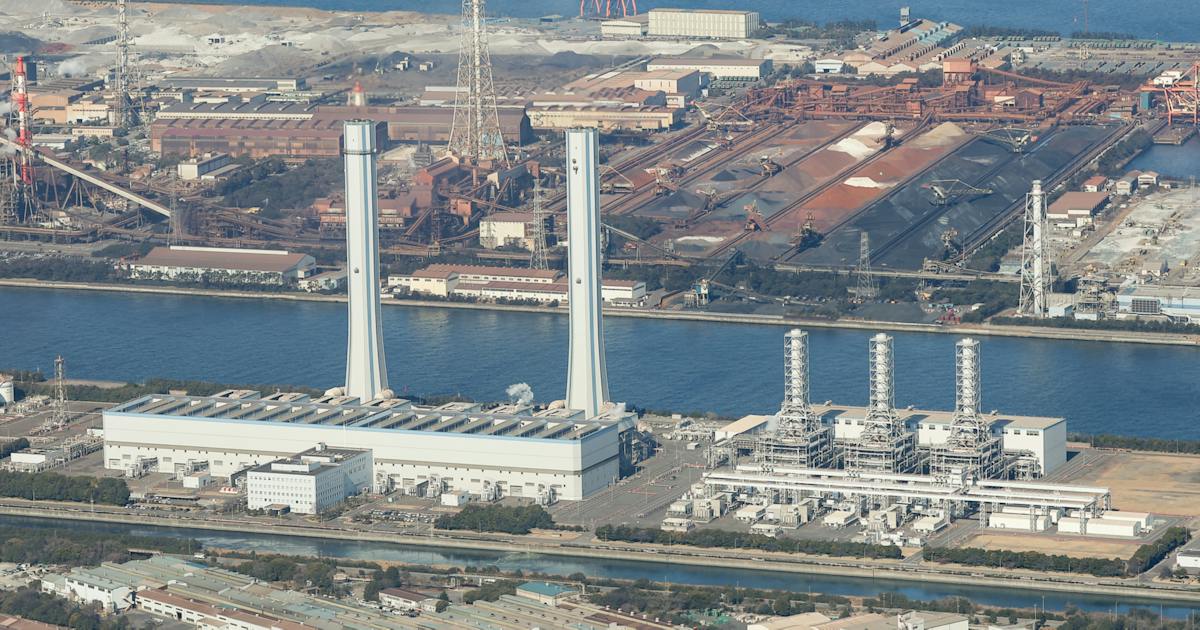
JERA, Japan’s largest power company, announced on October 1st that it will solve this bottleneck the only way left: by skipping the grid altogether. The company said it will build a 400,000-kilowatt data center inside the grounds of its Chiba thermal power plant, drawing power directly from the facility’s own generators. Dell will supply servers and racks. Realm, a UK-based data center developer specializing in sovereign AI infrastructure, will handle operations. The three companies signed a partnership agreement on the same day, and Apollo Global Management is providing financing. The total investment is 2.3 trillion yen, roughly $14 billion at current exchange rates. Operations are targeted for around 2028.
The deal is not just big for Japan. It is a prototype.
Why Co-Locating a Data Center Inside a Power Plant Changes Everything
A data center draws power constantly. An AI training cluster runs 24 hours a day, every day. That requirement makes intermittent renewable sources awkward without massive storage, and it makes grid dependency a strategic liability. When you build a data center inside a power plant, none of those constraints apply.
The Chiba plant is an LNG-fired facility with a total output of 4.38 million kilowatts. A 400,000-kilowatt data center would consume roughly 9 percent of that output. The remaining capacity can still feed the grid. Power flows directly from generator to cooling system to server rack, with no need for new transmission lines, no waiting period, and no exposure to grid congestion charges. The economics of delivery time alone make the model attractive. In markets where grid interconnection takes years, speed of deployment is a competitive advantage that translates directly into revenue.
Google has already done something similar in Texas, pairing wind and solar farms with data centers. Meta announced plans for a combined fossil-fuel and data center site in Ohio. SoftBank Group is pursuing the same model in Texas. JERA’s announcement brings the concept to Japan for the first time at this scale, and it signals that Japanese utilities are no longer willing to wait for grid upgrades to catch up with AI demand.
The LNG Pivot Nobody Expected
There was a moment in 2023 and 2024 when the industry looked as though AI data centers might be powered primarily by renewables. Wind and solar were cheap. Battery costs were falling. Governments wanted clean energy profiles for their new facilities. Then the grid bottleneck became real, and the math changed.
LNG fired back into favor. It runs around the clock. It emits roughly half the CO2 of coal. It can be ramped quickly to follow demand. Japan has massive LNG import infrastructure and deep experience running gas-fired plants. The Chiba plant is one of the country’s largest, and its existing fuel supply chain is already in place. Using it as the anchor for a data center is not a compromise on climate goals so much as a recognition that AI infrastructure cannot wait for the perfect energy mix. It needs power today.
Other Japanese projects are moving in the same direction. In Akita Prefecture, a consortium including UAE investors is planning a roughly 2 trillion yen, 500,000-kilowatt facility. Elex, a major power retailer, is exploring a data center adjacent to a new biomass plant in Niigata, partnering with a Samsung-affiliated trading company. These are smaller in scale than JERA’s Chiba project, but they share the same logic: secure power first, optimize the fuel source later.
Realm, Sovereign AI, and the Geopolitical Layer
Realm’s involvement is significant beyond its role as a data center builder. The company positions itself as an infrastructure partner for sovereign AI — helping governments and regulated industries build AI capacity that stays under national control rather than relying on overseas cloud providers. That positioning is why the Chiba project is expected to target government agencies and financial institutions in addition to commercial cloud customers.
In a region where data sovereignty laws are tightening and where concerns about foreign control of critical AI infrastructure are rising, a domestic partnership between a Japanese utility, an American hardware supplier, and a UK operator offers a politically palatable architecture. No single country owns the stack. Dell controls the servers. Realm operates the facility. JERA provides the power. Each partner brings something the others do not, and each is incentivized to keep the project within allied supply chains.
That arrangement may also make it easier for JERA and Realm to replicate the model overseas. The partnership explicitly targets expansion into Europe and Asia, and Apollo’s involvement suggests the financing structure is designed to be repeatable. JERA’s CEO Gion Yukio framed the challenge bluntly at the press conference: the key question is how quickly stable power can reach AI data centers. In that framing, the Chiba plant is not an exception. It is the template.
What This Means for the Next Five Years
Several outcomes are worth watching.
First, the power sector will face intense pressure to accelerate permitting for new gas-fired capacity. Japan currently has limited natural gas flexibility compared to the United States, and expanding LNG import terminals or reactivating idled plants will take time. The Chiba facility draws on existing capacity, but scaling the model requires either adding new generators or increasing utilization at plants that are already running near their limits.
Second, the model tests whether Japanese utilities can transition from pure power suppliers to integrated energy-technology partners. JERA is not just selling electricity to a data center. It is co-locating its generation with compute infrastructure, which changes how it values that power, how it plans maintenance, and how it negotiates with customers. This is a fundamentally different business model from the regulated utility framework most Japanese power companies operate under today.
Third, the geopolitical dimension will shape which countries adopt this model and which resist it. The United States has already moved ahead with plant-adjacent data centers in Texas, Ohio, and Alaska. Japan’s entry into the same category aligns its infrastructure strategy with Washington’s, even as it preserves domestic control over critical AI capacity. That balance — allied supply chains with sovereign operations — may become the standard for countries that lack the transmission grid space to absorb the coming wave of AI demand.
Who Wins, Who Loses
Winners: JERA, which turns stranded or underutilized power capacity into higher-margin infrastructure revenue. Dell, which gains a repeatable domestic deployment channel for its server and rack business. Realm, which anchors a sovereign AI play with real power behind it. Apollo, which finances a model that can scale across multiple sites. Japanese government agencies and financial firms, which get domestic AI infrastructure without ceding control to foreign cloud operators.
Losers: The transmission grid, which loses relevance as the most efficient path to AI power. Incumbent data center developers who relied on grid interconnection as their primary constraint, since the problem is no longer about securing electrons — it is about securing land and generation. Coal-fired generators that may face additional displacement as gas-fired plants absorb both power and compute demand.
What happens next: If JERA’s Chiba facility operates as intended, the company plans to expand the model to other thermal plants through the 2030s, targeting several million kilowatts of combined data center capacity. That would make Japan home to one of the largest concentrations of power-integrated AI infrastructure in the world, rivaling the United States on a per-capita basis. The question is no longer whether data centers will be built next to power plants. It is whether Japan can duplicate that model before the grid window closes entirely.