Why UK Arrests Near RAF Fairford Signal a New Security Front
Multiple arrests for suspected explosives offenses near a U.S. air base used in strikes against Iran reveal the uncomfortable reality: British soil is now a strategic target in a conflict it claims neutrality toward. The incident exposes the domestic security costs of foreign policy entanglement.
The Ground Beneath British Soil
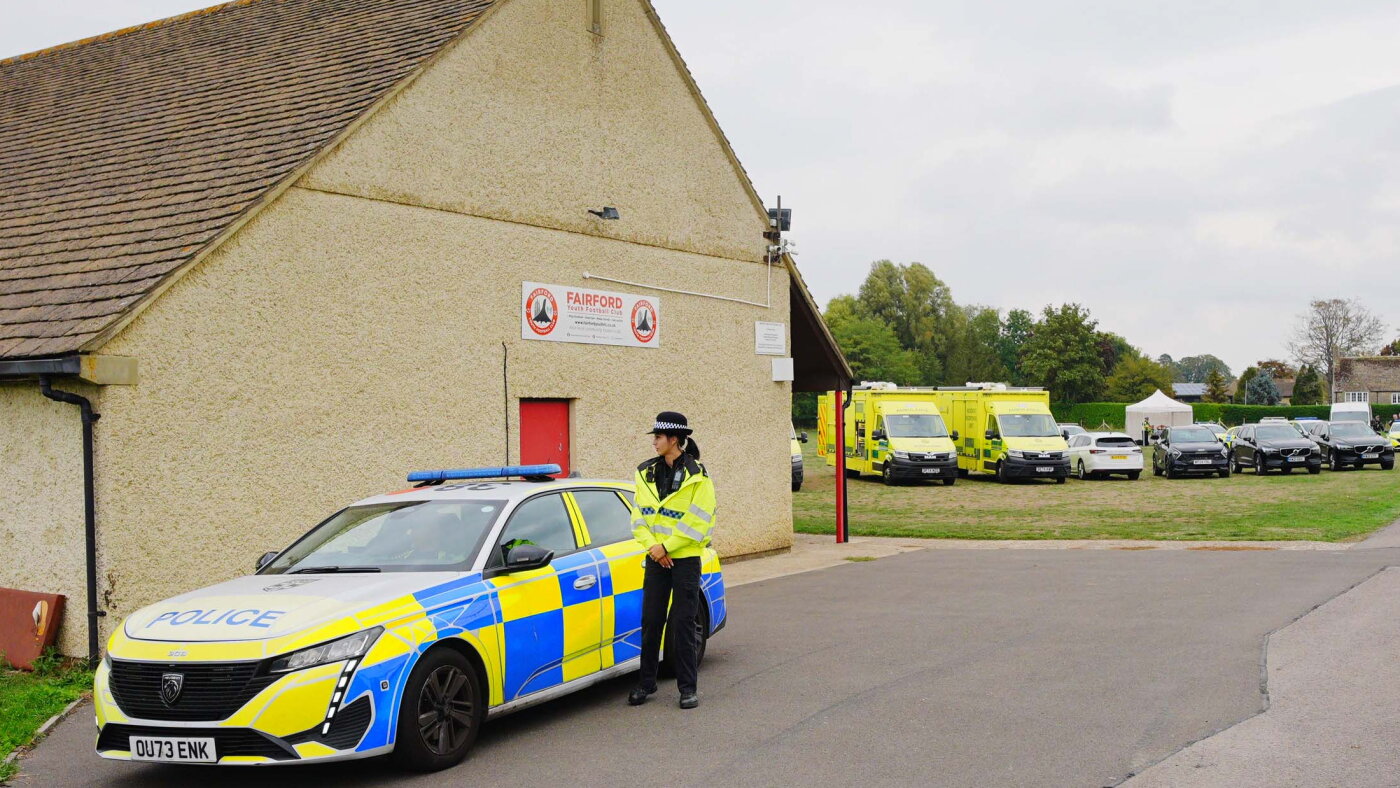
Several men are in custody. Emergency services have cordoned off a residential area in Whelford, Gloucestershire. Army bomb-disposal experts are examining vehicles. Counter-terrorism officers are leading the investigation.
On the surface, this looks like a standard security response. But the location changes everything.
Whelford sits five miles from RAF Fairford — a Royal Air Force station that has hosted American combat aircraft since the 1950s and, more recently, served as the launch point for U.S. strikes against Iranian targets. After the United States and Israel opened a war against Iran on February 28, the British government made a calculated decision: it would allow American forces to use Fairford for attacks on Iranian missile sites.
The UK has not formally declared war. It has not deployed its own troops. But on paper, at least, British airspace and runways are now part of the battlefield.
A Base, a Decision, and a Target
The geography of this incident matters more than most readers will realize.
RAF Fairford is the only U.S. Air Force forward operating base in the United Kingdom. It houses B-52 strategic bombers and serves as a critical logistics hub for American operations in the Middle East and beyond. When Washington needs heavy ordnance delivered quickly across the region, Fairford is the starting line.
That makes it, by definition, a strategic target. Not just for hostile states — though Iran clearly views American assets as legitimate military objectives — but for individuals and networks that see no meaningful difference between attacking U.S. personnel directly and degrading the infrastructure that supports them.
The UK government understood this calculus when it approved the use of Fairford for offensive operations. What it may not have fully grasped is how approval changes the domestic threat landscape.
Contained, Not Resolved
Gloucestershire Police described the situation as “contained.” That is the correct language for an active incident. It is not the same as safe.
Several key facts remain unconfirmed. Police did not say whether the arrested men were connected to RAF Fairford specifically. They did not identify the number of detainees. They did not disclose what type of explosives were suspected. And crucially, they did not indicate whether any devices were discovered or whether the operation was disrupted before any damage could occur.
All of that is normal for an ongoing counter-terrorism investigation. It is also exactly the kind of information vacuum that breeds speculation — and paranoia.
Defense Secretary Wes Streeting offered reassurance. Prime Minister Andy Burnham received updates. The U.S. Air Force said its personnel remain “vigilant” but declined to discuss force protection measures. That last detail is telling. When an institution refuses to comment on the specifics of its own security protocols, it is usually because the protocols are either highly classified or uncomfortably exposed.
The Strategic Dilemma
This incident reveals the central dilemma facing the British government. By allowing RAF Fairford to be used against Iranian targets, London gained diplomatic credibility with Washington and reinforced the special relationship. But it also imported a theater of war onto British soil — however indirectly.
There is a legal distinction, of course. The UK has not been attacked. It is not fighting Iran. British forces have not fired a shot. But distinction is a comfort for lawyers, not necessarily for residents of Whelford who were evacuated from their homes on a Sunday afternoon.
The precedent matters too. If Fairford can be used for offensive strikes, other bases might follow. If Iranian retaliation takes the form of asymmetric attacks on British soil rather than direct military engagement, the UK becomes a target without having formally entered the conflict. That is the paradox of proxy basing: you get the strategic benefits without the political accountability, until the moment you don’t.
Who Wins, Who Loses
The winners in this scenario are hard to identify. The UK government gains nothing from domestic arrests near a sensitive military installation. The United States gains nothing from having its forward base require heightened security on British streets. Iranian militants or sympathizers may see value in demonstrating that Fairford is vulnerable — even if the operation itself was foiled.
The losers are clearer. Residents of Whelford, who have lived quietly in the shadow of an American base for decades, now face periodic disruptions and the invisible weight of being considered part of a conflict zone. Local businesses may suffer from reduced access. Families of service members — British and American — live with elevated risk that their government cannot fully mitigate.
And the British public, told that the UK is not at war, must now reconcile that claim with the reality of counter-terrorism operations at one of the country’s most important military installations.
What Comes Next
Counter-terrorism investigations of this nature typically unfold in layers. Initial arrests give way to extended detentions. Forensic analysis of seized materials reveals networks rather than lone actors. Public statements remain sparse while operations continue.
But the strategic question will outlast the immediate incident. The UK made a choice to host American strikes from Fairford. That choice carries consequences — not just in the skies over Iran, but on the ground in Gloucestershire. The government will need to decide whether the diplomatic value of the base outweighs the security burden it now imposes on British communities.
So far, the evidence suggests it does. But the arrests near Whelford are a reminder that wars have aftershocks, even when they are fought from distant runways.