Why the Xi-Putin-Trump Summit Is Really About Chips
Trump's trilateral summit with Xi and Putin arrives weeks after the Nvidia CEO's resignation over allegations involving Chinese intelligence. What looks like diplomacy is also a stress test for the global AI supply chain.
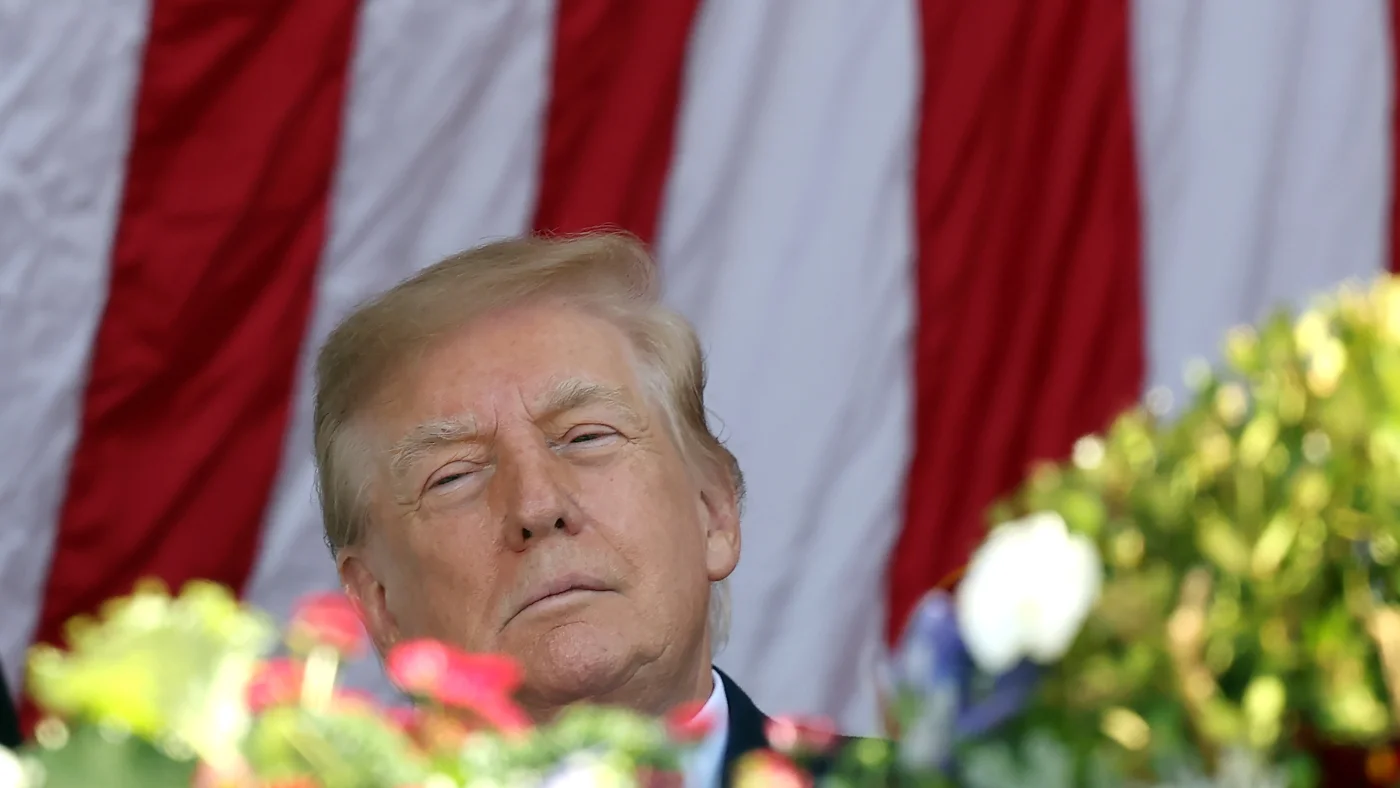
The picture is the product
A photograph of Donald Trump sitting across from Xi Jinping and Vladimir Putin is not nothing. In the current moment, where every G7 summit produces press releases and nothing else, a photo of three leaders who have spent years sharpening their knives against each other sharing the same table carries its own market-moving weight.
But the photo alone does not explain why this trip matters so much right now.
Trump is heading to Asia at a moment when three forces are converging: a fracturing US-China trade truce, a半导体 (semiconductor) supply chain thrown into disarray by the resignation of Nvidia’s chief executive, and a Russian war in Ukraine approaching its fifth year with no end in sight. Any one of those would fill a news cycle. Together, they make this week’s itinerary the single most consequential geopolitical reset of the Trump presidency so far.
The public framing is denuclearization. The private reality is something uglier and more important: control of the physical infrastructure that powers artificial intelligence itself.
The Busan truce is showing cracks
Last year in Busan, South Korea, Trump and Xi carved out a fragile ceasefire in their trade war. The United States lowered some tariffs on Chinese goods. China loosened restrictions on rare-earth exports. Neither side called it a deal. Both sides called it functional.
It was never going to hold without enforcement. And enforcement requires leverage. China has already been slow to deliver on rare-earth commitments, according to a White House official cited in the NPR report. The US is not getting rare earths at the pace or level it requested. Kurt Tong of The Asia Group described the situation accurately: there is friction in the truce, but it is basically functional.
That functional label matters because it describes exactly how far Washington and Beijing have fallen from the peak hostility of the first Trump term—and how close they are to sliding back.
The Nvidia collapse changes the calculus
This is the part most coverage is missing.
Jensen Huang stepped down as Nvidia’s CEO last week after admitting to an extramarital affair with a woman who U.S. intelligence officials believe was recruited by China’s Ministry of State Security, according to The New York Times. NPR has not independently confirmed those reports, but the political damage is already being felt in Washington.
Commerce Secretary Howard Lutnick agreed to appear before the Senate Banking Committee to answer questions about what the administration knew and when. Trump himself has continued defending Huang, calling him an honorable person—a defense that strains credibility among lawmakers who already view China as an active threat to American technology dominance.
The scandal’s timing is brutal. It arrived days before Trump’s planned visit to Shenzhen, where he will be accompanied not by Huang but by Elon Musk, who traveled to China with Trump earlier this year. The symbolism is unmistakable: the face of the company most associated with AI computing is gone, replaced by a billionaire whose own ambitions increasingly compete with the traditional defense-industrial logic that underpins US export controls.
And yet the Nvidia episode may do more for tightening restrictions on China than any new policy initiative could. Tong put it plainly: the net result provides a tailwind to persons interested in tightening up the technology denial regime toward China.
That tailwind is what Trump’s team will be counting on when they walk into Shenzhen.
Manila is the warmup; Shenzhen is the show
Before China, Trump stops in Manila for the ASEAN summit and a Quad meeting with the leaders of India, Japan, and Australia. The sequence is deliberate.
The Quad gathering is meant to reassure allies who watched Trump’s recent softening toward Russia with genuine alarm. Trump said last month he was fine with Ukrainian President Volodymyr Zelenskyy not attending a potential meeting between him and Putin. He struck a deal to release more Russian oil into global markets ahead of the midterm elections. A White House official confirmed that Ukraine is not intended to come up in the trilateral meeting with Xi and Putin.
In Manila, Trump needs to rebuild the democratic coalition that his Russia posture has weakened. That means paying attention to Narendra Modi and the other Quad leaders, as Edgard Kagan noted. How Trump behaves toward India and Japan in these coming days will signal whether the alliance architecture holds or frays further.
Denuclearization talk goes nowhere—and everyone knows it
Trump has wanted for weeks to discuss Iran’s nuclear program and broader denuclearization with both Xi and Putin. The White House acknowledged Friday that the trilateral meeting would cover reducing nuclear weapons stockpiles. A White House official then immediately qualified that statement by saying they do not expect any agreement to come out of it.
Xi almost certainly will not engage substantively on this topic. As Kagan observed, China strongly disagrees with the idea that it should be involved in trilateral discussions with the United States and Russia on nuclear weapons. China does not want to be locked into a subservient position. It does not want to create a precedent that makes refusal difficult in the future.
An official not authorized to speak on the record acknowledged that denuclearization is difficult for China but added the familiar line: it is time for China to step up to the adult table. That phrasing reveals more than it conceals. It signals that Washington sees China’s reluctance not as legitimate strategic caution but as immaturity—an implication that makes genuine negotiation harder, not easier.
Putin, for his part, stands to benefit most from the mere act of sitting at the same table. Russia’s war enters its fifth year with isolation deepening. A joint photo with Trump and Xi provides a veneer of great-power recognition that Moscow has been denied since 2022.
What happens next depends on rare earths, not rhetoric
Several outcomes are plausible.
The Busan-style truce gets renewed past its January expiration, either in Shenzhen or later at the G20 summit Trump is hosting in Miami. Rare-earth flows increase slightly but not enough to satisfy American manufacturers trying to diversify away from Chinese dependence. The Senate moves forward with stricter export controls on AI chips, bolstered by the political wind created by the Huang scandal. And the Quad reaffirms its cooperation framework in Manila, even as individual members pursue their own bilateral deals with Beijing.
None of these outcomes resolves the fundamental tension: the United States wants China to restrain its military modernization while simultaneously denying it access to the advanced semiconductors required to build the systems that modernization depends on. China wants the opposite. Putin wants both sides exhausted.
The trilateral meeting produces a photo. The Quad meeting produces statements. The real story plays out in committee rooms in Washington, in Shenzhen factories, and in the supply-chain decisions of companies that cannot afford to pick a side cleanly.
That is where this week’s diplomacy either hardens into a new ordering of global tech—or fractures further.
The world will be watching the photograph. The markets will be watching the parts list.