Xi's Pacific Gambit: Orchestrating a Trilateral Realignment
At APEC in Shenzhen, Xi Jinping orchestrated the first-ever trilateral meeting between Trump and Putin — a quietly calculated move to position China as the indispensable broker of Asia-Pacific order while the two rivals take turns visiting his court.
The Host Writes the Script
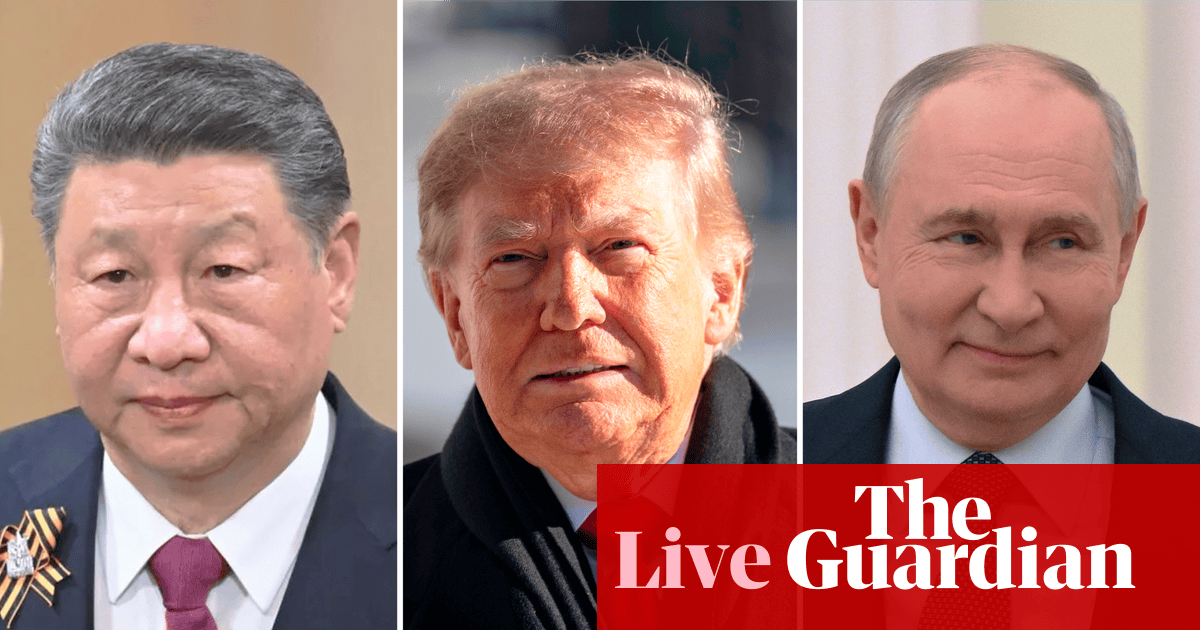
Xi Jinping stood at the tarmac in Shenzhen and greeted Donald Trump personally — the first head-of-state visit he has welcomed at an airport since coming to power. They hugged. It was a picture of choreographed warmth, the sort of image that took careful calibration across months of back-channel signalling. Photographs showed both leaders smiling broadly, their aides positioned just behind them like stagehands who knew their cue had passed.
What happened next, however, tells the story.
Two days later, Xi would preside over the first-ever trilateral summit between himself, Trump and Vladimir Putin. Three nuclear-armed leaders, one Pacific port city, zero precedents. Analysts immediately invoked Yalta — shorthand for great powers carving up deals without consulting the people affected by them. The comparison was lazy but revealing,投射ing anxiety onto a scene that operated by different rules entirely.
But Yalta was imposed. This arrangement was invited. And the invitation came from Beijing.
The symbolism was deliberately inverted: rather than emerging from wartime alliance, the trilateral emerged from what China framed as multipolar necessity. Chinese state media ran editorials within hours emphasizing the historic nature of the gathering, framing it not as a concession to Russian isolation but as evidence of Asia-Pacific centrality. The Global Times called it “a new format for great-power coordination in the twenty-first century” — language rarely deployed so confidently in Xinhua’s English-language output.
Who Controls the Room?
Xi did not merely host this meeting — he structured it from the ground up. According to the White House schedule, Xi met Trump first at a state guesthouse beside Shenzhen’s tiger safari park, a venue chosen for its relative seclusion amid a complex that otherwise operates as a tourist attraction. The two worked nearly two hours before Putin arrived for the trilateral portion. The sequence matters profoundly: Trump arrived to full military honours, children waving flowers, soldiers lining the runway, a detail that fed directly into his post-summit press remarks about being “treated like royalty.” Then he waited.
Putin, meanwhile, arrived to comparatively muted ceremony — a pattern that repeated across the summit’s red-carpet moments. This was not accidental snubbing but deliberate pacing. By making the American president wait, Xi demonstrated that in Shenzhen’s geometry, he sets the tempo. Neither Washington nor Moscow arrives as equal hosts here. They arrive as guests at someone else’s table.
Other attendees absorbed slightly or silence with varying degrees of composure. Japanese Prime Minister Sanae Takaichi received a notably colder welcome, her delegation placed lower on seating charts than protocol normally dictates for a G7 member. Australian Prime Minister Anthony Albanese faced fury from his own Ukrainian diaspora for standing in a group photo alongside Putin — an act one community chair called a propaganda gift to the Kremlin. Smaller Pacific Island nations, typically overlooked in great-power narratives, found their leaderships absent from key plenary sessions altogether, excluded by schedules that prioritized bilateral corridors over multilateral forums.
While smaller allies absorbed slight or silence, China controlled the narrative. Xi opened with poetry — APEC members are “passengers riding the same ship” — and followed with policy: a US$20 million funding commitment to APEC practical cooperation, a new APEC research centre in Shenzhen, and calls to align regional trade agreements and reduce barriers. Beijing was offering substance wrapped in symbolism, the kind of package that appeals to developing economies frustrated by years of rhetorical grandstanding without material delivery.
The Putin Variable
Putin declared Russia “integral” to the Asia-Pacific — a claim that carries more weight now than when he made similar assertions before the Ukraine invasion. Moscow’s economic pivot toward Asian markets has accelerated under sanctions pressure, with Chinese and Indian refineries absorbing increasing volumes of discounted Russian crude. He urged regional nations to use Russian logistics infrastructure, including the Northern Sea Route and rail corridors through Mongolia, signalling Moscow’s accelerating pivot eastward as Western sanctions tighten their grip.
The Russian leader’s presence in Shenzhen also carried domestic significance. For a leader whose global isolation has been his defining diplomatic challenge since February 2022, appearing alongside Trump — however temporarily arranged — projects resilience. Images of the three leaders together were already circulating on Russian social media as evidence that Moscow retains agency beyond its relationship with Beijing alone.
Trump called Putin a “friend” and said “a lot of wonderful things” could come from their talks. The language is loose, unrestrained, and entirely unpredictable — which is precisely the environment in which Beijing benefits most. Trump’s transactional framing of diplomacy creates openings that institutional foreign policy apparatuses cannot easily exploit. Xi, operating within a system built for long horizons, can absorb ambiguity without losing strategic direction.
A divided Washington-Moscow relationship serves Chinese strategic interests far more effectively than either a consolidated Western front or an active Russo-American détente. Xi does not need Trump and Putin to agree. He needs them to talk — separately, tentatively, intermittently — while China remains the common table they all return to. Every conversation held on Chinese soil reinforces that reality, however informally structured.
The Business Silence
While the leaders performed diplomacy, the commercial dimension told a quieter story — one perhaps more telling than any joint statement. Nikkei Asia reported that prominent US executives attending APEC were “relatively light” compared with previous years. Several had not received clear agendas in advance. Scheduling conflicts were cited publicly; privately, sources pointed to something else.
Jensen Huang, Nvidia’s CEO, resigned last week following revelations about an affair with a Chinese businesswoman alleged to be a spy. His absence from Shenzhen was conspicuous — and troubling for an industry that has become the primary battleground in US-China technology competition. Other US technology and finance executives — Visa, Mastercard, Deloitte — were present, but the chipmaker’s chaos cast a shadow over broader commercial engagement. Wall Street commentators noted the timing was cruel: just months after Biden-era export controls had already chilled investment sentiment, scandal replaced policy as the headline risk factor.
Zak Dychtwald, founder of the consultancy BridgeWorks Global, told the South China Morning Post that CEOs had spent the previous 18 months returning to China with growing confidence, building relationships and recalibrating supply chains around what seemed like manageable risk. The Nvidia scandal set that back materially. Trust, once fragile, was now visibly fraying on both sides of the Pacific — not from legislative action or regulatory decree, but from personal contagion.
The business community’s withdrawal created a vacuum that diplomats rushed to fill. Where corporate leaders might have negotiated quietly in private dinners, officials now occupy that space, extending the securitization of economic relations into realms previously reserved for market logic. That shift benefits institutions accustomed to operating at arms length from commercial pressures, which describes Beijing’s state-capitalist model increasingly well.
Second-Order Effects
The summit’s structural implications extend beyond the immediate photograph session. Regional economies already deepening ties with China face a reinforced incentive to hedge more aggressively against American unpredictability. Southeast Asian nations, particularly Vietnam and Indonesia, watched the trilateral framing with calculating interest — not alarm, exactly, but a dawning recognition that the architecture of Asia-Pacific order may well crystallize around Chinese-hosted multilateralism rather than American-led alliances.
Within the United States, the absence of substantial business representation will fuel debate among hawks who argue that decoupling rhetoric outpaced decoupling practice even before scandal intervened. Expect congressional pressure to increase on executive-branch engagement with China, potentially constraining future diplomatic flexibility precisely when the administration seems most willing to explore it.
For Russia, the在深圳 appearance offers a psychological boost without altering material dependencies. Moscow still looks to Beijing for economic lifelines it cannot generate independently. But symbolic elevation matters in authoritarian politics, where image management often substitutes for substantive leverage.
What Comes Next
No major agreement is expected from the trilateral. That was never the point. The achievement is structural: China has positioned itself as the necessary intermediary between the world’s two most disruptive powers, the venue for conversations that neither Washington nor Moscow can easily sustain alone. The precedent it establishes — a major US-Russia dialogue hosted and timed by China — will echo through every subsequent diplomatic cycle.
Kim Jong-un’s absence reinforces the reading. North Korea’s leader has been photographed inspecting construction sites in Samjiyon and Hamgyong — domestic duties, not diplomatic ones. Trump and US officials have signalled openness to engagement, but Pyongyang is not arriving at Shenzhen’s table. The triad is complete without him, and incomplete with him. Beijing has no pressing need to extend the invitation; Kim’s exclusion signals that the current configuration suits China’s purposes.
For Australia, Japan, and other US-aligned neighbours, the subtext is uncomfortable. Their security concerns will not feature prominently in trilateral talks between three adversaries. Albanese’s photograph with Putin already triggered accusations of moral surrender. Takaichi’s cold reception suggests Japan may face a similar calibration — one that tests whether alliance loyalty translates into guaranteed access to Chinese hospitality.
Xi’s “same ship” metaphor is elegant because it is deliberately ambiguous. Passengers share a vessel, yes — but the captain has not yet been named, and the route is being drawn in Beijing. The question for Asia-Pacific states is no longer whether China and America will compete. It is who gets to decide the terms — and whether there is room left at the table for everyone else.