Xiaomi's Bet on Longevity in Japan's Rising-Price Market
Xiaomi is defending its position in Japan's premiumizing market by betting on battery longevity, drop resistance, and unusually long software support — even for its cheapest phone. The strategy reveals how Chinese manufacturers are no longer competing on price alone.
Xiaomi Is Betting Everything on Longevity in Japan
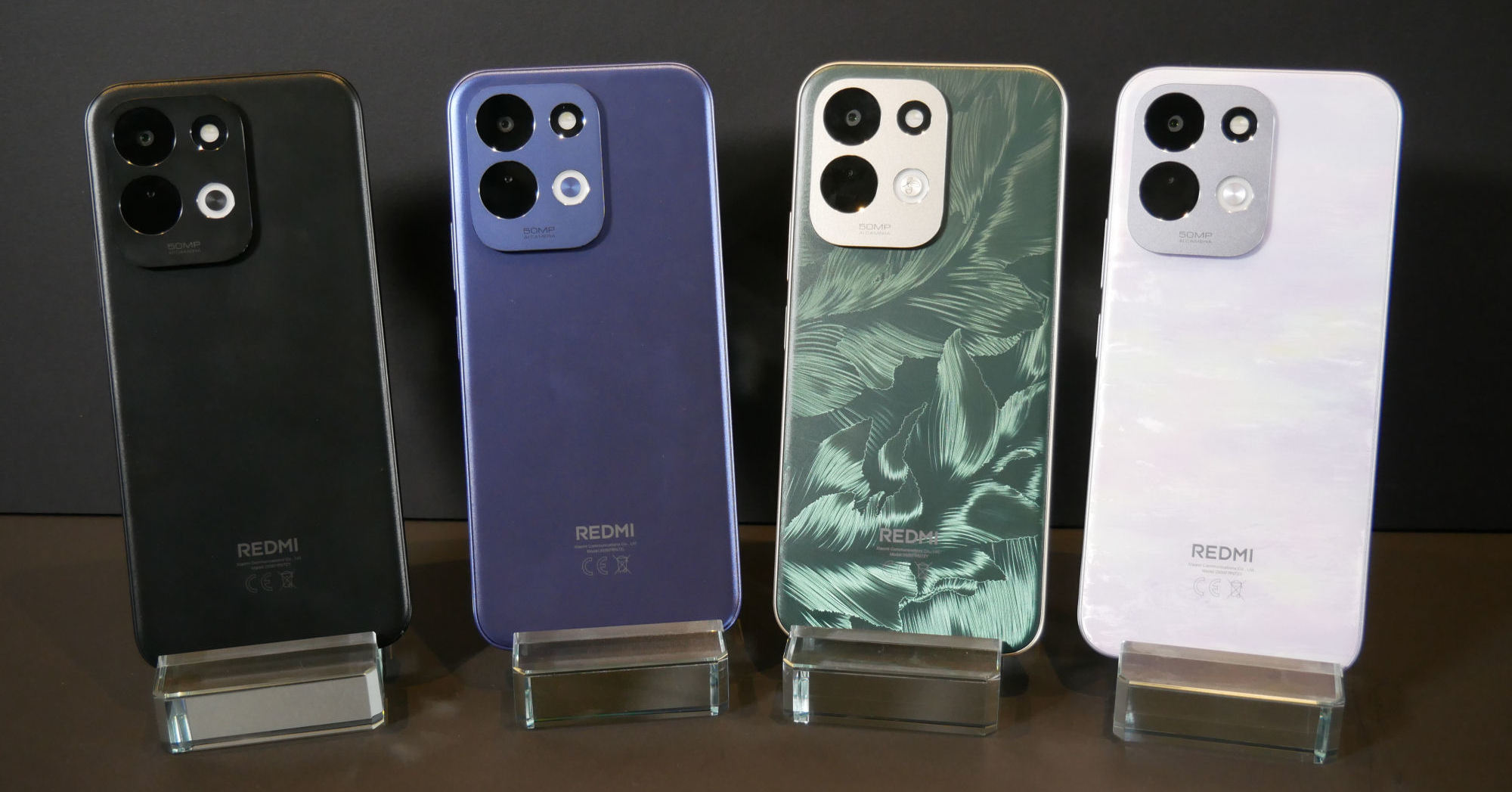
Xiaomi Japan launched two new phones on August 28 — the REDMI 17 and the REDMI Note 17 Pro Max 5G — and both carry a message that goes straight against the grain of the current market. Prices are rising. Memory costs are squeezing margins. And yet Xiaomi is asking Japanese buyers to justify those higher prices not with flashy specs or premium materials, but with a single, almost defiant promise: these phones will last.
The REDMI Note 17 Pro Max 5G packs a 10,000mAh battery — the largest Xiaomi has ever put in a smartphone. The company claims it will retain 80 percent capacity after 1,600 charge cycles, which works out to roughly six years of daily use. In a side-by-side test against Samsung’s Galaxy A57 5G, Xiaomi said the REDMI ran for 32 hours and 34 minutes before dying, while two Galaxy A57 units combined for only 30 hours and 2 minutes. The REDMI 17, the more affordable model, carries a 7,500mAh cell.
Both devices are built around what Xiaomi calls “Titan Quality” — a marketing frame borrowed from mythology to signal unbreakable toughness. The Note 17 Pro Max features Corning Gorilla Glass Victus 2 on the front, rated for drops from up to three meters. The back uses a high-strength glass fiber composite. Xiaomi also ran 10 airtightness tests across components like the USB-C port, speaker, and battery cover, and both phones carry IPX6 and IPX8 water resistance ratings.
Here’s what makes this strategy noteworthy: Xiaomi is pairing physical durability with software commitments that are unusual at these price points. The REDMI 17 — an entry-level device — is promising four major OS version updates and six years of security patches. That is not standard for a phone in the 30,000 to 35,000 yen range. Most manufacturers offer two OS updates and three years of security at that tier. Xiaomi is essentially saying the cheapest phone in its lineup deserves the same longevity guarantee as the expensive one.
The Price Problem Nobody Can Ignore
Xiaomi is not hiding the fact that its phones have gotten more expensive. Starting September 4, the company raised prices on the Xiaomi 17T Pro and the POCO X8 Pro and X8 Pro Max by 20,000 yen each — a steep jump that reflects global memory cost inflation hitting every Android maker.
The REDMI 17 tells the same story in micro. Its predecessor, the REDMI 15 5G, launched at 31,980 yen for the 4GB-plus-128GB model and later rose to 36,980 yen. The new REDMI 17 starts at 34,980 yen for the same configuration — 2,000 yen cheaper than the inflated price of the old model, but only if you accept the trade-offs. The 256GB version now comes with 4GB of RAM instead of 8GB, and it costs 44,980 yen — a 3,000 yen increase over the previous generation’s 8GB-plus-256GB model. The REDMI 17 also drops 5G support and Osaifu-Keitai (Japan’s mobile payment standard), signaling that Xiaomi is actively segmenting its lineup for a market where some buyers still prefer 4G on budget devices.
The REDMI Note 17 Pro Max 5G is even more expensive. It launches at 79,980 yen for 8GB-plus-256GB. The previous generation, the REDMI Note 15 Pro 5G, started at 54,980 yen and rose to 57,980 yen before being discontinued. That is a gap of roughly 22,000 yen between generations — a leap that would be difficult to justify on specs alone.
Why Longevity Is the New battleground
At a press event, Hitoshi安达 (Kohiko Ando), head of Xiaomi Japan’s product planning division, framed the strategy directly: as smartphone prices rise, customer expectations are shifting. Buyers no longer want just performance and the latest technology. They want durability and the assurance that their investment will last.
This is a meaningful pivot for a brand that built its reputation in Japan on aggressive pricing. Xiaomi entered the Japanese market as the anti-Samsung and anti-Apple — the company that delivered flagship-level specs at half the price. That playbook is breaking down. Memory shortages and component cost inflation have erased the margin buffer that made low pricing sustainable. Xiaomi can no longer out-price competitors without eating into its already thin profits.
Ando stated that Xiaomi intends to keep its profit margin at 5 percent — a figure the company has publicly committed to since its IPO. That constraint means there is no room to absorb cost increases or discount heavily. Instead, Xiaomi is reframing the value proposition. The question is no longer “how cheap is this phone?” It is “how long will this phone remain useful?”
The REDMI 17’s six-year security update promise is the clearest expression of this logic. Japanese consumers are already replacing phones less frequently — Ando cited an average upgrade cycle of 4.5 years. A six-year support window means a buyer could reasonably keep the device through its promised lifespan without worrying about security vulnerabilities or software obsolescence. For a household sensitive to discretionary spending, that is a tangible safeguard against another purchase.
What This Means for the Rest of the Industry
Xiaomi’s approach is not just a Japan play. It is a signal about where the global Android market is heading. As component costs rise and consumers hold onto devices longer, the companies that can credibly promise longevity — in hardware and software — will pull away from the rest. Samsung already has a reputation for long support on its Galaxy A and S series. Google has extended Pixel updates. But Xiaomi committing to six years of security on an entry-level REDMI device is an escalation that other budget-oriented brands will need to respond to.
The REDMI Note 17 Pro Max 5G’s after-sales terms reinforce this. Xiaomi is offering one free screen or back glass replacement within 24 months and a free battery replacement if capacity drops below 80 percent within 36 months. Ando framed this as confidence in product quality, but it is also a competitive weapon. Samsung does not offer free screen replacements on its A-series phones. Apple offers battery service at a cost. Xiaomi is effectively saying: we will stand behind this phone harder than anyone else at this price.
There is a risk, of course. Promising six years of updates on a device with 4GB of RAM is a bet that the hardware will remain usable for that duration. Memory constraints could throttle performance over time, undermining the very longevity Xiaomi is selling. The company will need to prove that software optimization can compensate for modest hardware — a challenge that even well-resourced Android vendors struggle with.
The Bigger Picture
Xiaomi’s Japan strategy reveals a broader shift in how Chinese smartphone makers are positioning themselves in mature markets. The era of competing solely on price is ending. What is replacing it is a competition over the total cost of ownership — how long a phone lasts, how well it survives daily abuse, how many years of support it receives, and how much it costs to repair when things go wrong.
Japan is a particularly important testing ground for this model. It is one of the world’s most premium smartphone markets, with consumers willing to pay high prices for devices that last. A brand that can convince Japanese buyers that a 35,000-yen REDMI phone is a better long-term value than a 50,000-yen competitor’s offering has cracked a formula that could translate elsewhere.
The REDMI 17 is available at an early-purchase discount of 29,980 yen, making it one of the most affordable new smartphones on the Japanese market right now. The REDMI Note 17 Pro Max 5G sits at 79,980 yen, firmly in mid-range territory but priced aggressively relative to its specifications. Both are positioned as answers to a market that is getting more expensive — and Xiaomi’s answer is to make the expense feel worth it by extending the life of the product.