Yayoi Kusama's Death Changes How We Value Living Art
Yayoi Kusama died at 97 on August 14, but her studio did not announce it until August 27. The delay raises fresh questions about how the art world handles the estates of living artists who became global phenomena.
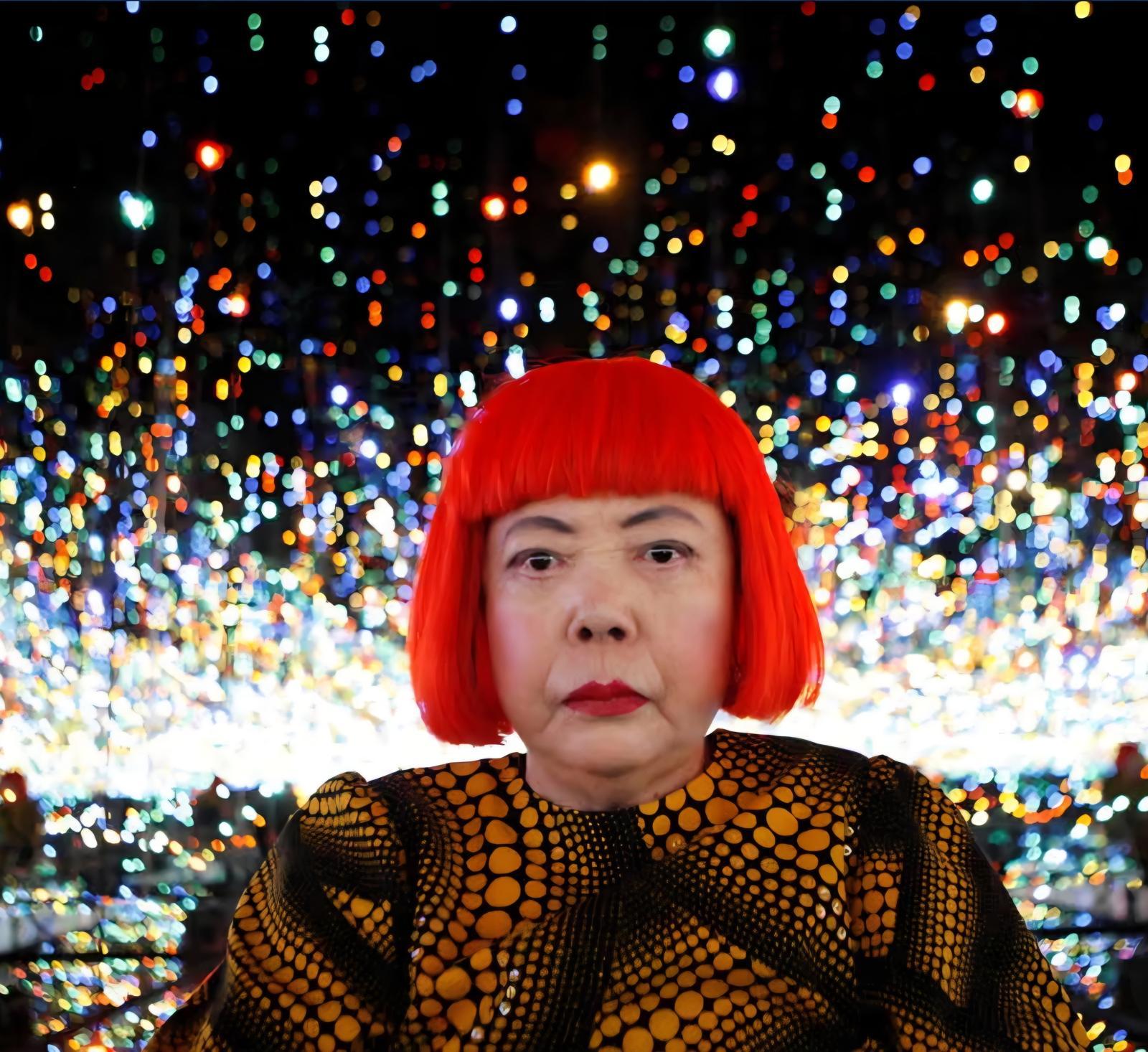
The Announcement That Was Not an Announcement
Yayoi Kusama died on August 14. Her studio let the world know on August 27. The two-week gap between the artist’s final breath and the public reading of it is not a trivial detail. It is the first signal that Kusama’s death will not behave like ordinary celebrity news. She has spent the last decade of her life inside the Seishunkan Hospital psychiatric ward in Tokyo, still painting, still shaping the visual vocabulary that has made her one of the most exhibited living artists in history. Her工作室 treats her not as a figurehead who has passed, but as a working artist whose output continues to matter.
The delayed announcement itself mirrors the strange position Kusama occupied in life. She became a global phenomenon late — her breakout moment came with the 1993 Venice Biennale, when she was already 64. The institutions that now compete to show her work did not discover her until she was an older woman working in a clinic. The same logic applies to the timing of her death announcement. The world did not get Kusama when she arrived in New York in 1957. It got her when the Instagram age demanded art that was experiential, repeatable, and shareable. The announcement came when the institutions were ready to grieve publicly.
What the Delay Reveals
A two-week silence from a studio is unusual for someone of Kusama’s stature. Most high-profile artists have PR teams that move within hours. The delay here suggests something more complicated than logistics. Kusama’s legal and financial affairs were managed through the Yayoi Kusama Foundation, established to control the commercial use of her work. The foundation operates with a precision that has frustrated some critics and delighted others. The artist herself once said she wanted to be remembered as an outsider — a word she embraced deliberately.
The studio’s statement emphasized that Kusama “did not put down her brush until just before her death.” That is the key phrase. It changes the timeline. It means the works produced in 2025 and early 2026 belong to the same continuum as the paintings from the 1960s. The estate will not face the familiar problem of deciding whether late-period work from a diminished mind retains value. Kusama’s mind was sharp. Her body was failing. The art kept coming.
The Museum Game Changes
Museums have spent the last fifteen years learning how to monetize Kusama. The Infinity Mirror Rooms generate lines that stretch around city blocks. Ticket prices have risen. Tour dates are set years in advance. When a living artist dies, the model shifts. The demand that was elastic — because the artist could always make more, travel to openings, sign books — becomes fixed. Supply freezes. Demand, for a figure like Kusama, does not contract.
The question now is who wins and who loses. Museums that secured exhibition contracts before August 14 will honor them. The Tate Modern, MoMA, the Hirshhorn — these institutions already have Kusama in their histories. Their collections include her work. They will survive the transition. Regional museums and pop-up institutions that booked Kusama experiences for 2027 and beyond face a different reality. Licensing agreements tied to a living artist’s participation may need renegotiation. The emotional capital of a Kusama opening — the artist in a wheelchair, waves from the platform — is gone. What remains is the work.
Art markets tend to reprice after the death of a living master. Basquiat, Warhol, Haring — their secondary market values rose sharply after they died. Kusama’s prints, sculptures, and early canvases are already expensive. They will likely become more expensive. The risk is that the market absorbs the work faster than the institutions can contextualize it. The dots and pumpkins are everywhere. They are on scarves, phone cases, and hotel lobbies. The commercial saturation that made Kusama accessible to a generation also made her vulnerable to being flattened into decoration.
The Estate’s First Test
The Yayoi Kusama Foundation has one job now: decide what to do with a living artist’s unfinished output. The foundation controls reproduction rights, licensing, and the exhibition schedule. It has already committed to several major shows. The studio says it will “continue to transmit hope and strength for the future through art.” That is the language of management, not mourning. It signals that the foundation intends to treat Kusama’s estate as an ongoing enterprise.
This is where the model diverges from most artist estates. Jeff Koons and Richard Prince are alive and actively producing. Their estates, when they eventually form, will inherit work that is still being made. Kusama’s estate will inherit an artist who was still painting in her nineties. That is an extraordinary position. It means the foundation can argue that the late works are not retrospective curiosities but part of a continuous trajectory. It also means the foundation faces an obligation: to protect the integrity of a body of work that extended across eight decades and three continents.
The Outsider Who Became the Institution
Kusama called herself an outsider. She was right about the impulse behind her work — the compulsive repetition born from hallucinations that began in childhood. She was wrong about the outcome. The outsider became the institution. Her dots cover walls in Tokyo, New York, London, and Seoul. Her pumpkin sits in public parks as a shared cultural reference. The visual language she invented has become ordinary. That is both her triumph and her burden.
The Korean art world feels this tension acutely. Kusama’s work has been shown at the Artsonje Center and other major venues. Her pumpkins are among the most photographed objects in Seoul. The delayed announcement of her death has sparked discussion about how Korean audiences received the news — with the same mixed reverence that characterized her exhibitions there. She was never fully Korean, never fully Japanese in the way that matters to national pride. She belonged to the world. That is the uncomfortable truth for any art world that wants to claim her.
What Comes Next
The art world will grieve Kusama. It will also adapt to her absence quickly. The exhibitions will continue. The market will adjust. The estate will manage. But the longer-term impact will be felt in how institutions treat living artists today. Kusama’s career proved that an artist could remain relevant across generations, across mediums, across geographic boundaries. The next time a museum books a living artist for a major retrospective, the question will be different. It will not be whether the artist is important. It will be what happens after.
Kusama’s studio published her obituary on August 27. Two weeks of silence, then a careful recalibration of the narrative. The artist she described — someone who explored eternal love and the soul until the moment of death — is now a fact. The work remains. The question is who gets to decide what the work means now that she is gone.