Yemen clash rewrites global energy risk maps — Seoul can't ignore it
A bloodiest Yemen clash in years has the Houthis eyeing the Bab el-Mandeb strait at a moment when Hormuz is already closed by the US-Iran war. For South Korea, an oil-import-dependent economy, the math is simple and alarming.
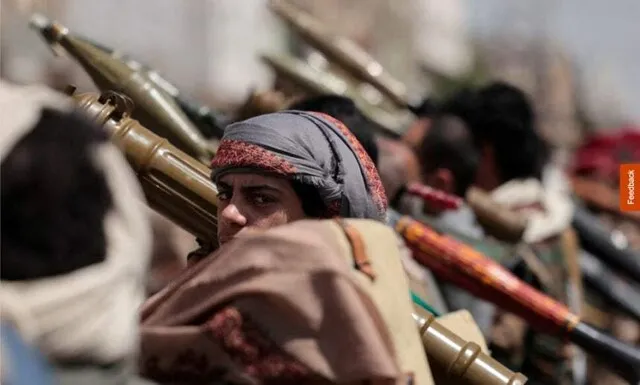
One Clash, Two Chokepoints
Thirteen days after US-Iran hostilities sealed the Strait of Hormuz, the Houthis made a move that most English-language headlines treated as another footnote in Yemen’s endless civil war. On the 3rd, they attempted to push toward the Bab el-Mandeb strait — the narrow neck of water between Yemen and Djibouti that funnels roughly 12 percent of global seaborne oil through the Red Sea into the Suez Canal and onward to Europe.
By the time the dust settled on the 4th, 129 people were dead: 66 from Yemen government forces, at least 62 from the Houthi side, and one civilian caught in the crossfire. The AFP called it the deadliest exchange between the two sides in years. But the body count is only the opening act.
What matters is where the fighting happened. The Houthis have controlled Sanaa and the northern highlands since 2014. They have been waiting — patient, Iranian-supplied, and increasingly well-armed with ballistic missiles and swarm drones — for the moment when the world’s attention is elsewhere. That moment is now.
The Double Lock
Here is the arithmetic that Western wires are still working through: the Strait of Hormuz is effectively closed following the US-Iran war that began in mid-2026. All oil flowing from Saudi Arabia, the UAE, Kuwait, Qatar, and Bahrain must now find alternate routes — and those routes are either landlocked pipelines with nowhere to go or ships willing to take the long way around Africa. Neither option scales.
Meanwhile, the Houthis are now testing the Bab el-Mandeb. If they gain even partial control of the strait’s Yemeni shore, they gain the ability to interdict tankers moving between the Red Sea and the Gulf of Aden. That is the second chokepoint in less than two weeks.
Two chokepoints, one conflict system, zero redundancy. The global oil market was already pricing in Hormuz disruption. It is not yet pricing in Bab el-Mandeb — and that gap is where the next shock lives.
Brent crude has already climbed 8 percent since the Hormuz closure. Several major banks have revised their annual averages upward. Nobody is talking about what happens if the Houthis close the Red Sea route as well.
Why Seoul Should Be Worried
South Korea imports roughly 97 percent of its crude. Of that, well over half comes from the Middle East — Saudi Arabia, the UAE, Iraq, Kuwait, Qatar. The shipping lanes that carry it all pass through either Hormuz or Bab el-Mandeb, sometimes both, depending on origin and destination.
When Hormuz went dark, Korea’s emergency petroleum authority activated contingency plans and began rationing allocations to refiners. The government urged industrial users to cut consumption. Stockpiles were tapped. Nothing prepared them for a second strait threatening to close.
Consider the petrochemical sector, which alone accounts for roughly 15 percent of Korea’s export earnings. Companies like Samsung SDI, LG Chem, and Kolon Industries depend on steady, affordable Middle Eastern crude feedstock. A second chokepoint closure would raise shipping costs across the board and force rerouting that adds weeks — not days — to delivery timelines. For just-in-time supply chains, that is existential.
The broader economy feels it too. Shipping is Korea’s third-largest export sector. If vessel insurance premiums spike — and they will, because every hull passing the Bab el-Mandeb is now a target worth negotiating over — Korean shipowners lose margins overnight. Hyundai Merchant Marine and HMM have already seen their freight rates climb.
The Iranian Calculus
The Houthis are not acting alone. Iran backs them with weapons, training, and intelligence. The Islamic Revolutionary Guard Corps’ Quds Force has spent a decade building the Houthi military apparatus into something that looks more like a proxy regular army than a militia. What happened on the 3rd was not a spontaneous escalation. It was a calibrated probe.
Iran’s calculus is straightforward: while Western naval forces are concentrated around the Persian Gulf dealing with Hormuz, the Houthis extend pressure on the Red Sea corridor. Even if they cannot fully close Bab el-Mandeb, the threat alone forces commercial shippers to pay higher insurance, accept longer routes, or delay voyages. That is leverage without direct engagement.
And Iran benefits regardless of outcome. Every day of Houthi pressure keeps global oil prices elevated, which strengthens Tehran’s own revenue from whatever output it can still move. It also keeps Washington diplomatically stretched across two fronts instead of focused on any single negotiation track.
Who Wins, Who Loses
The winners in this scenario are few and specific: countries with significant domestic oil production (the US, Canada, Brazil), nations with diversified import routes (Japan has been slowly shifting toward LNG and ASEAN suppliers), and commodity traders who shorted volatility too early and are now riding the wave.
The losers are everyone else. Import-dependent Asian economies — South Korea, Taiwan, Thailand, Vietnam — face a compound shock. China, which already diversifies heavily through Russian pipelines and Central Asian overland routes, is somewhat better positioned but still exposed through its Arabian Sea port investments.
For South Korea specifically, the damage would not be abstract. The Ministry of Trade, Industry and Energy estimates that a full Middle East shipping disruption could shave 1.5 to 2 percent off annual GDP growth. That is not a recession warning. It is a structural hit to an economy that was already struggling with weak domestic demand and a property sector in correction.
What Happens Next
The immediate question is whether the Houthis consolidate gains around the Bab el-Mandeb or whether Yemen government forces — backed implicitly by whoever still has naval capacity in the region — push them back. Neither side has the logistics for a decisive victory. This will likely settle into a grinding standoff with periodic flare-ups, each one rattling markets a little more.
The secondary question is whether Iran escalates further or signals restraint. A direct Iran-US confrontation would pull the US Navy harder away from the Red Sea and leave the Bab el-Mandeb even more vulnerable to Houthi coercion.
The tertiary question — and the one Seoul needs to answer first — is whether South Korea diversifies its crude sourcing fast enough to survive a prolonged dual-chokepoint scenario. That means accelerating LNG contracts from Australia and Qatar, deepening strategic petroleum reserve stocks beyond current legally mandated levels, and engaging diplomatically with Red Sea corridor states like Djibouti and Somalia in ways that go beyond symbolic cooperation agreements.
None of this is happening at pace. The韩国government’s energy security framework was designed for a world with one vulnerable chokepoint. That world is gone. The question now is whether Seoul adapts before the second one closes for real.
The 129 dead in Yemen are a tragedy measured in human terms. But in energy markets, numbers like that are also data points — indicators of how fast the rules of global supply are changing, and how unprepared the most exposed economies still are.