Yemen's 100,000-Troop Offensive Could Rewire Red Sea Security
Saudi-led government forces are mobilizing up to 100,000 troops for a major offensive against the Houthis, triggering a tit-for-tat bombing campaign over rival capitals. The stakes extend far beyond Yemen's borders.
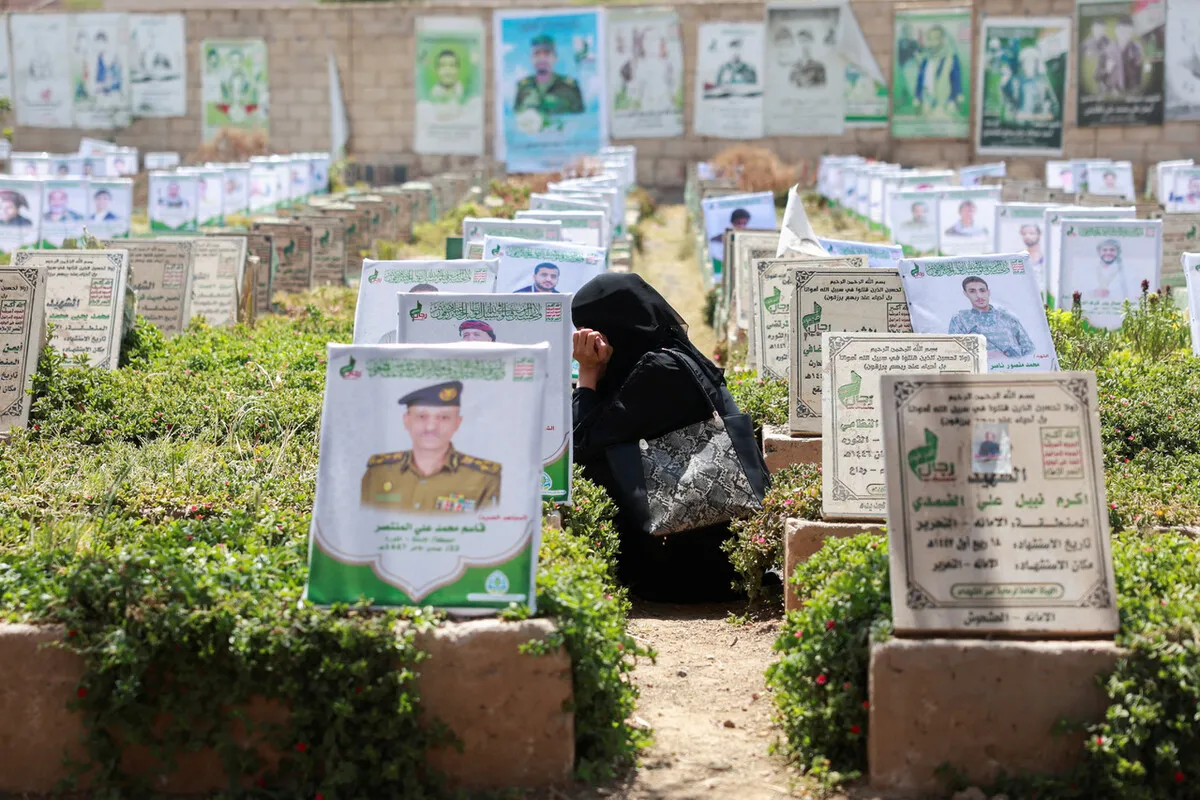
Capitals Under Fire, a War Expanding Beyond Yemen’s Borders
The images are almost cinematic in their symmetry. Houthi missiles and drones struck Aramco facilities near Riyadh and the port city of Yanbu on the Red Sea, sending plumes of smoke into the Saudi sky. In response, Saudi coalition warplanes pounded central Sanaa — including the area around the presidential palace and Hafa airbase — in what Al Jazeera described as “very heavy” strikes. At least 700 Houthi fighters were killed, according to Yemeni government spokesperson Majed Abdullah Al-Najili, who said 257 precision strikes were carried out on Tuesday.
But the aerial duels over Riyadh and Sanaa are only the visible tip of a much larger escalation. Behind the headlines, a Yemeni government coalition is preparing a ground offensive that could redefine the balance of power in the Horn of Africa and send shockwaves through global energy and shipping routes.
The 100,000-Troop Gamble
Reuters reported on Tuesday, citing six Middle Eastern and Western sources, that Yemen’s government forces — bolstered by allied tribal militias — are mobilizing more than 100,000 troops for a major offensive that could begin as early as next week or, at the latest, in the aftermath of the US midterm elections in November.
The target is almost certainly the Bab el-Mandeb strait, the narrow maritime chokepoint that links the Red Sea to the Gulf of Aden and the Indian Ocean. Roughly 12 percent of global trade passes through these waters annually, including a significant share of the world’s LNG and petroleum products. Regaining control of this corridor — which the Houthis seized last month when they captured the port city of Mokha — would be a strategic trophy of enormous consequence.
Yemen’s defense ministry confirmed on Tuesday that it has issued a general mobilization order, opening conscription centers across the country and drafting reserves and volunteers. Al Jazeera noted that coalition airstrikes had already targeted communication installations in Sa’dah province in northern Yemen, widely seen as preparation for a coordinated multi-front operation.
Why Timing Matters
The choice of when to launch is itself a signal. If the offensive begins before the US election, Washington — already deeply reluctant to escalate militarily — would face pressure to respond. If it comes after, the new administration inherits a transformed regional landscape.
That reluctance is already evident. Axios reported that Saudi Defense Minister Khalid bin Salman called US Defense Secretary Pete Hegseth on Monday requesting US airstrikes against Houthi targets. Hegseth declined. A US official told the outlet that Washington has no current plans for kinetic action against the Houthis, preferring to limit its role to intelligence sharing.
The calculus is clear: the United States is trying to avoid opening another front in an already overextended Middle East posture, particularly one that could draw in Iran more directly. But that hands Saudi Arabia the task of fighting a war it can barely afford to win on its own.
The Stalemate That Isn’t
Despite the government’s claims of retaking a fortification southeast of Taiz on Tuesday, the overall picture on the ground remains stubbornly contested. The Institute for the Study of War noted that Houthi forces are pushing on both the eastern and western flanks around Taiz, Yemen’s second-largest city and a critical link between the government’s temporary capital in Aden and northern supply lines.
The Houthis have the advantage of terrain and motivation. They are fighting a defensive war on home ground, backed by Iranian-supplied drone and missile technology that has proven effective against Saudi airpower. The government forces, by contrast, are a fragile coalition of regular troops and irregular tribal militias with varying levels of loyalty and capability.
Saudi air superiority has so far prevented a Houthi breakthrough, but it has not been able to dislodge them either. The capture of Mokha last month demonstrated that gap between aerial dominance and ground reality.
The Shipping and Energy Implications
n
This is where the conflict stops being regional and becomes global. The Red Sea has already seen a dramatic surge in Houthi attacks on commercial shipping since late 2023, disrupting insurance markets and forcing major carriers to reroute around Africa’s Cape of Good Hope. A full-scale Saudi-Yemeni ground war would likely intensify those attacks, not diminish them — the Houthis have every incentive to keep pressure on maritime routes as leverage.
Aramco’s infrastructure has already been hit. Tuesday’s strikes on refineries near Riyadh and Yanbu caused fires in crude storage tanks. While Saudi Arabia has the capacity to absorb and recover from such damage, the psychological and financial costs add up. The kingdom’s Vision 2030 diversification strategy depends on perceived stability, and this war tells the opposite story.
For global oil markets, the risk is not immediate supply disruption — Saudi reserves are vast — but the premium on uncertainty. Every escalation raises the probability that the Strait of Hormuz, through which about 20 percent of global oil flows, could become a secondary flashpoint.
The Iran Factor
No analysis of this conflict is complete without addressing Tehran. The Houthis are a proxy force, but not a dependent one. They have pursued an independent strategic trajectory that sometimes aligns with Iranian interests and sometimes diverges from them. Iran benefits from the distraction Saudi Arabia faces on its southern border, but it also risks being dragged into a wider war it did not start.
The United States’ refusal to join the airstrikes signals a desire to keep the conflict contained — but containment is the job of diplomacy, not abstention. Without a credible US military deterrent operating in the theater, regional actors will fill the vacuum, and the Houthis are already doing exactly that.
What Happens Next
If the government offensive succeeds in retaking Mokha and securing the Red Sea coastline, it would deal a significant blow to Houthi prestige and revenue. If it falters — and history suggests that is a real possibility given the coalition’s internal fractures — the Houthis could press their gains and potentially threaten Aden itself.
Either outcome reshapes the Gulf security architecture. Saudi Arabia can no longer rely on airpower alone to project strength. The US stance raises questions about the durability of its alliances in the region. And Iran watches, weighs, and decides how far to go.
The world should be watching closely. This is not just a civil war. It is a collision point for regional ambitions, global supply chains, and great-power posturing — and the blast radius extends far beyond Yemen’s borders.